
Clearing prices swing wildly because properties do. Here is what actually drives the number on a Midwest job, and the ranges to expect before anyone walks your ground.
Ask three contractors what land clearing costs and you will get three different answers. That is not evasion. It is because "an acre" describes a quantity of land and almost nothing about the work involved in clearing it.
An acre of light brush behind a barn and an acre of mature woods on a 20% slope are the same size and nowhere near the same job.
The ranges
These are typical Midwest market ranges, not quotes. Your property decides the real number.
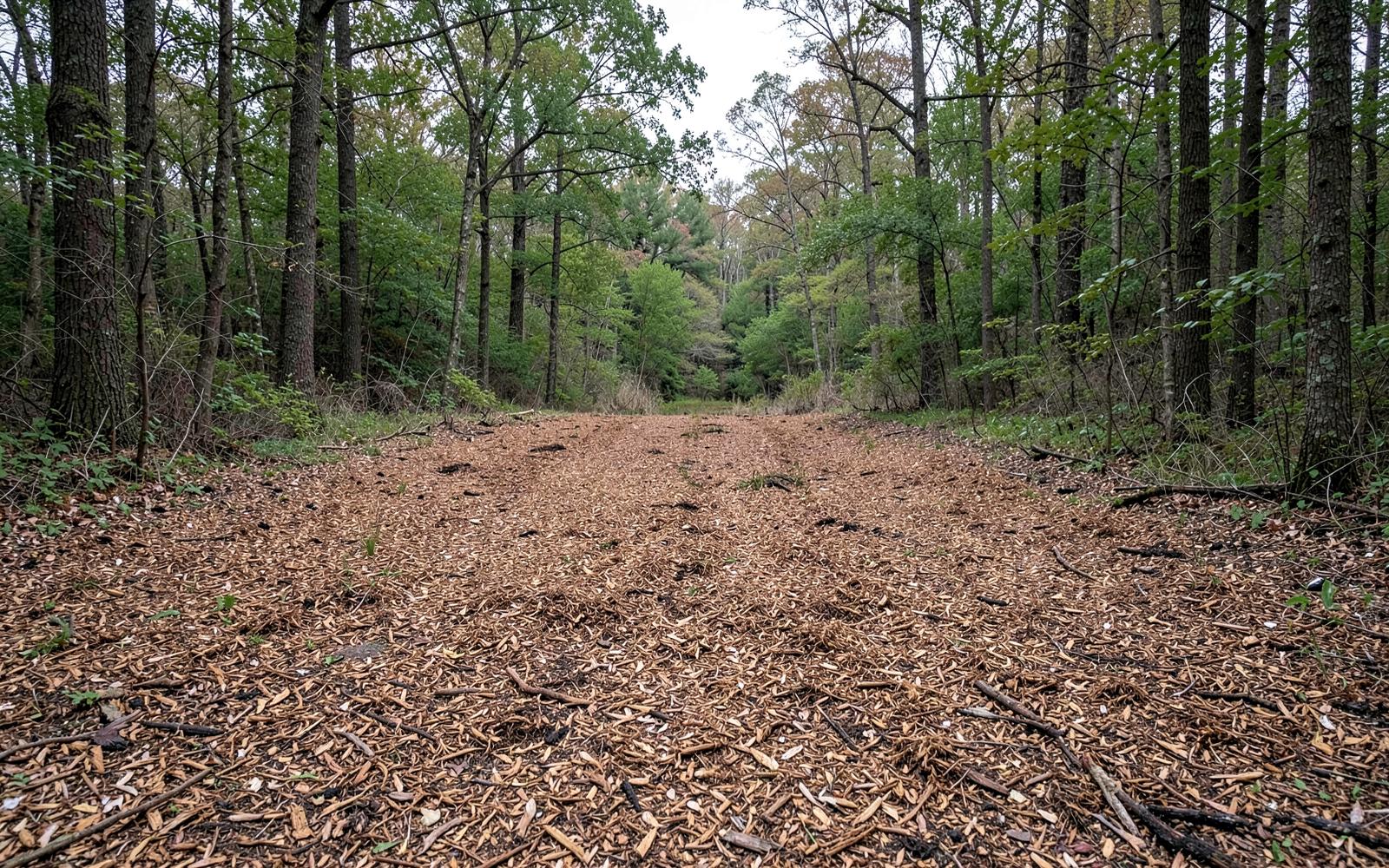
- Light brush and saplings, mulched in place — roughly $500 to $1,200 per acre
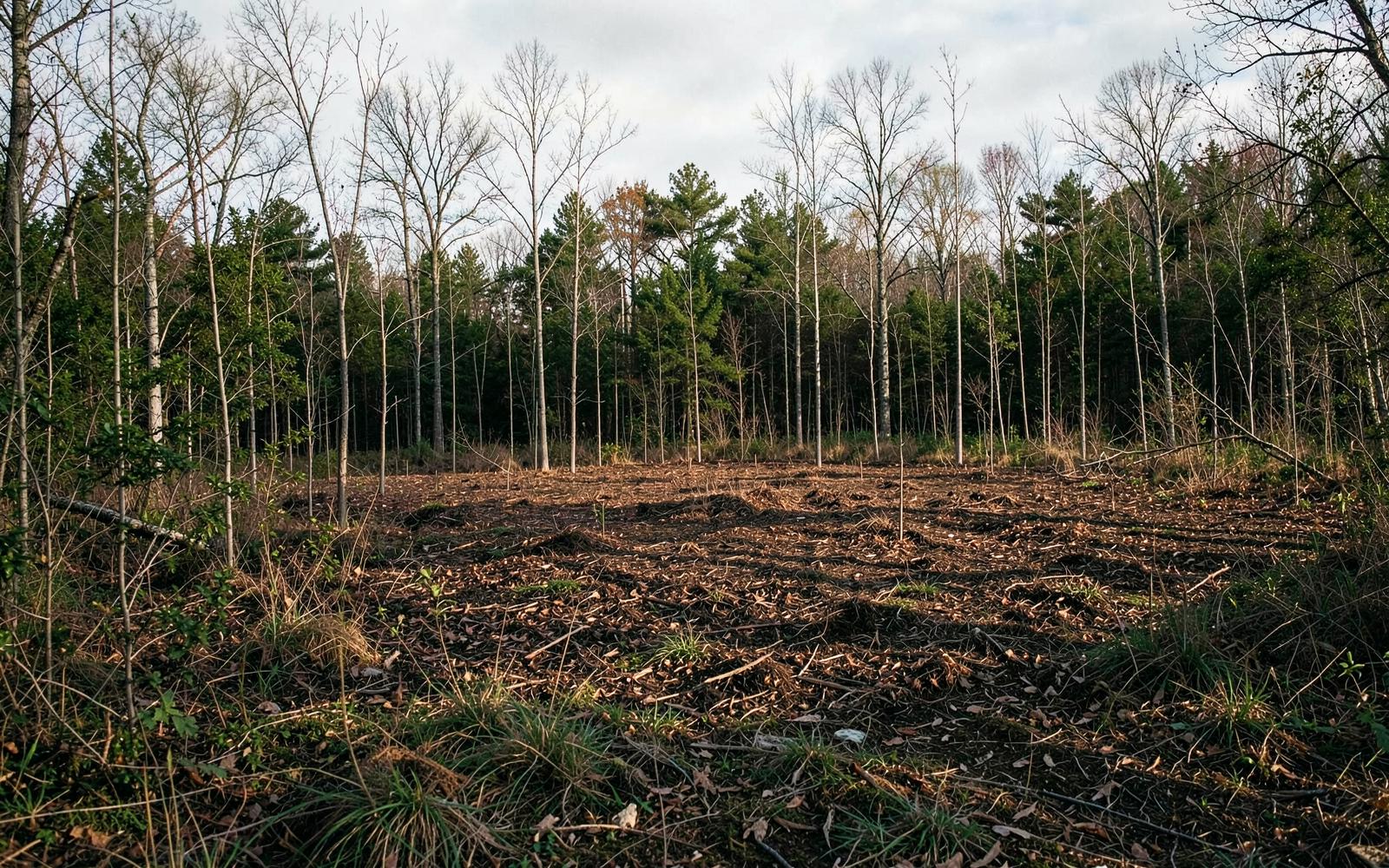
- Medium density with stems up to 6 inches — roughly $1,200 to $2,500 per acre
- Heavy wooded ground with larger timber — $2,500 to $6,000+ per acre
- Full clearing with stump grubbing and haul-off — often double the mulch-in-place price
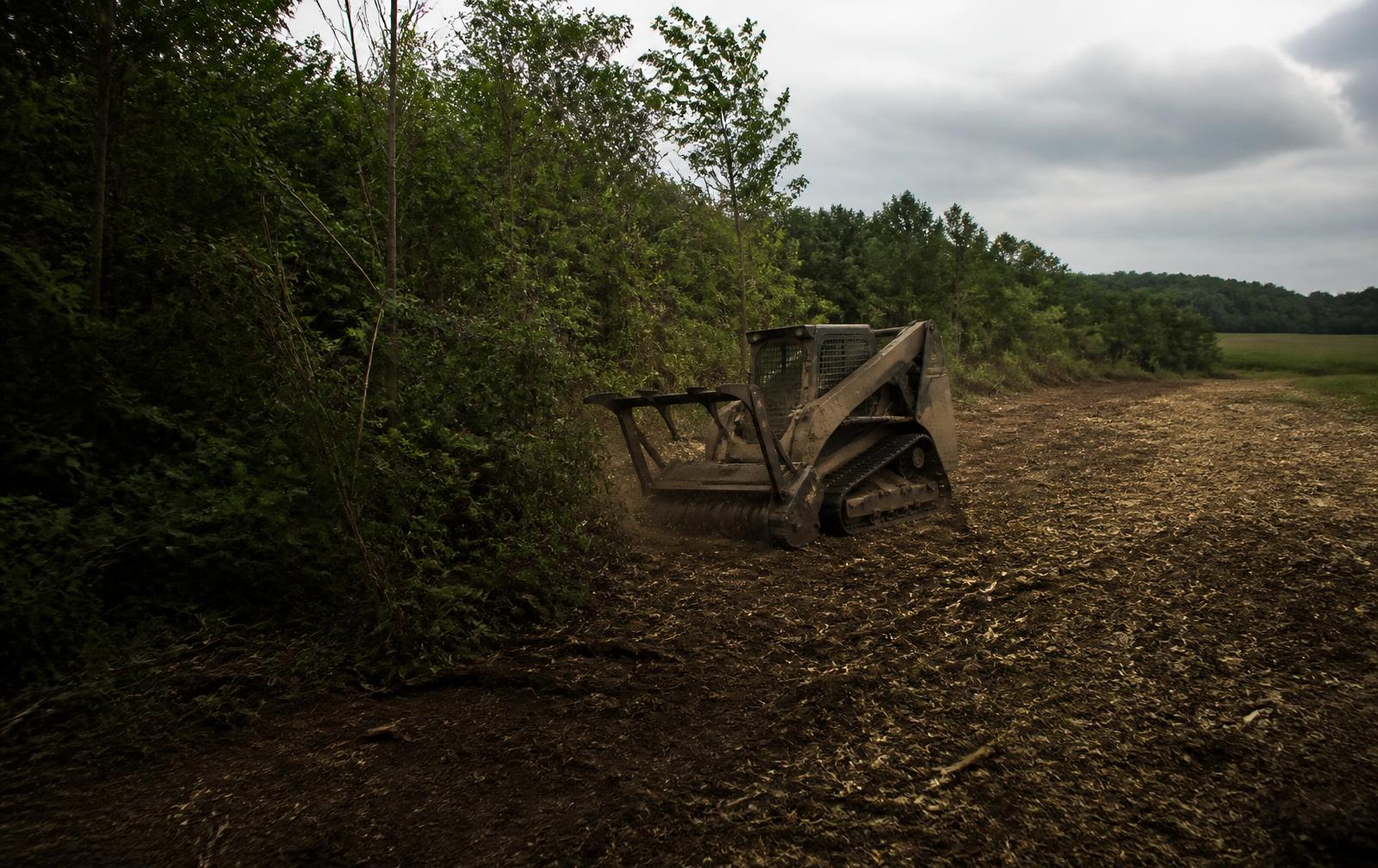
The gap between the top and bottom of that range is not padding. It is the difference between one machine walking through cover for a day and a multi-machine operation with trucks and a dump site.
What actually moves the price
Stem diameter. This matters more than almost anything. Brush under four inches feeds through a mulching head quickly. Once you are into 8-inch and larger trunks, the machine slows dramatically and cutting time per acre can triple.
Density. Not how tall the growth is — how tightly packed. A wall of honeysuckle can take longer than scattered mature trees, because there is no room to move and no way to get a clean bite.
Slope. Flat ground lets a machine run efficiently in long passes. Once you cross roughly 20% grade, everything changes: slower travel, more repositioning, real safety limits on what can be done and when. Wet slopes may simply have to wait.
Access. A gate wide enough for a lowboy and a firm path to the work area can be worth thousands. If equipment has to be walked in a half mile, or if a bridge or culvert cannot carry the weight, that is time on the clock before any clearing starts.
Ground conditions. Indiana and Ohio clay holds water. Soft ground means rutting, and rutting means either stopping or repairing. The same job in August and in March are different jobs.
What happens to the material. Mulching in place is the cheapest outcome because nothing leaves the property. Piling and burning adds handling and, in many counties, permitting. Hauling off adds trucking, dump fees, and a lot of trips.
Where people get surprised
The two most common budget shocks are stumps and debris.
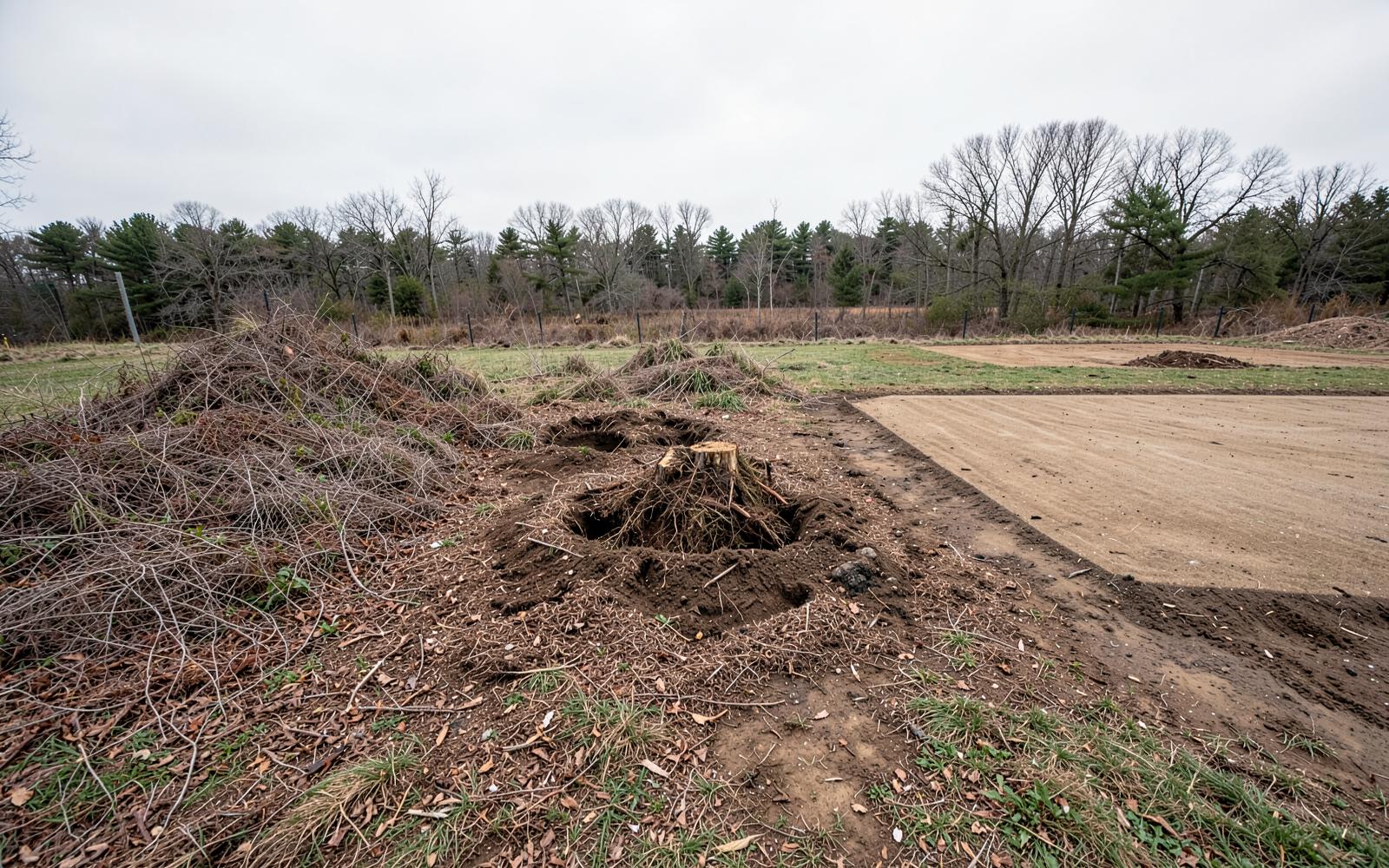
Stumps. Mulching leaves the root mass in the ground. That is fine for pasture, trails, hunting land, or anything you are not building on. If you are pouring a foundation or planting row crops, those stumps have to come out, and grubbing is a separate, heavier operation with its own price.
Debris. "Clear it" means very different things to different people. Some want the ground opened up with a mulch layer left behind. Some want bare dirt they could seed tomorrow. Confirm which one you are buying before work starts.
Getting a number you can trust
A quote given over the phone without anyone seeing the property is a guess. A useful estimate needs acreage, a sense of density and stem size, the slope, how equipment gets in, and what you want the ground to look like when it is done.
Photos help enormously — wide shots showing the whole area, plus a few close-ups of the thickest cover and the largest trunks.
For a fast starting range on your own property, our instant pricing tool will walk you through those inputs. For anything over ten acres or on steep ground, skip the calculator and request an on-site walkthrough — those properties need eyes on them.
Managing multiple sites or bidding recurring work? We welcome contract opportunities from commercial, municipal, utility, and developer clients.