
Three words that get used interchangeably and mean three very different jobs at three very different prices. Knowing which one you need is the difference between a fair quote and a wasted one.
Most confusion in a clearing quote comes down to vocabulary. A landowner asks for "clearing," the contractor prices clearing, and then it turns out the customer actually needed the ground ready to build on — which is two more operations and a much larger number.
Here is what each term actually covers.
Clearing
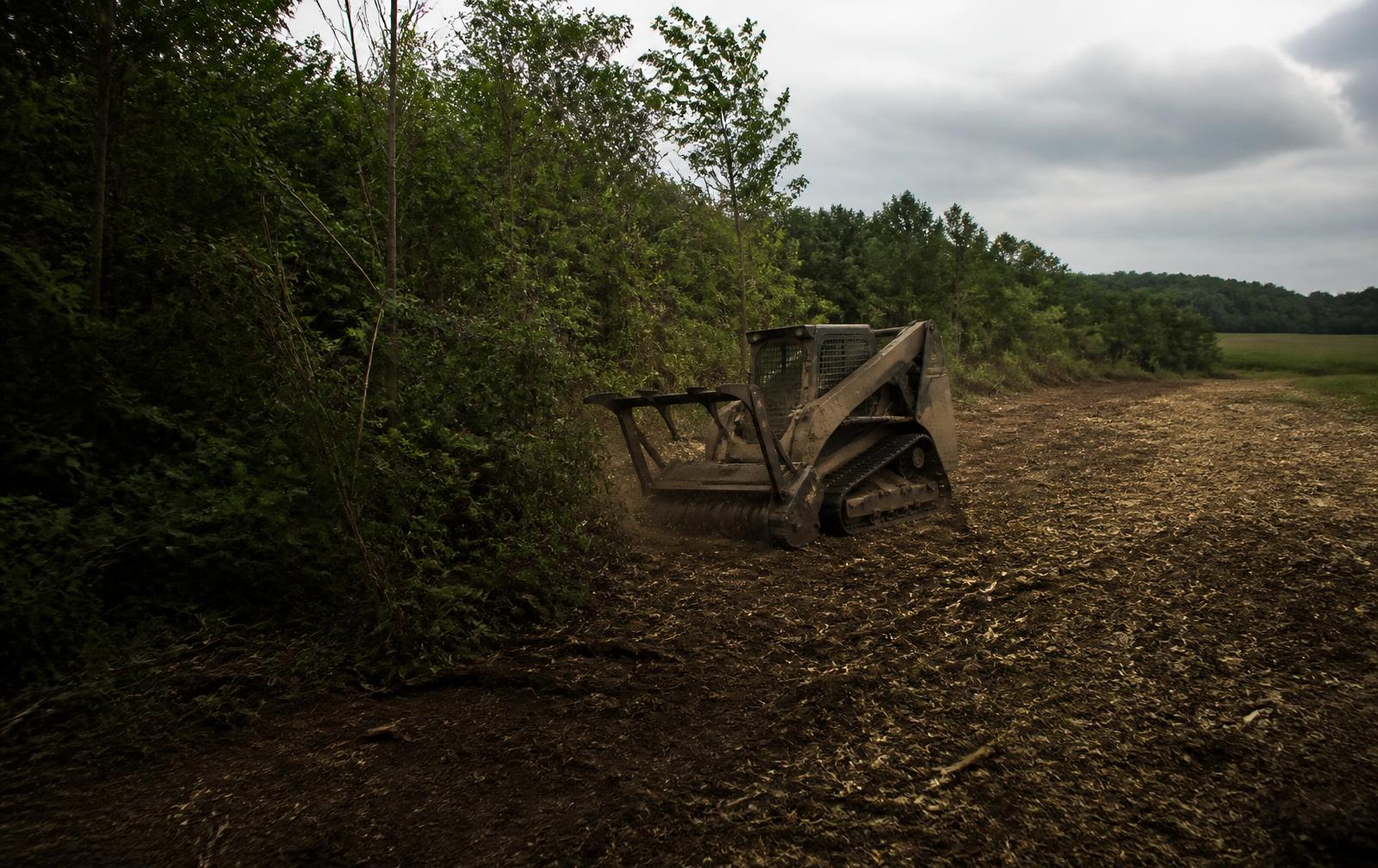
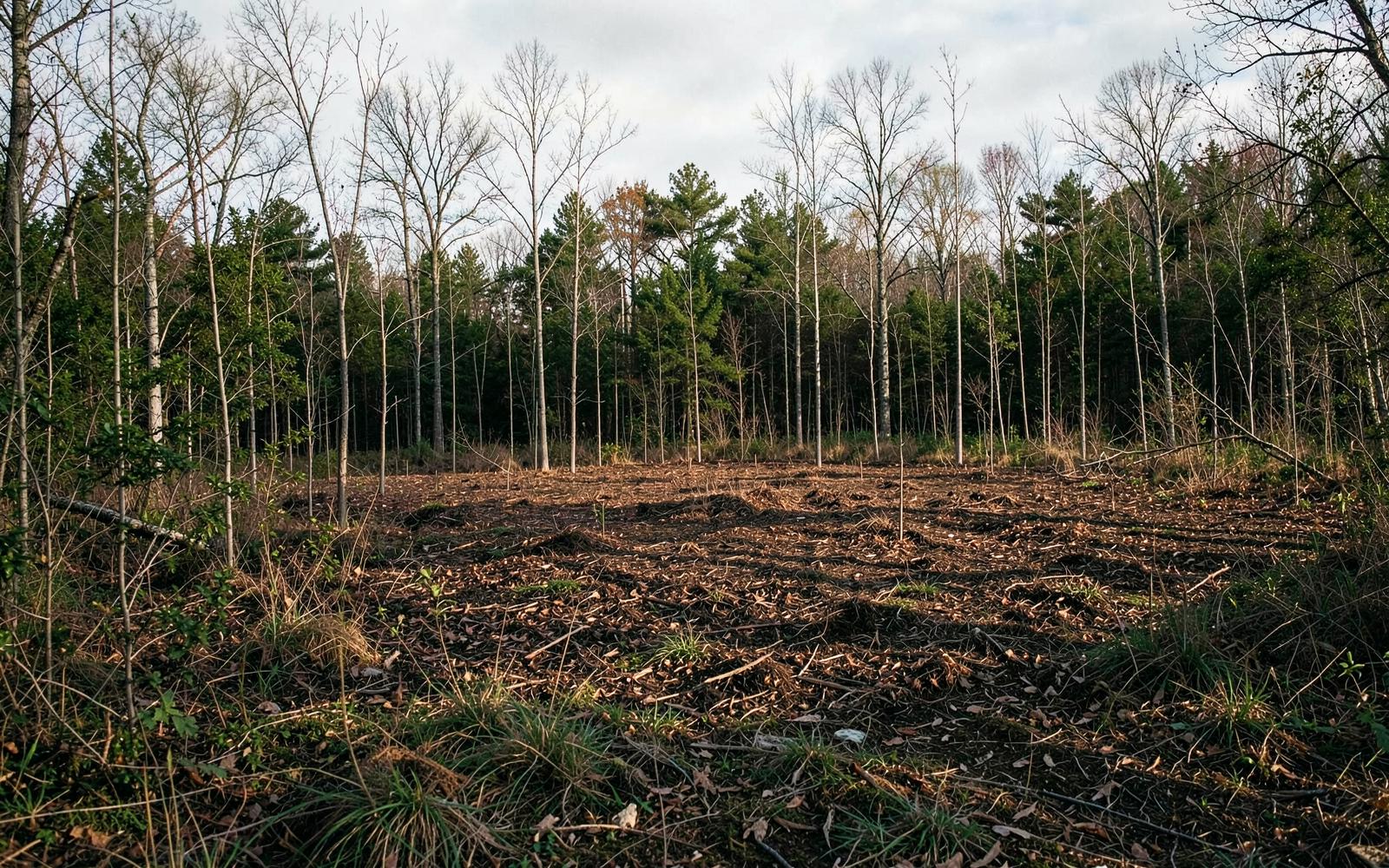
What it is: removing what is growing above the ground. Brush, saplings, undergrowth, and trees, either mulched in place or cut and removed.
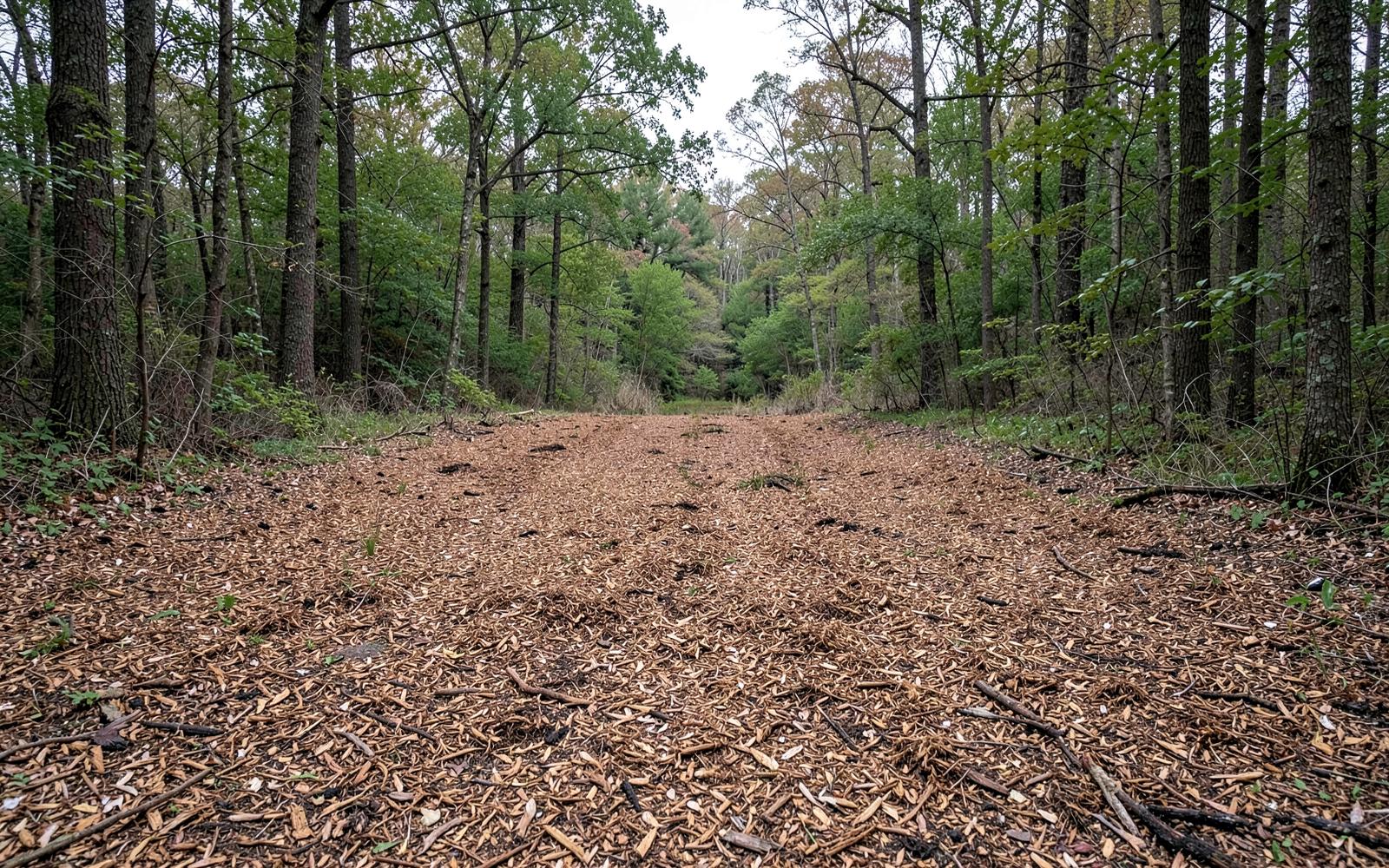
What is left: the root mass, the stumps, and the existing ground contour. If it was mulched, a layer of ground-up material across the surface.
When it is enough: pasture, hunting land, trails, fence lines, view corridors, boundary work, or any property you want opened up and usable but are not building on.
Roughly: the cheapest of the three, and the fastest.
Grubbing
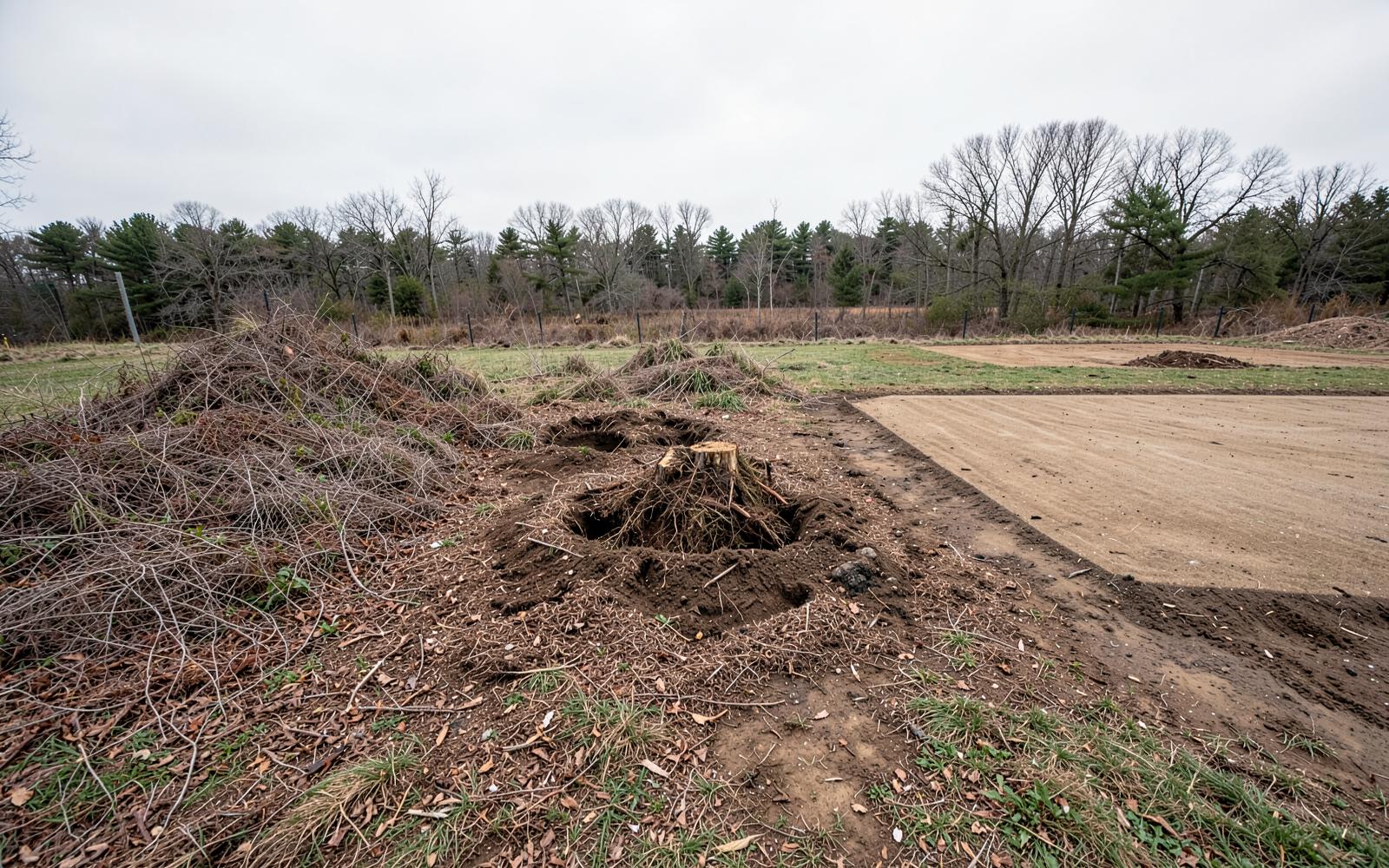
What it is: getting the roots and stumps out. Excavators, root rakes, and grapples pulling the below-ground material and hauling or burying it.
What is left: disturbed soil with the organic material removed, ready to be shaped.
When you need it: anything with a foundation. Homes, barns, shops, ponds, septic systems, row crops. Organic matter left in the ground decomposes, and decomposing material settles — which is how you end up with a cracked slab or a sunken driveway three years later.
Roughly: often doubles the cost of clearing alone, and generates real debris volume that has to go somewhere.
Grading
What it is: shaping the ground. Cutting high spots, filling low spots, establishing slope so water goes where you want it.
What is left: ground at the elevation and pitch your project actually requires.
When you need it: building pads, driveways, drainage correction, anything where water management matters — which in Indiana and Ohio clay is nearly everything.
Roughly: priced by the volume of material moved and how far it travels, not by acreage.
How they stack
For a building site, the sequence is usually all three: clear, then grub, then grade. Skipping a step does not save money, it just moves the cost downstream and usually multiplies it.
For pasture reclamation or recreational land, clearing alone is frequently the whole job.
For a driveway, you may need clearing along the route plus grading and drainage, and no grubbing at all outside the roadbed.
The question that gets you the right quote
Do not lead with "how much to clear ten acres." Lead with what the land needs to do when it is finished.
"I want to run cattle on it" gets you a different and much cheaper scope than "I want to put a shop on it." A contractor who understands the end use can tell you which operations you actually need — and, more usefully, which ones you can skip.
A useful middle path
On a lot of projects, the smart move is clearing the whole property and grubbing only the footprint. You get the full acreage opened up and usable, and you pay for the expensive below-ground work on the fraction of the site where a foundation is actually going.
Not sure where your project lands? Send us the details and we will tell you which operations it genuinely requires. Working across multiple sites or putting a job out to bid? Contract opportunities welcome.