
Burning is the traditional answer to a cleared property. It is also slow, weather-dependent, increasingly regulated, and leaves you with dead spots. Here is the alternative.
For a long time, clearing land meant pushing everything into piles and lighting them. It worked. It is also the part of the job most landowners end up regretting.
The problem with piles
They take forever to disappear. Green material does not burn well. A pile pushed up in April may still be sitting there in September, and you cannot use that part of the property until it is gone.
They are weather and permit dependent. Open burning rules vary by county and by season across Indiana and Ohio, and burn bans show up exactly when the weather is finally dry enough to work. Your project timeline ends up hostage to a permit window.
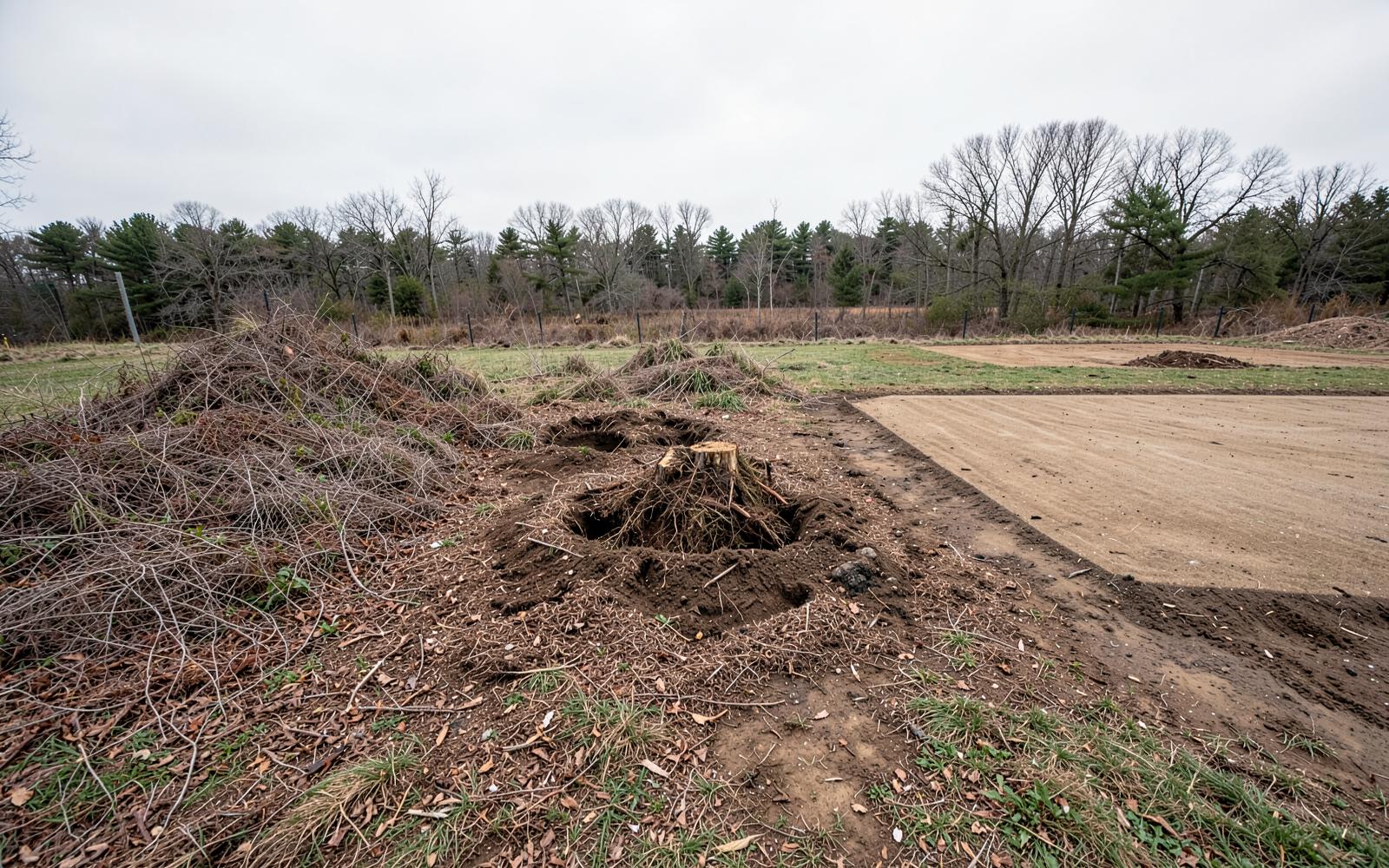
They leave scars. A burn pile sterilizes the soil beneath it. You get a ring of bare, hard, chemically altered ground that resists planting for years. On a property with a dozen pile sites, that is a lot of dead spots.
They waste the material. Everything you burn was organic matter that could have gone back into your soil.
Somebody has to handle it twice. Push it into a pile, then come back and deal with the pile. That is two operations.
Mulching in place
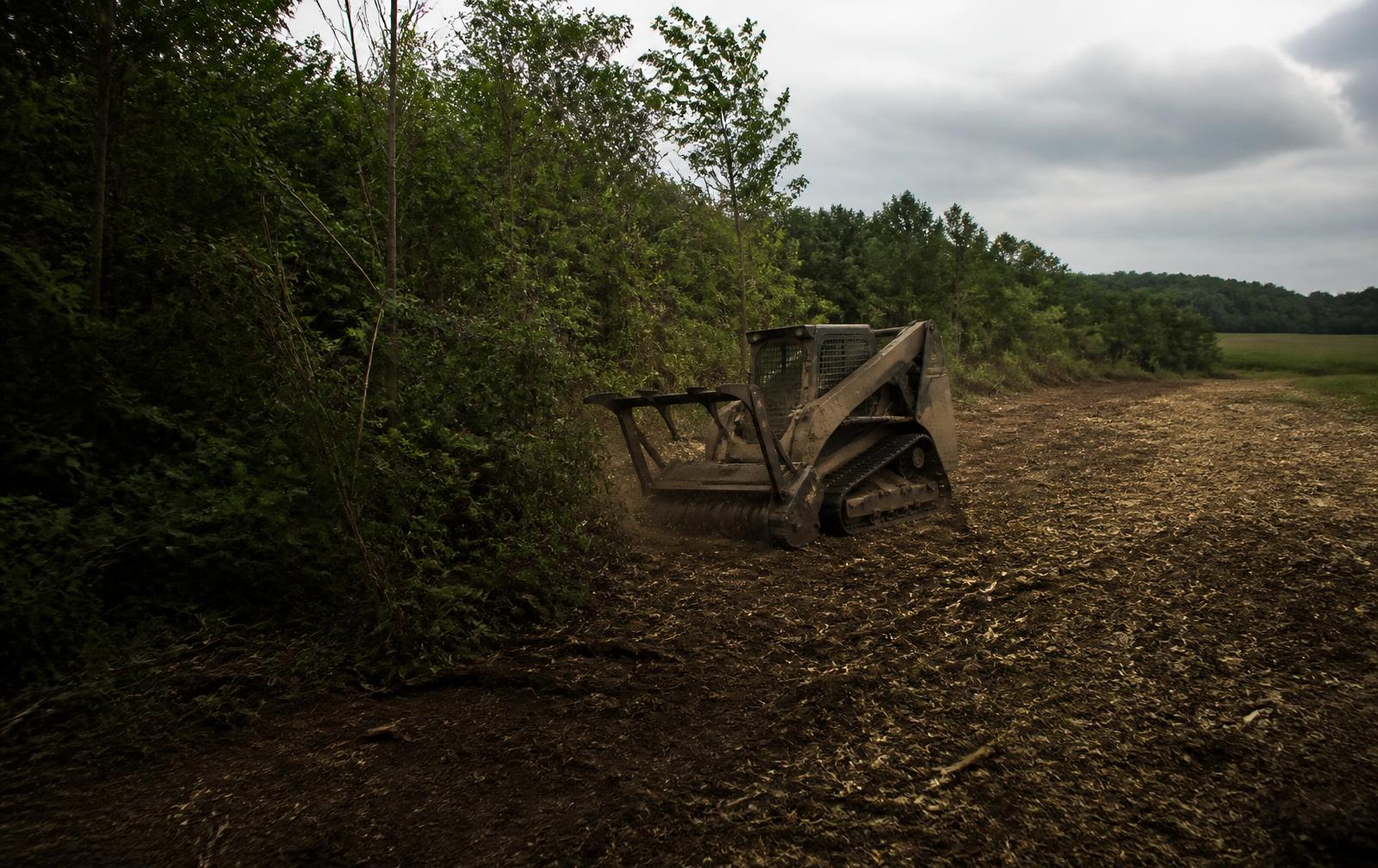
A forestry mulching head grinds standing brush and small trees where they stand and spreads the material as a layer across the ground. Nothing gets piled. Nothing gets hauled. Nothing gets burned.
One pass, and the property is open.
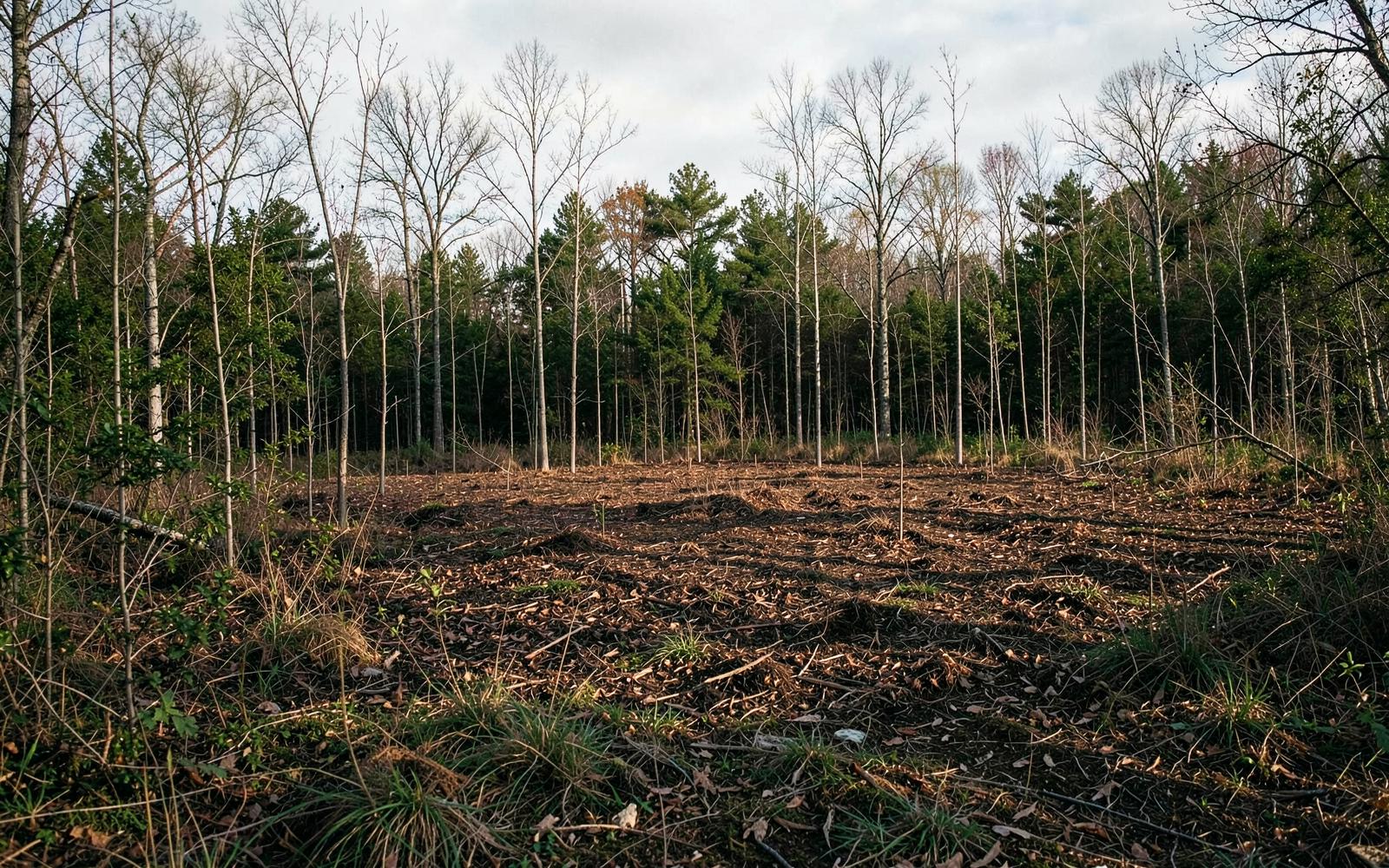
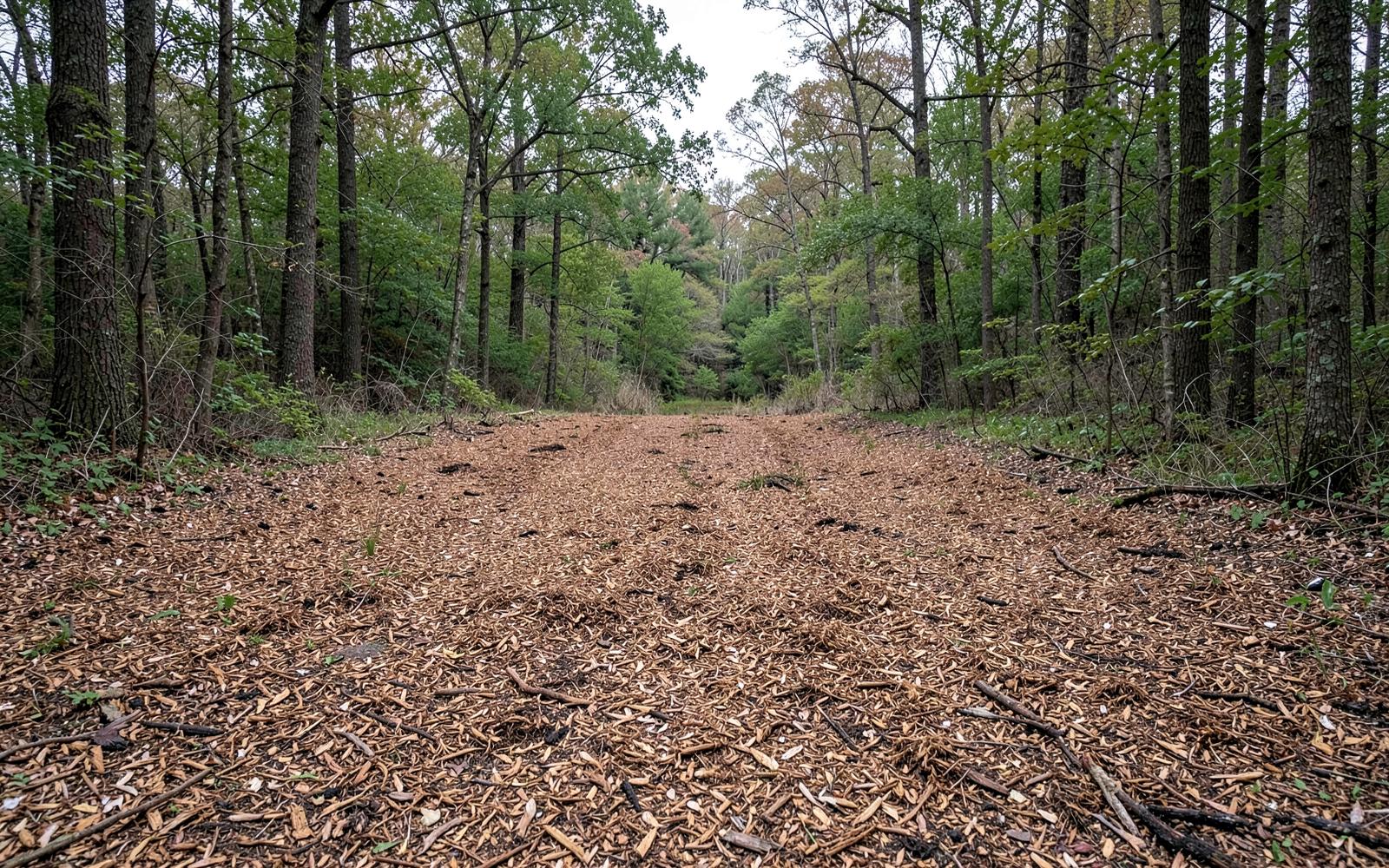
What you get: a mulch layer, usually two to six inches deep depending on how heavy the cover was, sitting on undisturbed soil.
What that layer does for you:
- Holds moisture through summer
- Suppresses the regrowth that would otherwise come back first
- Prevents erosion on slopes, which matters a great deal on Midwest clay
- Breaks down over one to three seasons and feeds the soil
- Lets you drive and walk the property immediately
Where mulching is the obvious answer
- Hunting and recreational land — trails, shooting lanes, food plot prep
- Pasture reclamation
- Fence lines and property boundaries
- Overgrown lots you want usable but are not building on yet
- Anywhere on a slope, where soil disturbance is a real risk
- Anywhere near water, where erosion control matters
Where it is not enough
Mulching leaves the root mass in the ground. If your plan involves a foundation, a septic field, a pond, or row crops, those roots and stumps have to come out. In that case mulching is still often the right first step — it clears the way so the excavation work can happen efficiently — but it is not the whole job.
Very large timber is also a limit. Above a certain trunk diameter, felling and removal beats grinding, both on cost and on time.
What about the regrowth?
Honest answer: mulching does not kill root systems. Aggressive species like honeysuckle, autumn olive, and multiflora rose will push back.
The mulch layer buys you a long head start, and the follow-up is a fraction of the original effort — usually a maintenance pass at 12 to 24 months, sometimes paired with targeted treatment on the worst species. Plan for it rather than being surprised by it.
What to expect
Mulching moves faster than clear-and-burn on most properties, and it does not stall waiting for a burn window. It leaves ground you can use the same week. And there is no pile sitting in the middle of your field all summer reminding you the job is not finished.
Get a range for your property, or request a walkthrough if the ground is steep, wet, or over ten acres.