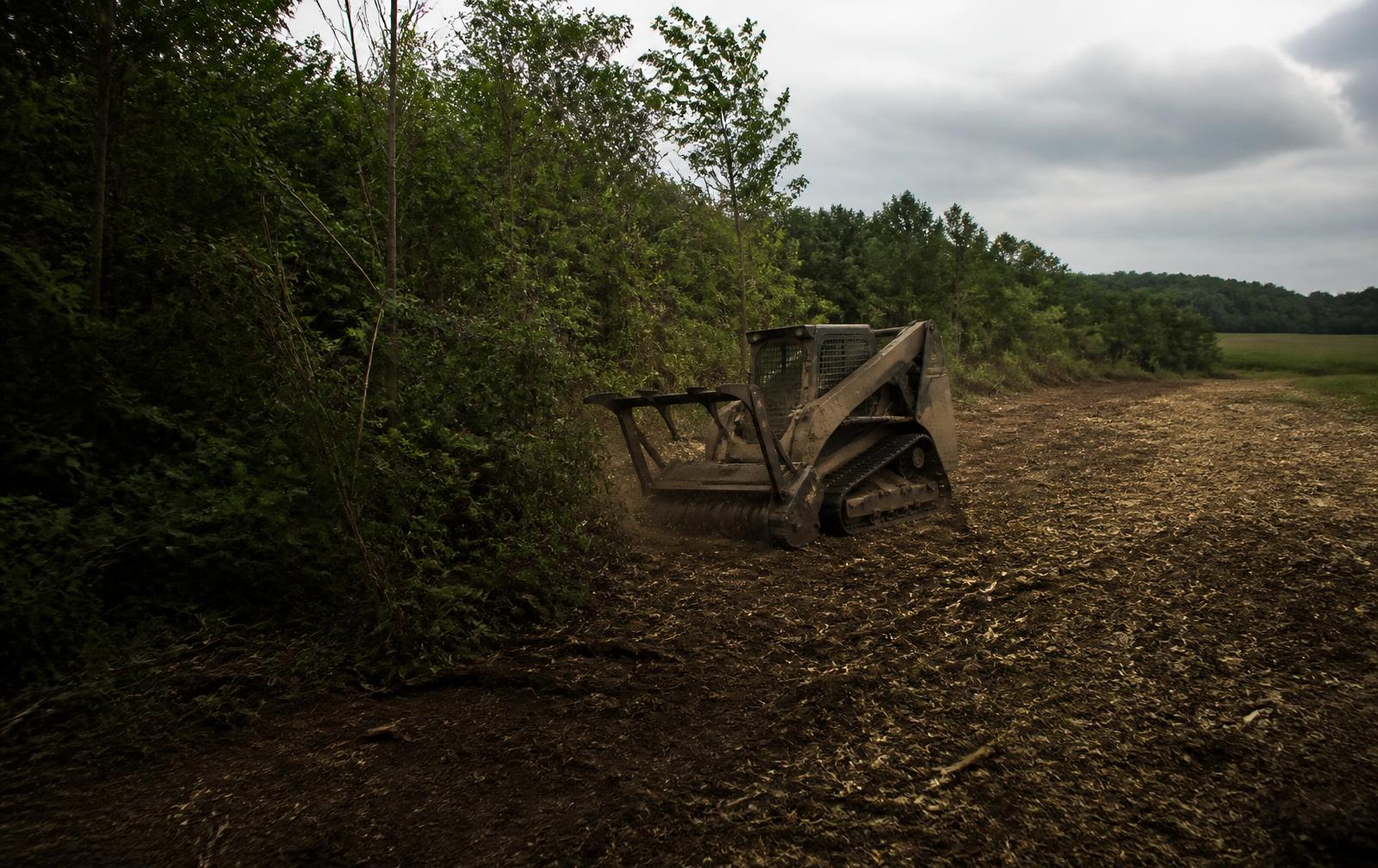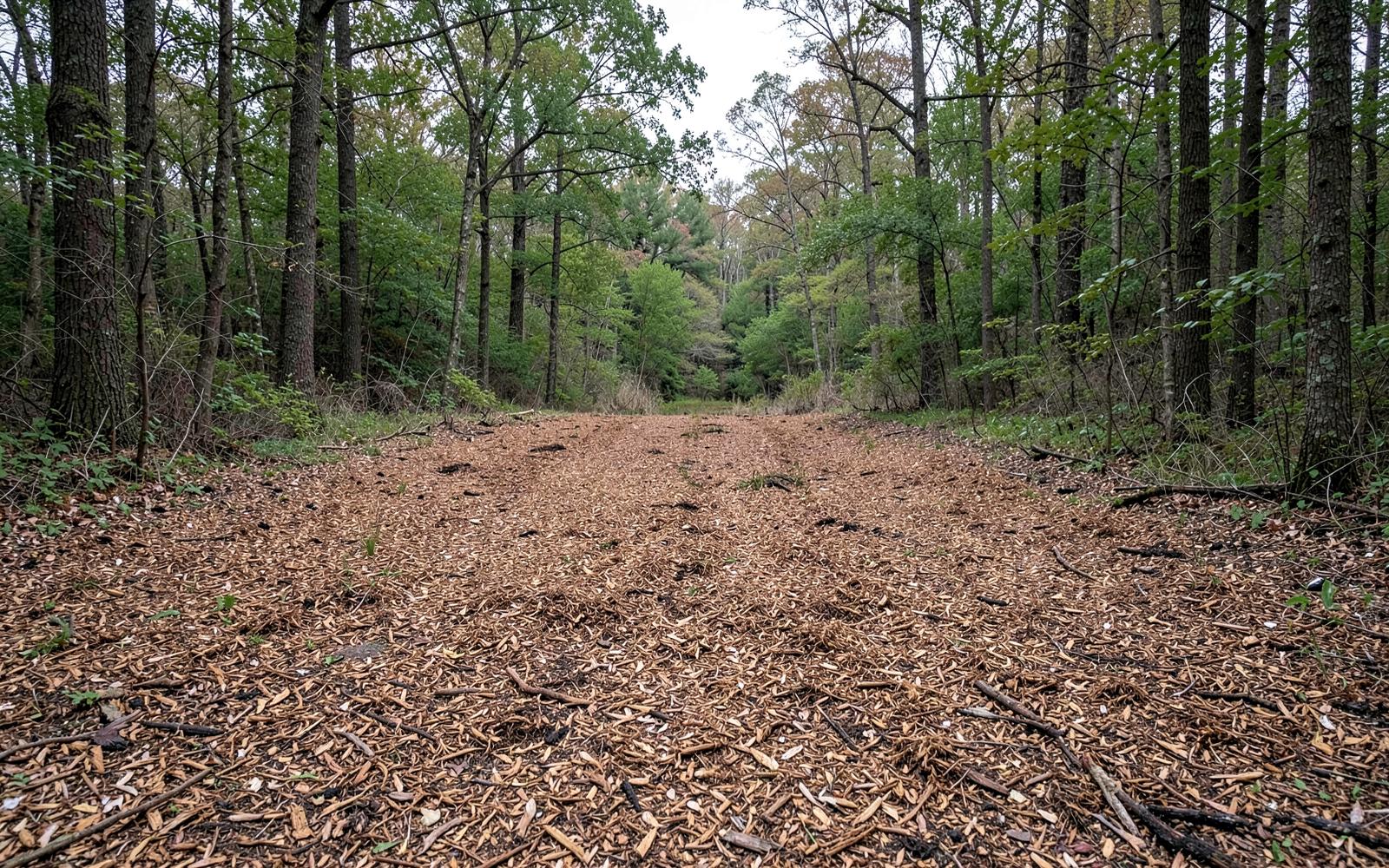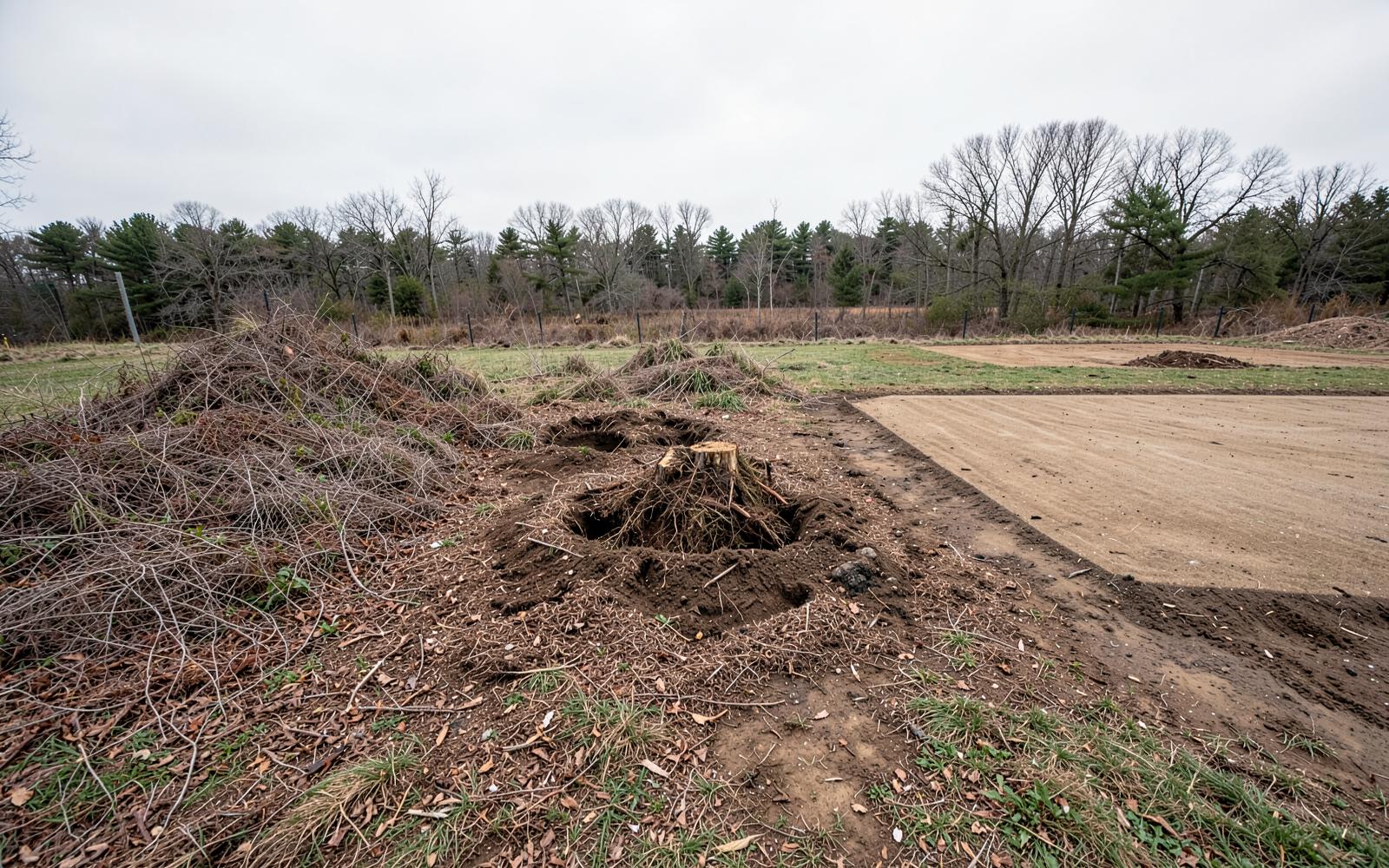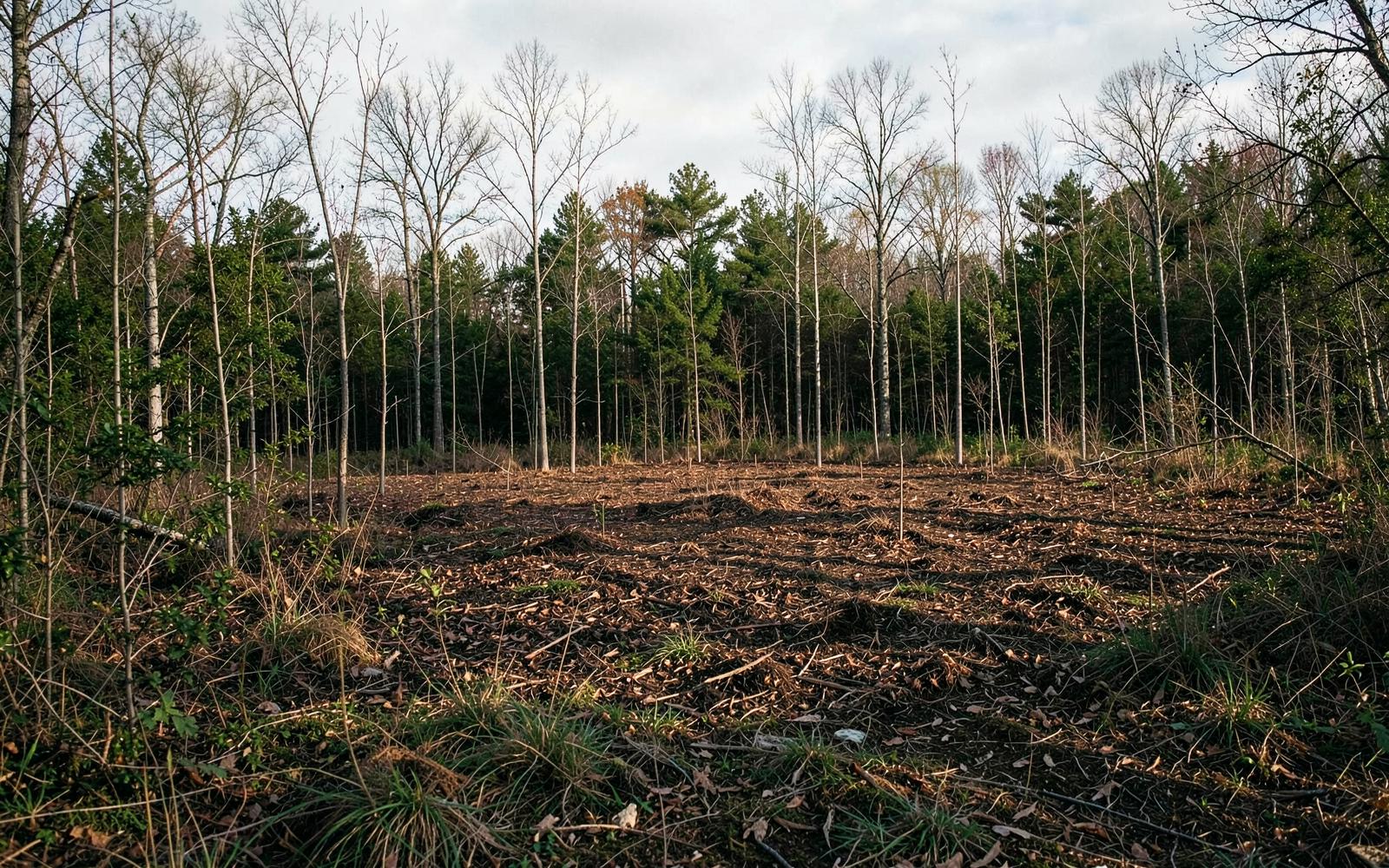

The honest answer ranges from two hours to two days. Here is what puts a given acre at one end of that range or the other.
Timeline questions usually mean scheduling questions. You want to know whether this is a Saturday, a week, or a month — so you can plan the fence, the build, the closing, or the hunting season around it.
The working ranges
For forestry mulching with a single machine, on ground a machine can actually work:
- Light brush, scattered saplings, flat — 2 to 4 hours per acre
- Medium density, stems to 6 inches — 4 to 8 hours per acre
- Heavy cover, dense understory, larger stems — 8 to 16 hours per acre
- Mature woods with significant timber — a full day or more per acre, often with a different approach entirely
Add grubbing and haul-off and you are into multi-day operations per acre with additional equipment and trucks.
What stretches the clock
Stem size, again. A mulching head eats 3-inch material continuously. At 10 inches it has to work each trunk. That is not a small difference — it is often the single biggest factor in how long an acre takes.
Repositioning. Long straight passes are efficient. A property broken up by fence lines, ditches, wet spots, rock, or trees you want left standing means constant repositioning, and repositioning is time with the head off the ground.
Slope. Steeper ground means slower travel, more careful positioning, and sometimes working only across the slope rather than up and down it. Figure meaningfully longer on anything above 20%.
What you want left standing. "Clear it all" is fast. "Leave the oaks and the walnut, take everything else" is careful, selective work, and careful work takes longer. Worth it, usually — but budget the time.
Ground moisture. Soft ground either slows the machine or stops it. Indiana and Ohio clay after a wet stretch can push a scheduled job out by weeks, and pushing through anyway means ruts you will be fixing later.
The parts people forget
Mobilization. Getting equipment to your property is real time. For a small job it can be a meaningful share of the day. This is why a one-acre job rarely costs one-fifth of a five-acre job — the setup is nearly the same.
Weather windows. In the Midwest, the frozen ground of January and the dry stretches of late summer are the best working conditions. Spring thaw and a wet fall are the worst. A job that takes three days of machine time might occupy three weeks of calendar.
Walk-through and layout. On selective work, marking what stays takes time up front and saves much more later.
Planning realistically
If you need land cleared for a specific date — a build start, a closing, a season opener — work backward and add margin. A good rule for Midwest work: take the machine-time estimate and roughly double it for calendar planning during wet parts of the year.
Winter is genuinely underrated. Frozen ground carries equipment well, there is no leaf cover hiding what you are dealing with, and schedules are usually more open.
Getting a real estimate for your property
Acreage alone will not do it. What helps: the acreage, the biggest trunks out there, how thick it is, how steep, how equipment gets in, and what you want left standing.
Start with the pricing tool for a range and rough timeline, or book a walkthrough if the property is large, steep, or complicated.