
The single most common question after a mulching job. How thick it will be, how long it lasts, whether you can plant through it, and what it is doing for your soil.
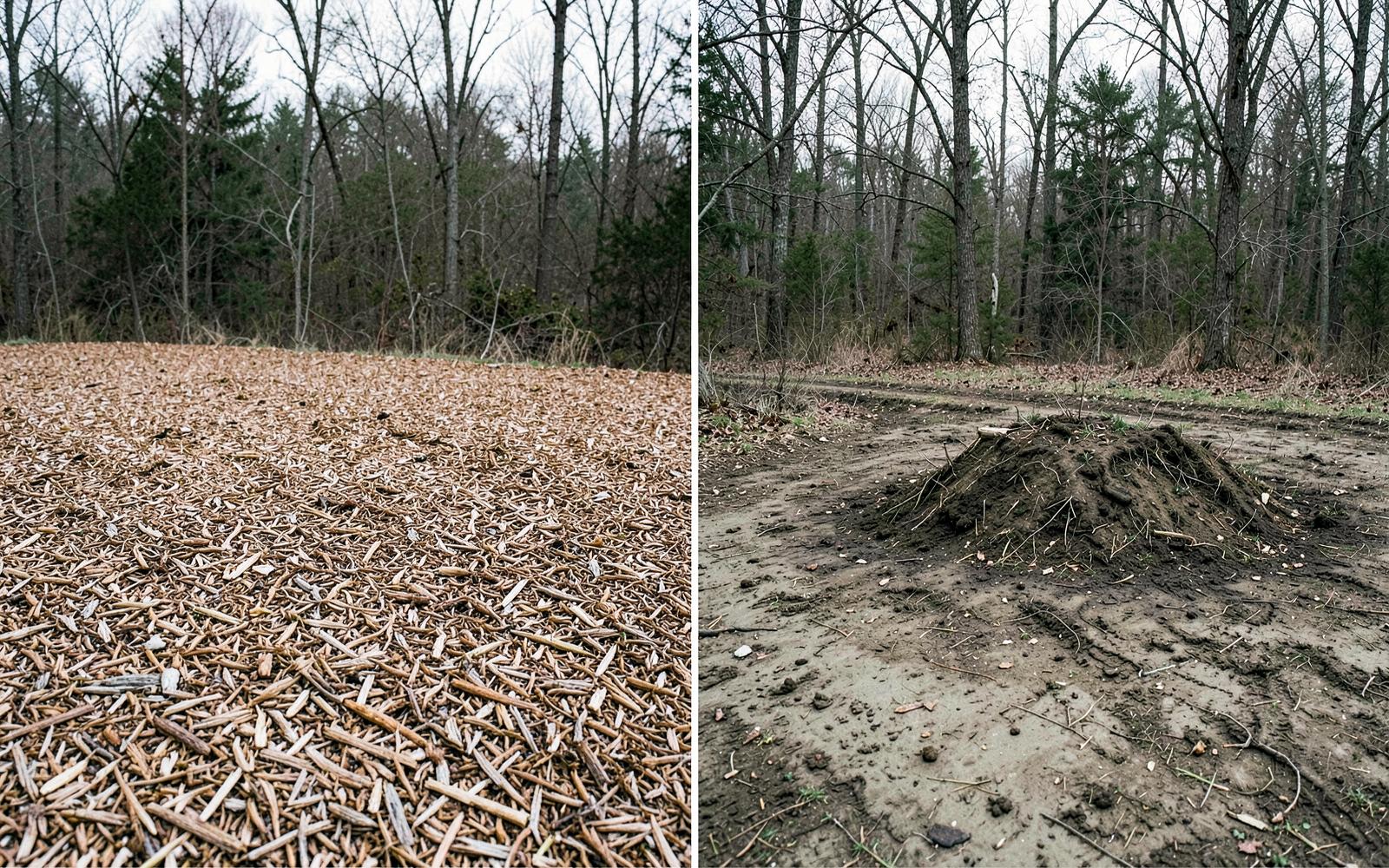
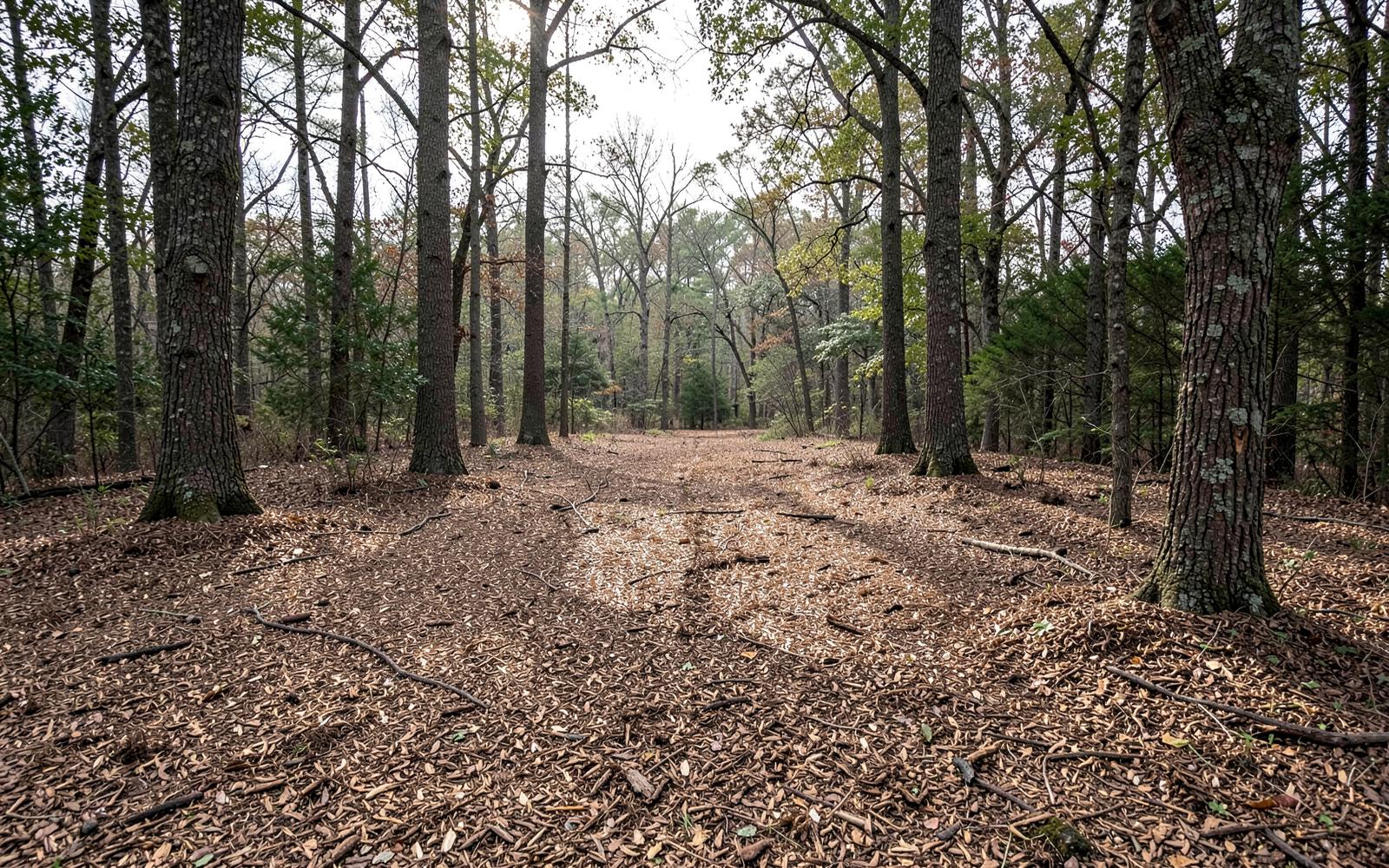
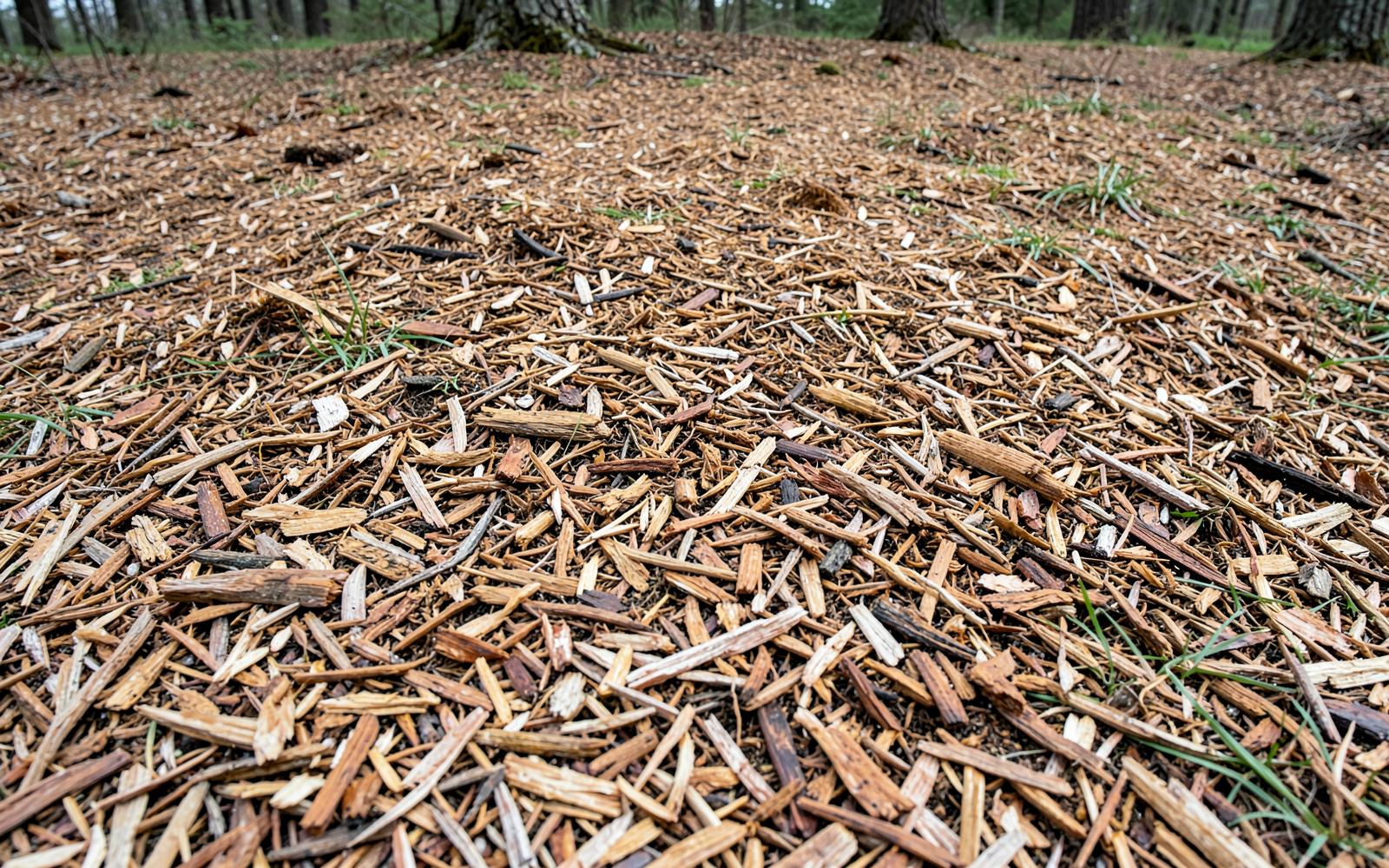
When a mulching head grinds standing brush, all that material has to go somewhere. It goes on the ground, and it stays there. Understanding what that layer does is the difference between being pleased with the result and being surprised by it.
How thick
Depends entirely on how much was standing.
- Light brush — one to two inches, barely noticeable within a season
- Medium cover — two to four inches
- Heavy woody growth — four to eight inches, sometimes more in the thickest spots
It will not be uniform. Where the cover was heaviest, the layer is deepest. That is physics, not sloppiness — though a good operator will spread rather than leave windrows.
How long it lasts
In the Indiana and Ohio climate, with real humidity and a proper freeze-thaw cycle, most of it breaks down over one to three years.
- Fine material — mostly gone in a season
- Medium chips — one to two years
- Larger chunks from bigger stems — two to four years
Warm, wet weather accelerates it. A dry summer slows it down.
What it is doing for you
Holding moisture. The layer acts like a blanket. Ground underneath stays damper through July and August than bare soil would.
Suppressing regrowth. Seeds need light and soil contact. The layer denies both. It will not stop anything coming back from an established root system, but it seriously slows new germination.
Preventing erosion. On any grade, this is the big one. The mat absorbs raindrop impact and slows sheet flow. Compare it to bare disturbed soil after a two-inch rain and the difference is dramatic.
Feeding the soil. As it decomposes it adds organic matter, which on Midwest clay is genuinely valuable — better structure, better drainage, more biological activity.
The nitrogen question
Woody material has a high carbon-to-nitrogen ratio. As microbes break it down they pull nitrogen from the surrounding soil, which can temporarily leave less available for plants.
In practice, on mulch sitting on the surface rather than tilled in, this is a modest and shallow effect. If you are seeding right away, a starter nitrogen application handles it. If you are tilling the mulch into the soil, the effect is much larger and you should plan for it.
Can you plant through it?
Grass and pasture seed — yes, but results improve a lot if the layer is thin or has broken down some. Where it is thick, either rake it back, wait a season, or expect patchy establishment. Frost seeding in late winter works well on mulched ground.
Food plots — a light layer is fine and often helpful. A thick layer needs to be worked or given time.
Trees and shrubs — plant through it. Pull the layer back from the trunk itself, but otherwise it is doing exactly what you would buy mulch to do.
Row crops — this needs the mulch incorporated and the stumps out. Different job.
When the layer is a problem
Building sites. It has to come off before a pad goes in. Organic matter under a foundation decomposes and settles.
Immediate dense turf. If you want lawn-quality grass next month, thick mulch is in the way.
Fire-sensitive situations. A thick dry layer near structures is worth thinking about. Keep it thinner close to buildings.
Windrows vs. spread
Ask about this specifically. Some operators leave material piled in rows where the machine passed. Spread evenly, the layer works as described above. Left in windrows, you get thick strips that smother and thin strips that do nothing.
Spreading takes a bit more time. It is worth asking for.
Questions about what your ground will look like afterward? Ask before you book.