
Mulching is priced by machine hours, not by acres. Once you understand that, the spread between a $600 acre and a $2,500 acre makes complete sense.
Here is the thing that makes mulching quotes confusing: contractors quote per acre, but the work is actually per hour. Acreage is just the unit everyone agreed to talk in.
A machine costs roughly the same to run every hour it runs. What changes is how many hours an acre takes — and that varies by a factor of five or more.
Typical ranges
Midwest market ranges, not quotes:
- Light brush, saplings, open ground — roughly $500 to $1,200 per acre
- Medium density, stems to 6 inches — roughly $1,200 to $2,000 per acre
- Heavy cover, dense understory, larger stems — $2,000 to $3,500 per acre
- Wooded with significant timber — often quoted hourly rather than by the acre
The five things that move it
1. Stem diameter. The dominant factor. Material under four inches feeds continuously. At eight inches and up, the head works each trunk individually and production drops hard. Two properties with identical acreage and identical density but different stem sizes can differ by double.
2. Density. Stems per acre. A solid wall of honeysuckle can be slower than scattered mature trees, because there is no room to maneuver and no clean bite.
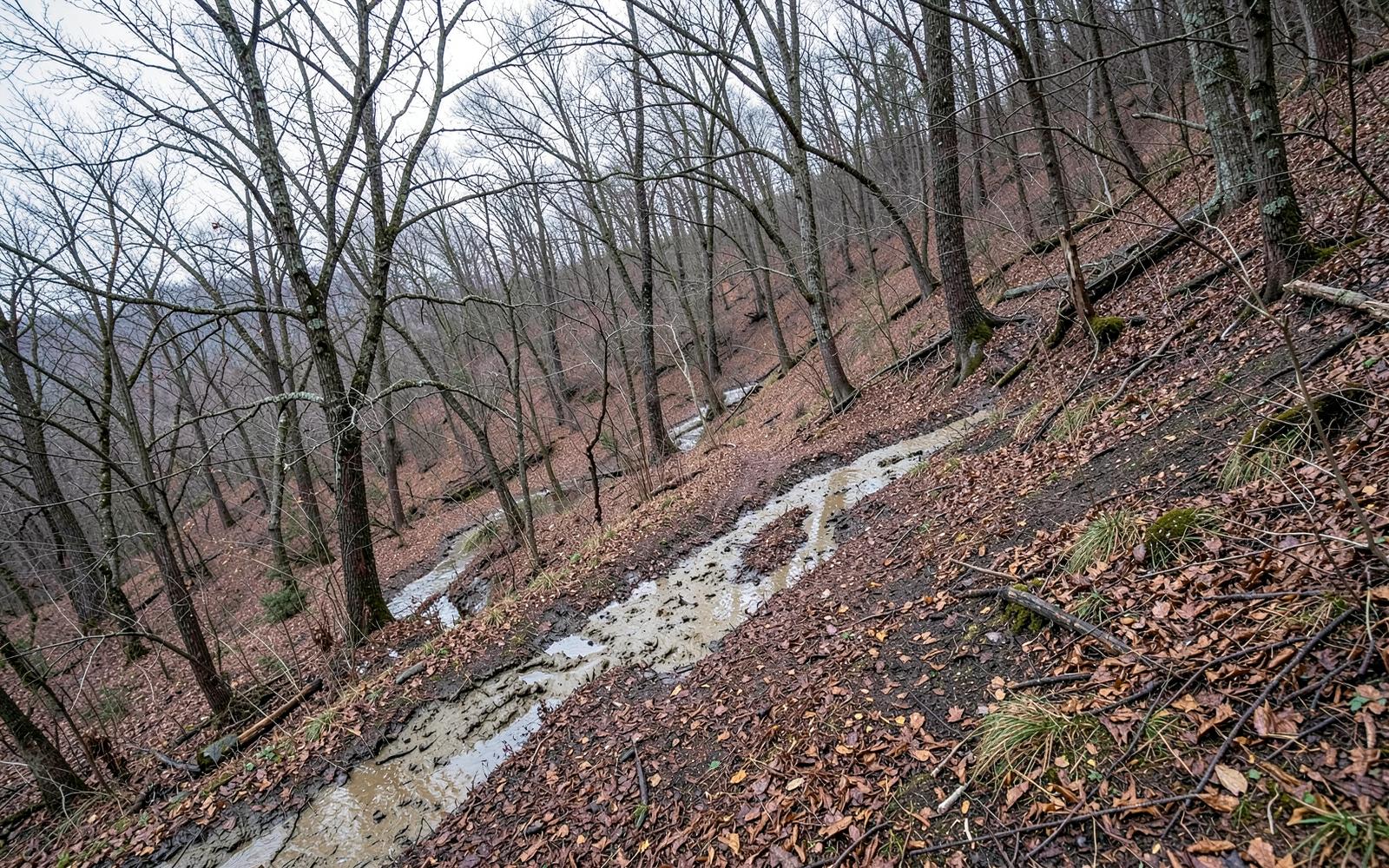
3. Slope. Above roughly 20% grade, everything slows — travel, positioning, and how much can safely be done in a pass. Wet slopes may not be workable at all.
4. Access. Gate width, bridge and culvert weight limits, and how far equipment must travel from the trailer to the work. Mobilization is real cost, and it is why the first acre always costs more than the fifth.
5. Total acreage. Bigger jobs price better per acre. The setup cost spreads across more work. A one-acre job and a ten-acre job do not differ by 10x.
What is usually included
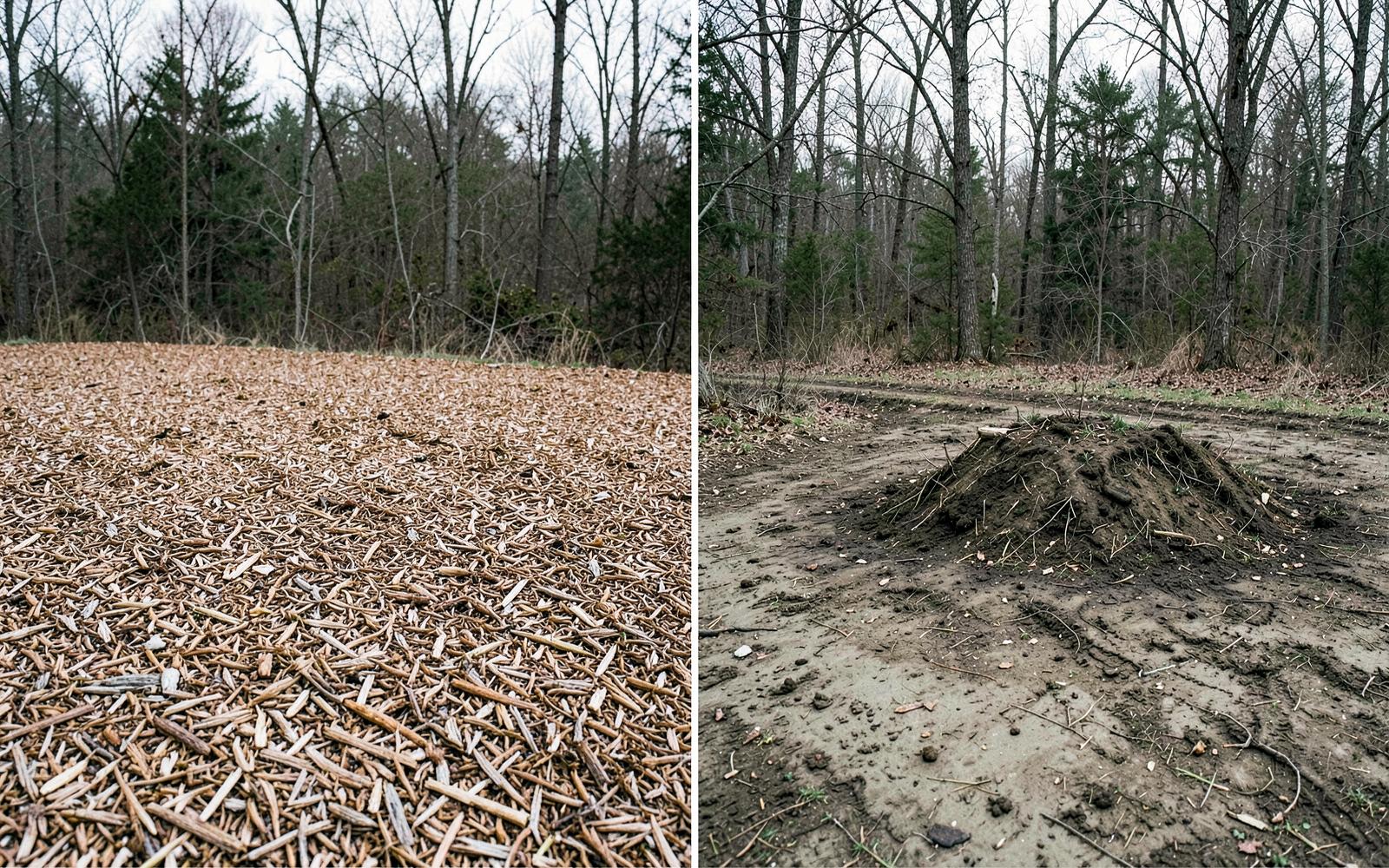
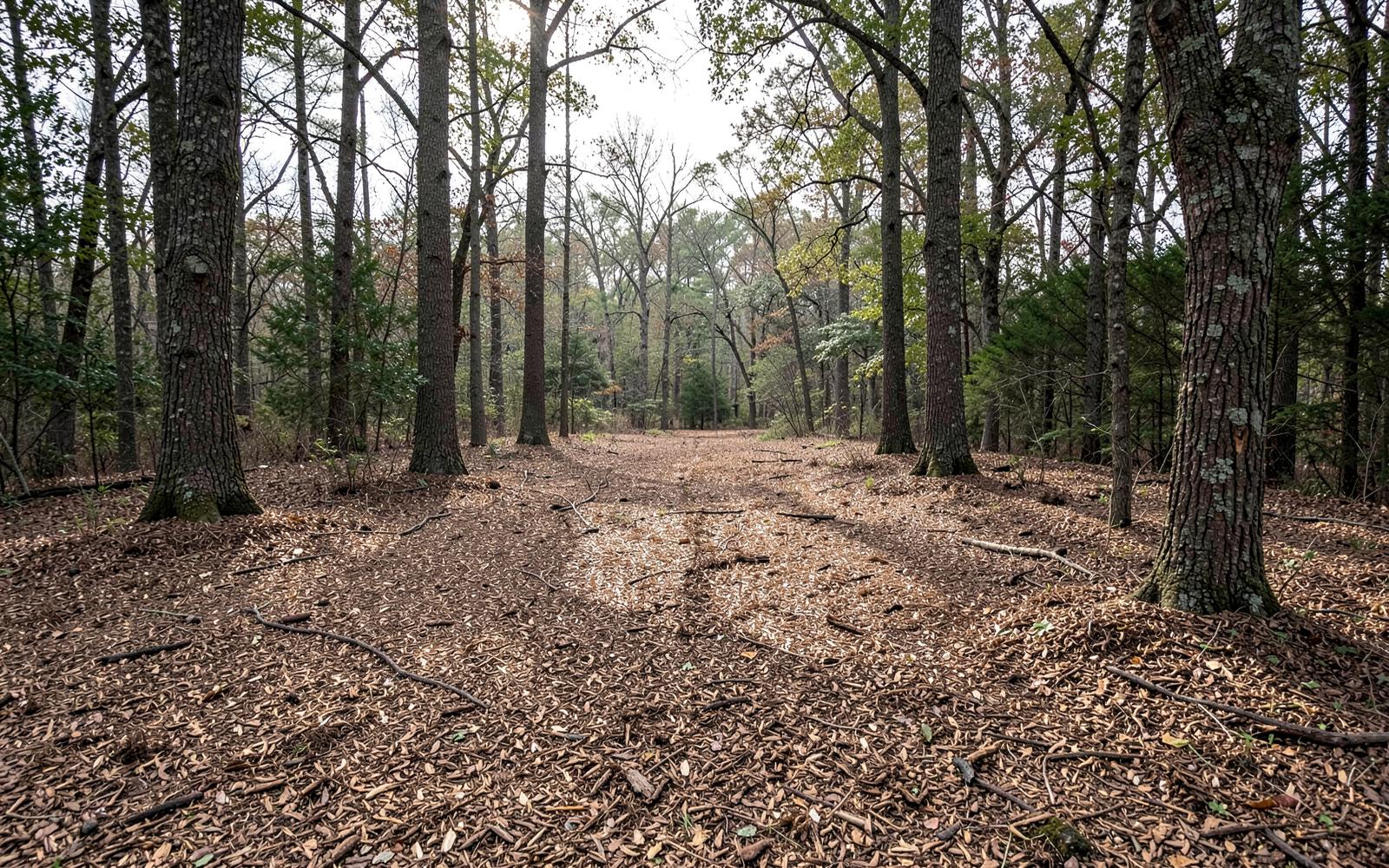
- The mulching itself, material spread as a layer
- Standard mobilization within the service area
What is usually not
- Stump grinding or grubbing
- Hauling anything off
- Seeding or reclamation
- Follow-up maintenance passes
- Long-distance mobilization
- Selective work requiring layout and marking
Confirm every one of these in writing. This list is where quotes diverge.
Ways to bring the number down
Time it right. Winter mulching on frozen ground is efficient — good traction, no leaf cover, and clearer sight lines. Schedules are typically more open too.
Do more at once. If you know you will want another five acres next year, pricing it together usually beats two separate mobilizations.
Be flexible on scheduling. Filling a gap between committed jobs is worth something to a contractor and often to you.
Loosen the spec where it does not matter. Uniform mulch depth across a hunting property is not worth paying for. Around a house, it might be.
Combine with neighbors. Adjacent properties clearing together share the mobilization.
The thing not to cheap out on
The lowest bid on overgrown ground is frequently the one that assumed lighter conditions than you actually have. That gets discovered mid-job and turns into a change order, or worse, a job that stops half finished.
A quote from someone who has actually seen your property — or at least good photos of the thickest parts and biggest trunks — is worth more than a lower number from someone who has not.
Get a range for your acreage, or send photos and we will price it properly.