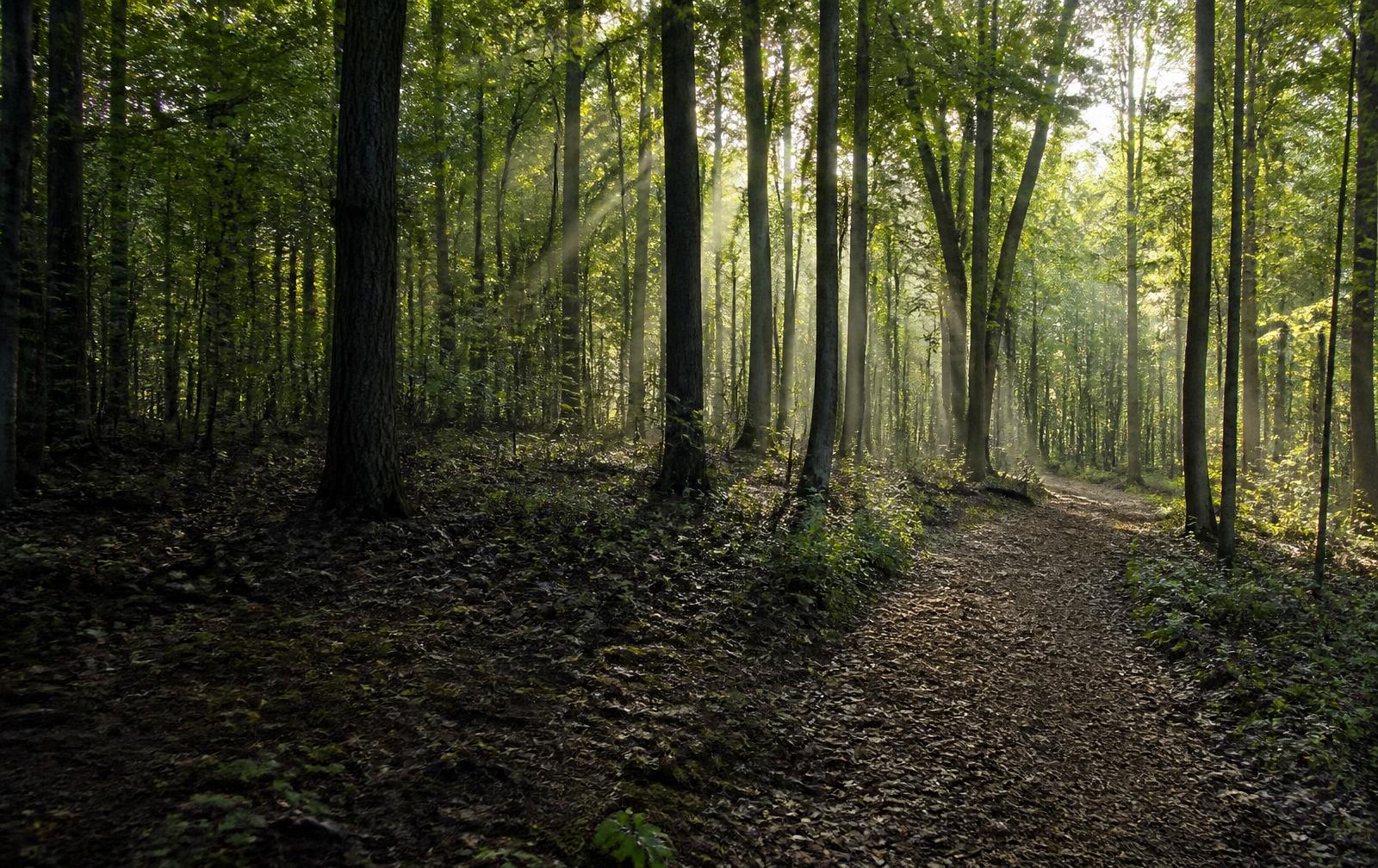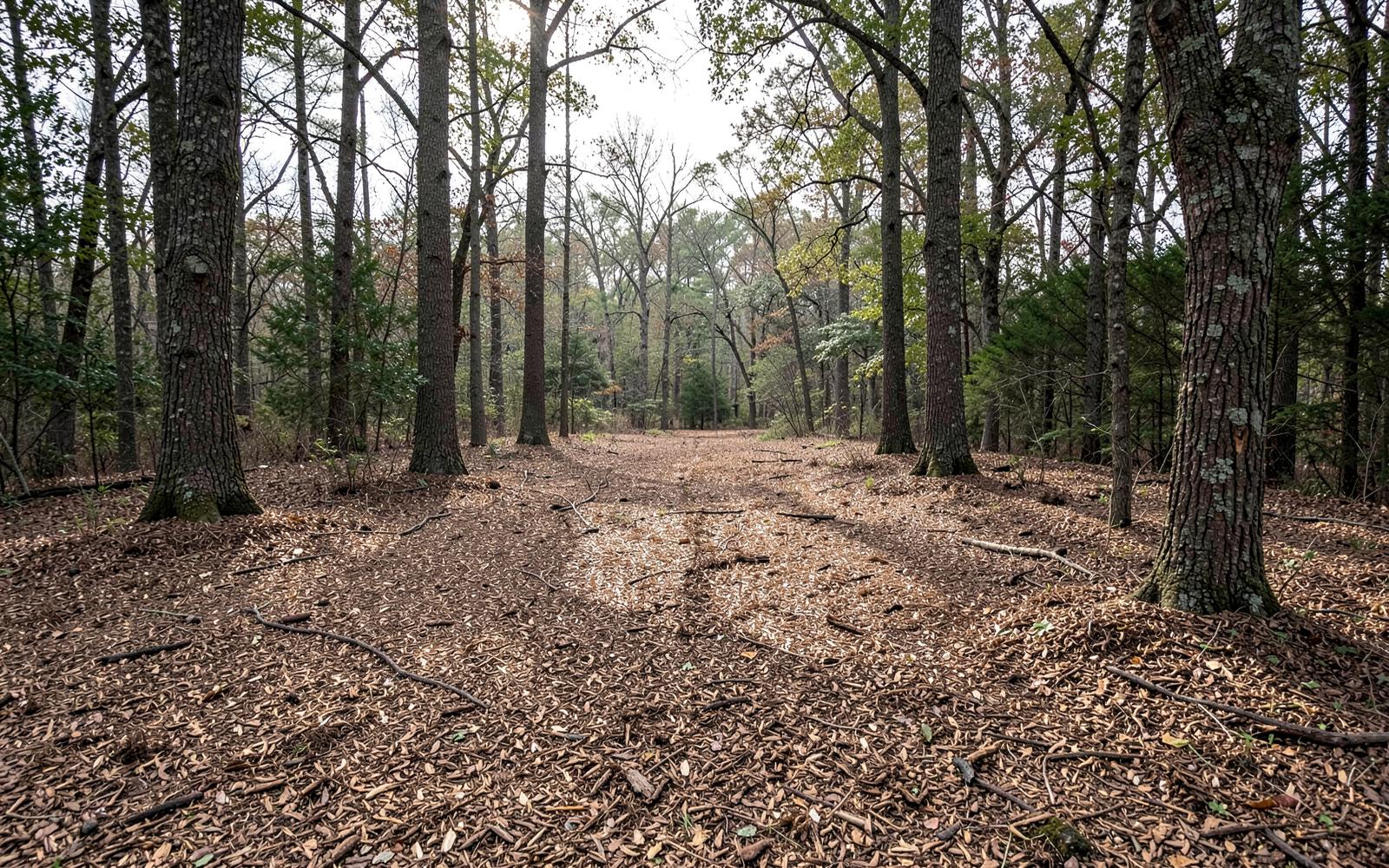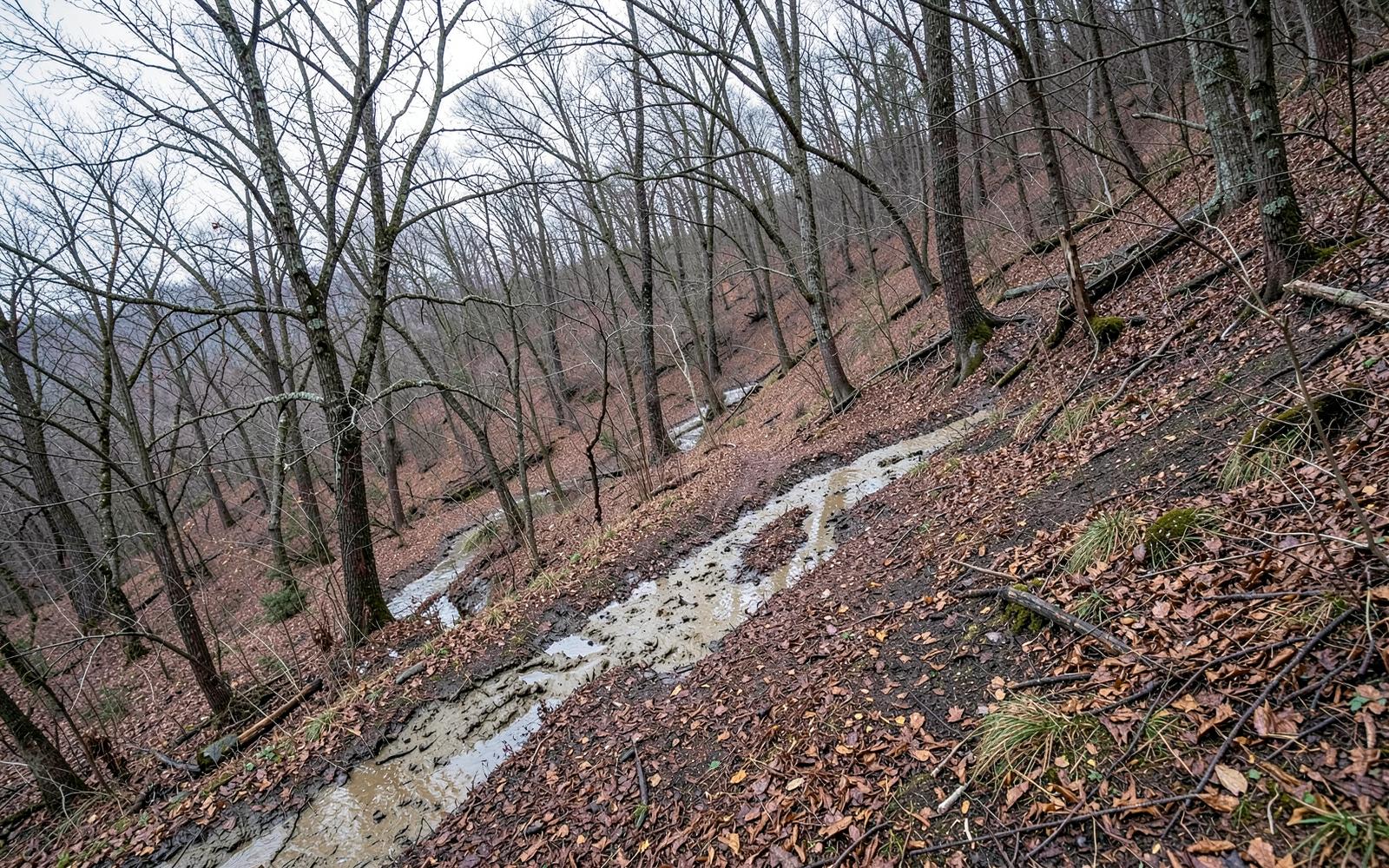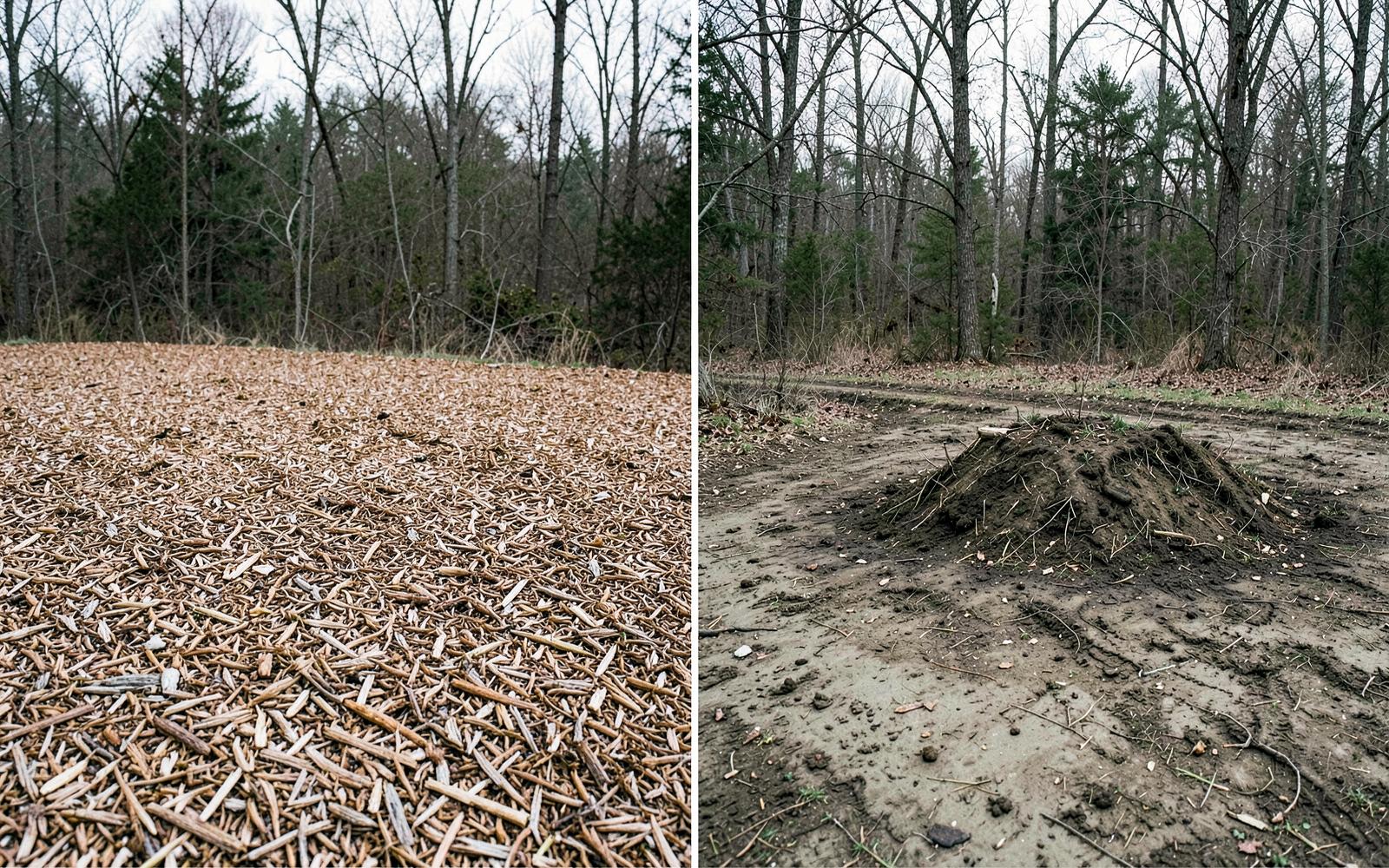

One grinds everything in place and leaves a mulch layer. The other pushes, piles, and hauls. Most properties have a clear right answer, and it usually comes down to what you plan to do with the ground.
These are not competing products. They are different operations that produce different ground, and choosing wrong costs you either money or a redo.
Forestry mulching
A mulching head mounted on a skid steer or excavator grinds standing vegetation where it stands. Material falls as a layer across the surface. One machine, one pass, nothing leaves the property.
You end up with: open ground under a two- to six-inch mulch layer, roots and stumps still in place, soil essentially undisturbed.
Strengths
- Fastest route from overgrown to usable
- No piles, no burning, no burn permits
- Almost no soil disturbance, which matters enormously on slopes and near water
- Erosion protection from day one
- Organic matter stays on your land
- Works in tighter spaces and on rougher ground than a dozer operation
- Drive on it the same day
Limits
- Stumps and roots stay
- Large-diameter timber is slow or impractical
- Aggressive species regrow from intact roots
- Not sufficient prep for foundations, ponds, or row crops
Traditional clearing
Dozers and excavators push vegetation over, roots and all, into piles. Material gets burned, buried, or hauled off.
You end up with: bare, disturbed soil, stumps removed, ready to be graded.
Strengths
- Removes the root mass, so regrowth is far less of an issue
- Handles timber of any size
- Genuinely prepares ground for construction
- One and done on species that would otherwise come back
Limits
- Significant soil disturbance and compaction
- Serious erosion exposure until the ground is stabilized
- Piles, burn permits, or trucking and dump fees
- Topsoil often gets scraped and lost along with the roots
- Meaningfully more expensive
- Weather-sensitive — a dozer on wet clay does real damage
The deciding question
What is going on this ground?
| Intended use | Usually the right call |
|---|---|
| Pasture or grazing | Mulching |
| Hunting land, trails, food plots | Mulching |
| Fence lines and boundaries | Mulching |
| View corridors | Mulching |
| Slopes and streamside ground | Mulching |
| Home, barn, or shop site | Traditional (or both) |
| Pond | Traditional |
| Septic field | Traditional |
| Row crops | Traditional |
| Driveway roadbed | Traditional along the route |
The combination most projects actually want
On a building project, the efficient sequence is usually mulch the whole property, then excavate only the footprint.
You get every acre opened up and usable at the cheaper rate, and you pay for the expensive below-ground work on the fraction of the site where it genuinely matters. Mulching first also makes the excavation faster, because the operator can finally see the ground.
On cost
Mulching is typically a fraction of full clearing per acre — often less than half — because nothing is handled twice and nothing leaves the property. Traditional clearing carries equipment, trucking, and disposal costs that mulching simply does not have.
But cheaper is only cheaper if it does the job. Mulching a building pad and then paying to grub it anyway costs more than doing it right the first time.
Regrowth, honestly
Mulching does not kill roots. In Indiana and Ohio, honeysuckle, autumn olive, and multiflora rose will push back within a season or two.
That is manageable and expected. A maintenance pass at 12 to 24 months, sometimes with targeted treatment on the worst species, keeps ground open at a fraction of the original cost. What it is not is a one-time permanent fix — if you need that, you need the roots out.
Tell us what the land needs to do and we will tell you which approach fits. Get a price range now.