
After a bad storm, the order you do things in determines what your insurance covers and whether anyone gets hurt. A practical sequence.
Indiana and Ohio get straight-line winds, ice storms, and tornadoes, and rural properties absorb the worst of them. Here is how to work through the first three days without making it worse.
Hour 0 to 2: safety only
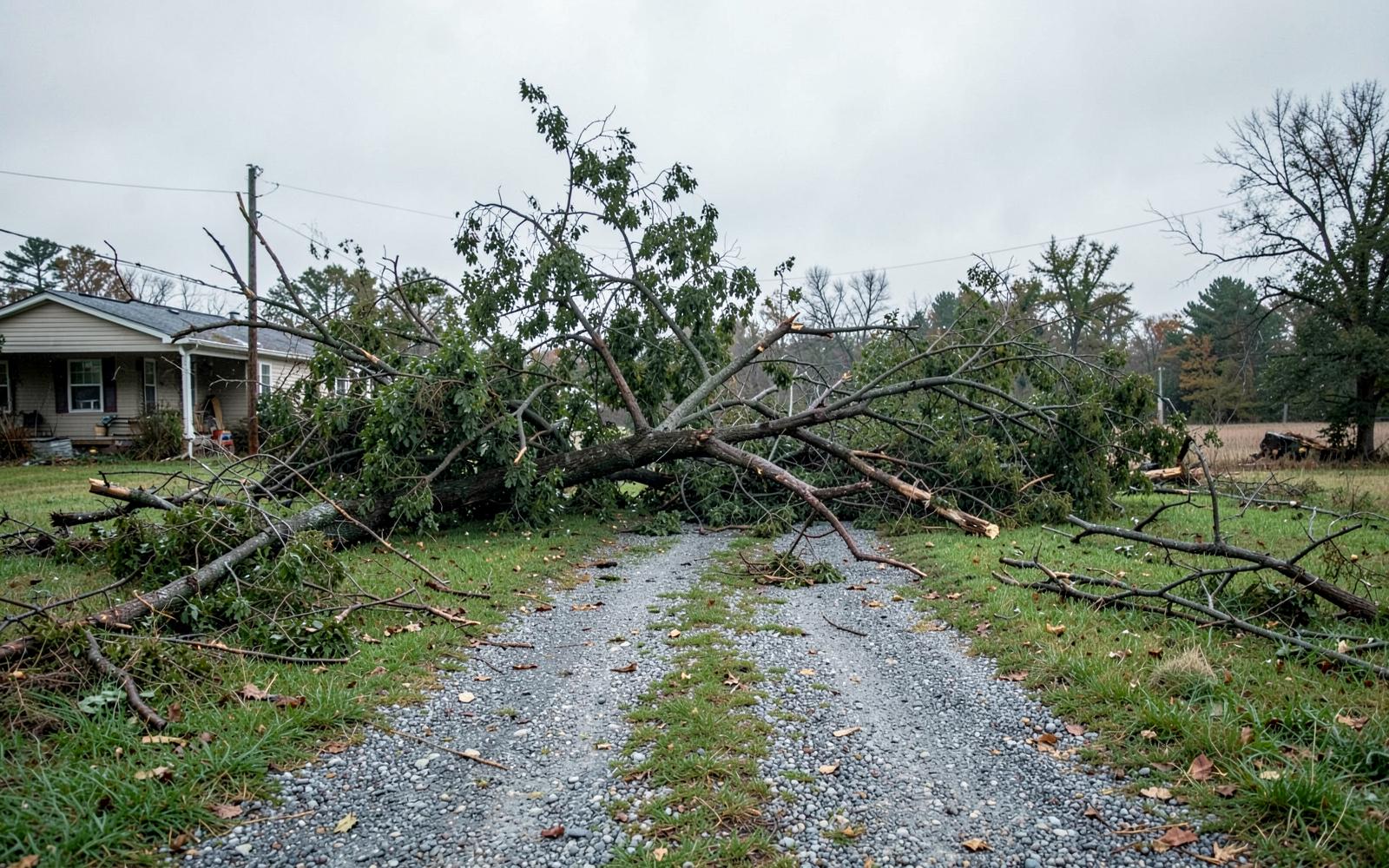
Assume every downed line is live. Stay well back, keep others back, and call the utility. Do not touch anything a line is touching — including fence, which conducts a long way.
Do not walk under hanging limbs. Widowmakers — broken limbs lodged in the canopy — kill people during cleanup, not during the storm.
Watch for leaning trees with lifted root plates. A tree that is partly uprooted is holding tension and can move without warning.
Check on people and livestock first. Fences down means animals out, often onto roads.
If gas smells present, leave and call. Falling trees pull meters and lines.
Hour 2 to 24: document before you move anything
This is the step people skip and regret.
Photograph and video everything before cleanup. Wide shots showing context, close shots showing damage, and photos that establish what hit what. Timestamps matter. Photograph damage to buildings, fence, vehicles, equipment, and standing timber.
Call your insurer and open a claim. Ask specifically what is covered: structures usually are; tree removal is often covered only when a tree hit something insured; debris removal may have a sublimit; loss of standing timber usually is not covered on a homeowner policy.
Keep every receipt from the moment cleanup starts, including your own equipment and fuel.
Write down what happened while it is fresh — time, conditions, sequence.
Day 1 to 3: stabilize, do not finish
The goal in the first days is preventing further damage, not completing cleanup.
Clear access first. Your lane, the route to the road, and the path to livestock and water. Everything else depends on being able to move.
Tarp and cover openings in roofs and buildings. Insurers generally expect reasonable steps to prevent additional damage, and failing to take them can affect a claim.
Get fence back up where livestock are out. Temporary electric is fine for now.
Move what is at risk — equipment, hay, anything under a compromised structure.
Leave the dangerous trees alone. Hung limbs, leaning trunks with root plates lifted, and anything near a line are not DIY work. This is where most post-storm injuries happen.
What to hire out
Anything involving power lines. Utility only.
Trees under tension. A trunk bent over and pinned is storing enormous energy. Cutting it wrong is how people get killed.
Trees on structures. Removal has to be rigged so the tree comes off the building rather than through it.
Large-scale debris. Acres of downed timber is equipment work, not chainsaw work.
The realistic cleanup sequence
Week 1: access, safety hazards, temporary repairs, insurance documentation. Weeks 2–4: structural repairs, fence rebuilding, hazard tree removal. Month 2 onward: debris processing, stump work, restoring ground.
Debris volume after a serious storm is almost always larger than it looks. A wood line that came down can be many truckloads or many hours of mulching.
What to do with the debris
Mulch in place where the material is spread across ground you are not building on. Fastest, no hauling, no burn permit.
Burn where permitted — check current county rules and any burn ban, which are common after storms when resources are stretched.
Haul off where the volume is concentrated near structures.
Salvage timber if significant merchantable trees came down. Talk to a forester quickly — value drops as logs sit.
Do not sign anything in the driveway
Storm chasers arrive fast. Be careful with anyone who shows up unsolicited, wants a large deposit, cannot produce insurance, or pressures you to sign immediately.
Verify insurance directly with the insurer. Get scope in writing. Do not pay large sums up front.
Afterward
Once the emergency passes, look at what the storm revealed — trees that were already weak, drainage that failed, fence lines that were overdue. Storms tend to expose the deferred maintenance.
We handle storm debris, hazard clearing, and property restoration. For municipalities and property managers needing storm response on contract, contract opportunities are welcome.