
The three species eating Indiana and Ohio property. Cutting them makes them thicker. Here is what actually works.
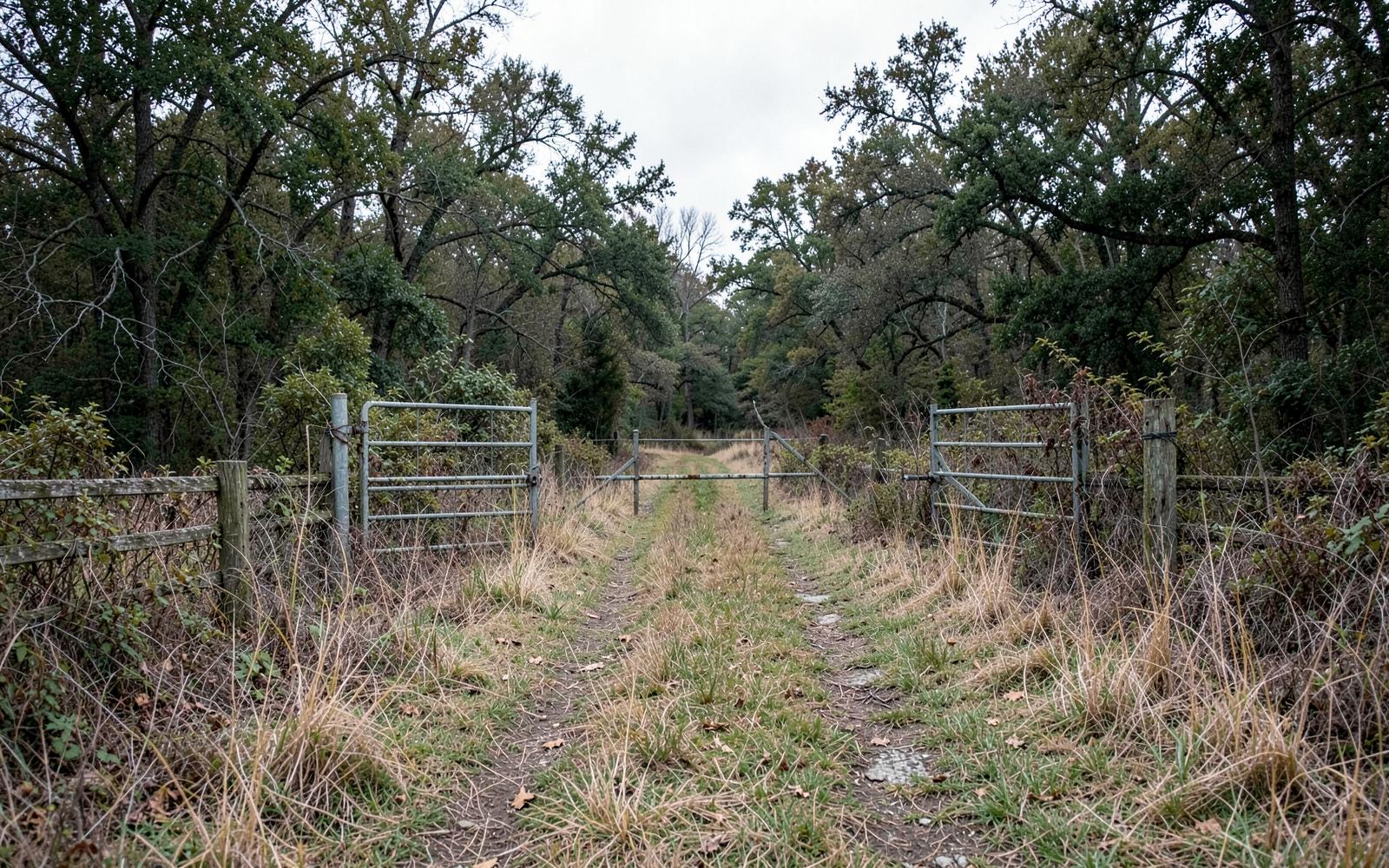
If your woods has a solid green understory you cannot walk through, it is almost certainly bush honeysuckle. If your pasture edge is a wall of silver-backed leaves, that is autumn olive. If you cannot get through the fence line without bleeding, multiflora rose.
All three were planted deliberately decades ago — for wildlife, erosion control, and living fence. All three escaped, and all three now dominate ground they were never meant to hold.
Why cutting alone fails
Every one of these resprouts vigorously from the cut stump and the root crown. Cut a honeysuckle at the base and it returns with five stems instead of one.
Mowing or mulching without follow-up genuinely makes the stand thicker. That is not a reason to skip mechanical clearing — it is a reason not to stop there.
Know what you are fighting
Bush honeysuckle (Amur, Morrow''s, Tatarian). Leafs out earlier than natives and holds leaves later, which is how it shades everything beneath it out. Hollow stems. Red berries that birds spread everywhere. The late-season green in a Midwest woods is almost always this.
Autumn olive. Silvery undersides on the leaves, thorny, nitrogen-fixing — which means it changes the soil to favor itself. Prolific red-speckled berries.
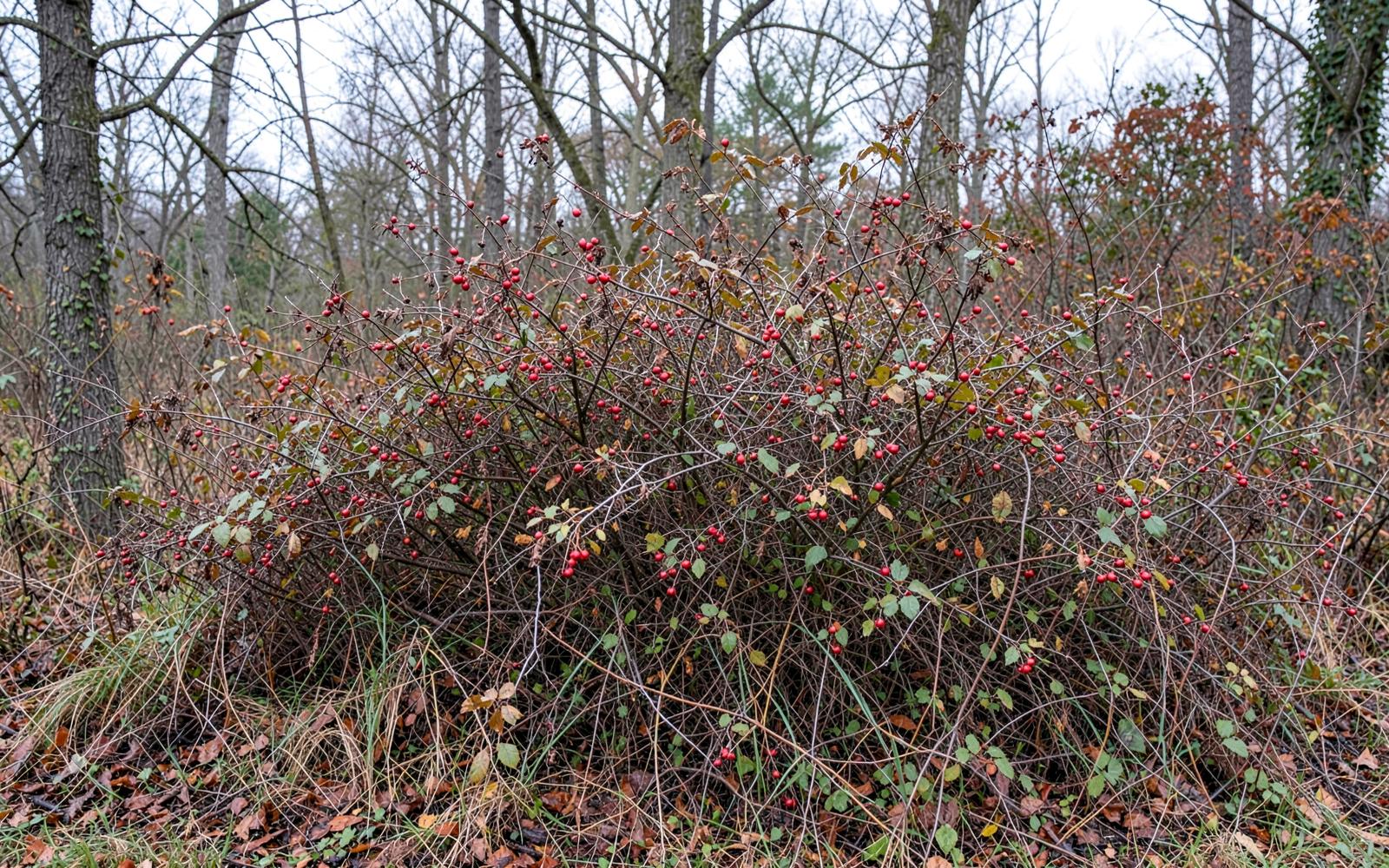
Multiflora rose. Arching thorny canes, white flower clusters, spreads by seed and by canes rooting where they touch ground. Forms impenetrable thickets in pasture and fence line.
What actually works
The reliable answer is mechanical removal plus targeted follow-up treatment, in that order, over two to three seasons.
Step 1 — Reset mechanically. Forestry mulching takes a dense stand to ground level in one pass and covers the soil. This is the only practical way to deal with acreage that is solid thicket. You are not killing it, you are resetting the clock and making everything after this possible.
Step 2 — Treat the regrowth. This is the step that does the killing.
Regrowth is far easier to treat than mature plants: less material, lower to the ground, and actively growing. Common approaches:
- Cut-stump treatment — herbicide applied directly to a fresh cut surface, effective in late fall and winter
- Foliar treatment on regrowth during the growing season
- Basal bark treatment on individual stems
Late fall is often the best window in the Midwest for honeysuckle specifically — it stays green after natives drop leaves, which makes it easy to identify and easy to treat with less risk to surrounding plants.
Always follow the product label. Rates, timing, grazing and haying restrictions, and proximity to water are all on there and all matter. Some products carry meaningful restrictions near water or on land that will be grazed. If you are not comfortable, hire a licensed applicator.
Step 3 — Keep after it. Year two and year three are spot work, not acreage work. Walk it, find the survivors and the new seedlings, treat them. This is where the job is actually won.
The seed bank problem
Even after killing every living plant, the soil holds years of seed, and birds bring more constantly.
Expect new seedlings annually. They pull easily when small and treat easily when young. The property that stays clear is the property somebody walks once a year.
Replace it with something
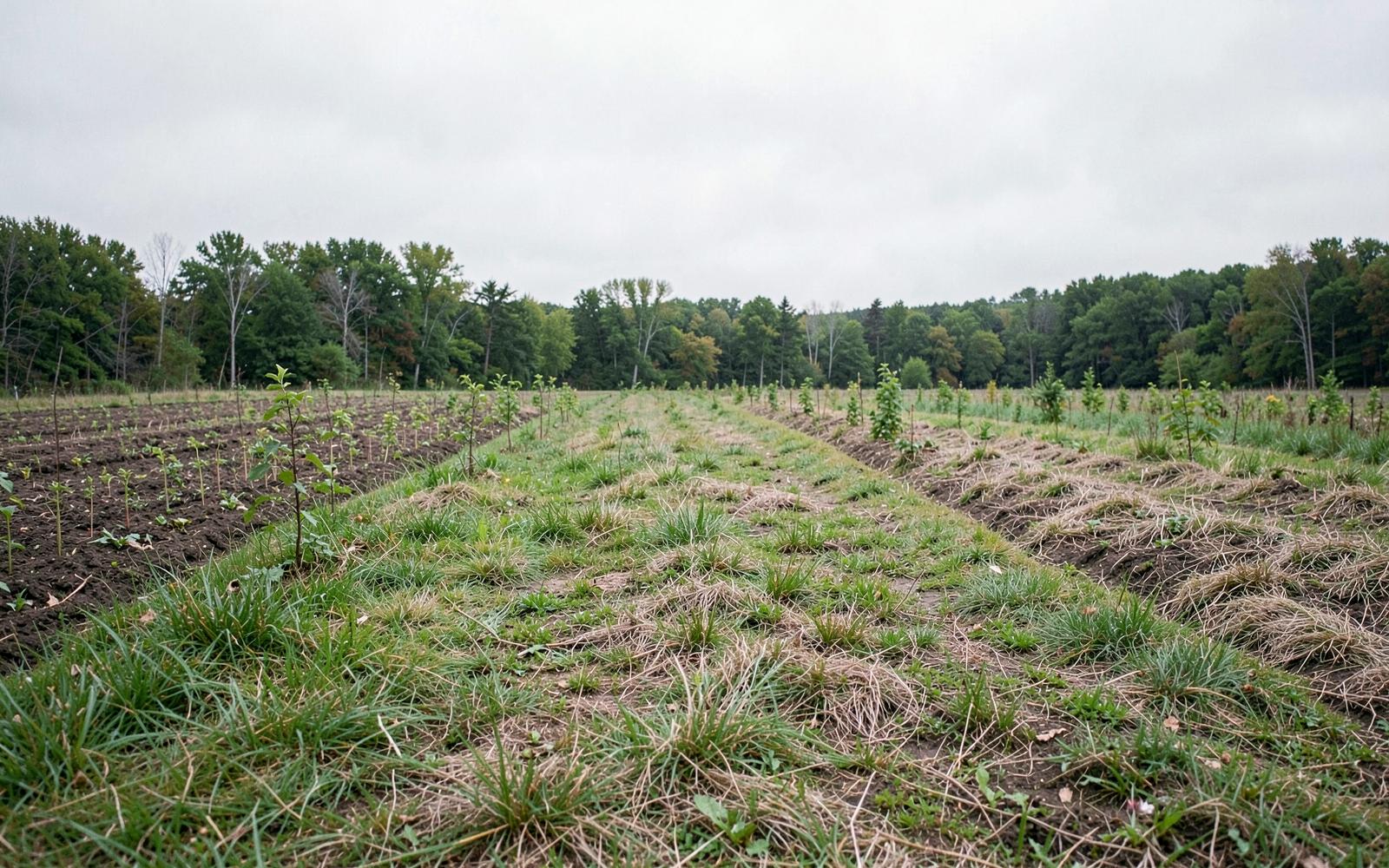
Bare ground invites reinvasion. The single best long-term defense is a competitive stand of something desirable — grass in open ground, native shrubs and regenerating hardwoods in woodland.
In woods, removing honeysuckle often releases suppressed native regeneration that has been waiting for light. That is the payoff, and it can be dramatic within two or three seasons.
Realistic expectations
Year 1: mechanical clearing, first regrowth treatment. Property is open and usable. Year 2: substantial treatment of regrowth and seedlings. Noticeably less work than year one. Year 3: spot treatment. Native vegetation visibly coming back. Ongoing: an annual walk-through.
Anyone promising one-and-done on these three species is selling you a second job.
Where to get help
County soil and water conservation districts in both states, along with the state DNR and extension services, publish current species-specific guidance and can often walk your property. Worth a call before you buy chemicals.
We handle the mechanical side — mulching dense stands back to ground level so the follow-up work is actually feasible.