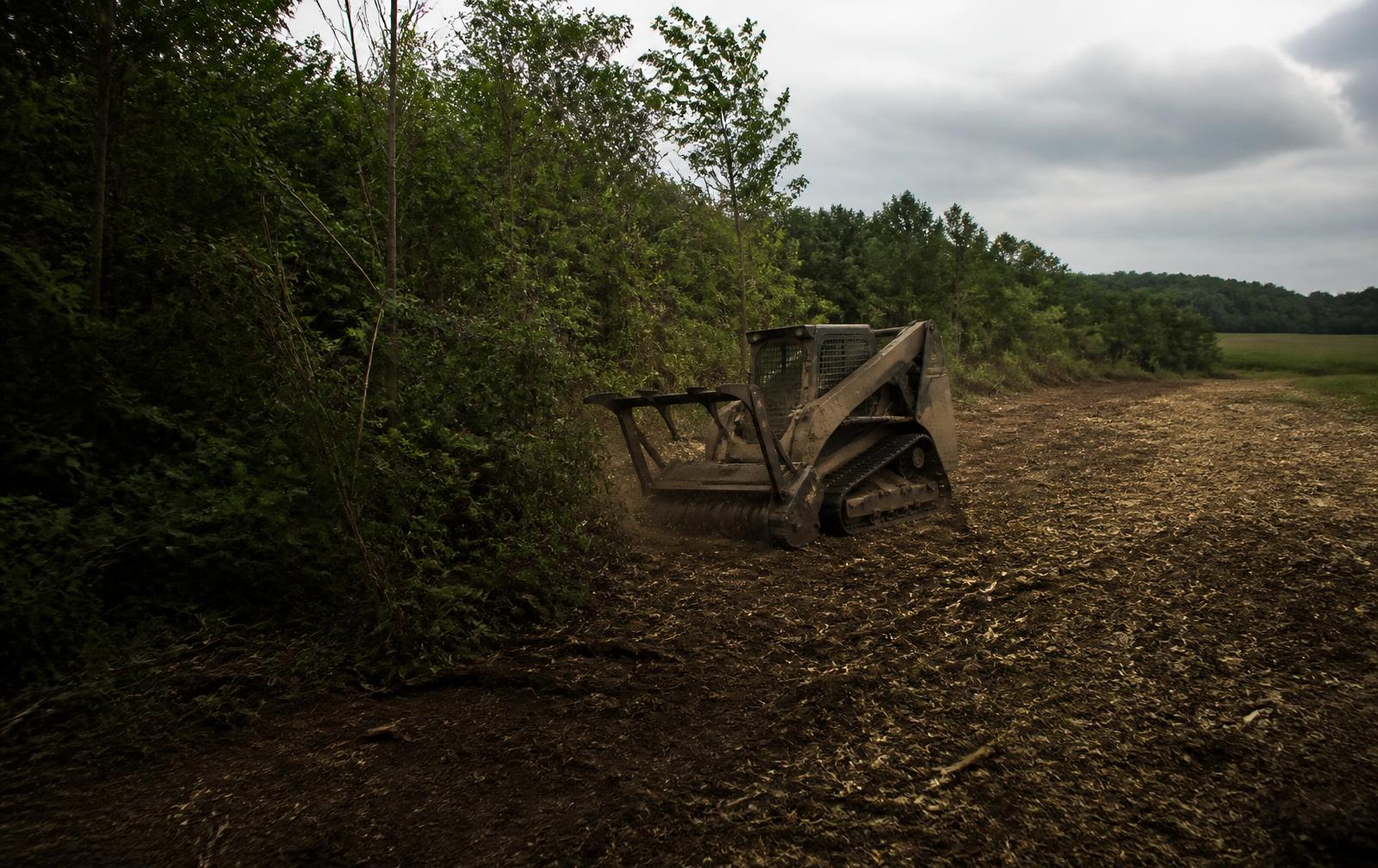

Heavy equipment on your property is a real risk. These ten questions separate the operators who will leave your land better from the ones who will leave you with a problem.
Land clearing is one of the few services where a bad hire can leave permanent damage. Ruts that channel water wrong for a decade. A damaged drain tile nobody finds until the field floods. A neighbor''s tree on the wrong side of a line.
Ask these before anyone starts.
1. Are you insured, and can I see the certificate?
General liability and workers'' compensation, current, with the certificate sent directly from the insurer. If a tree comes down on your barn or someone gets hurt on your property, this is the only thing standing between you and that bill. An uninsured contractor is not a bargain, whatever the quote says.
2. What exactly is included in this price?
Get it written. Does it include stumps? Haul-off? Seeding? Does the mulch get spread evenly or left in windrows? Does the quote cover the whole area or just the accessible parts? Most disputes trace back to this question not being asked.
3. What happens to the material?
Mulched in place, piled, burned, or hauled? Each has a different cost and a different result on your property. If it is being hauled, where is it going and is that included?
4. What will the ground look like when you are done?
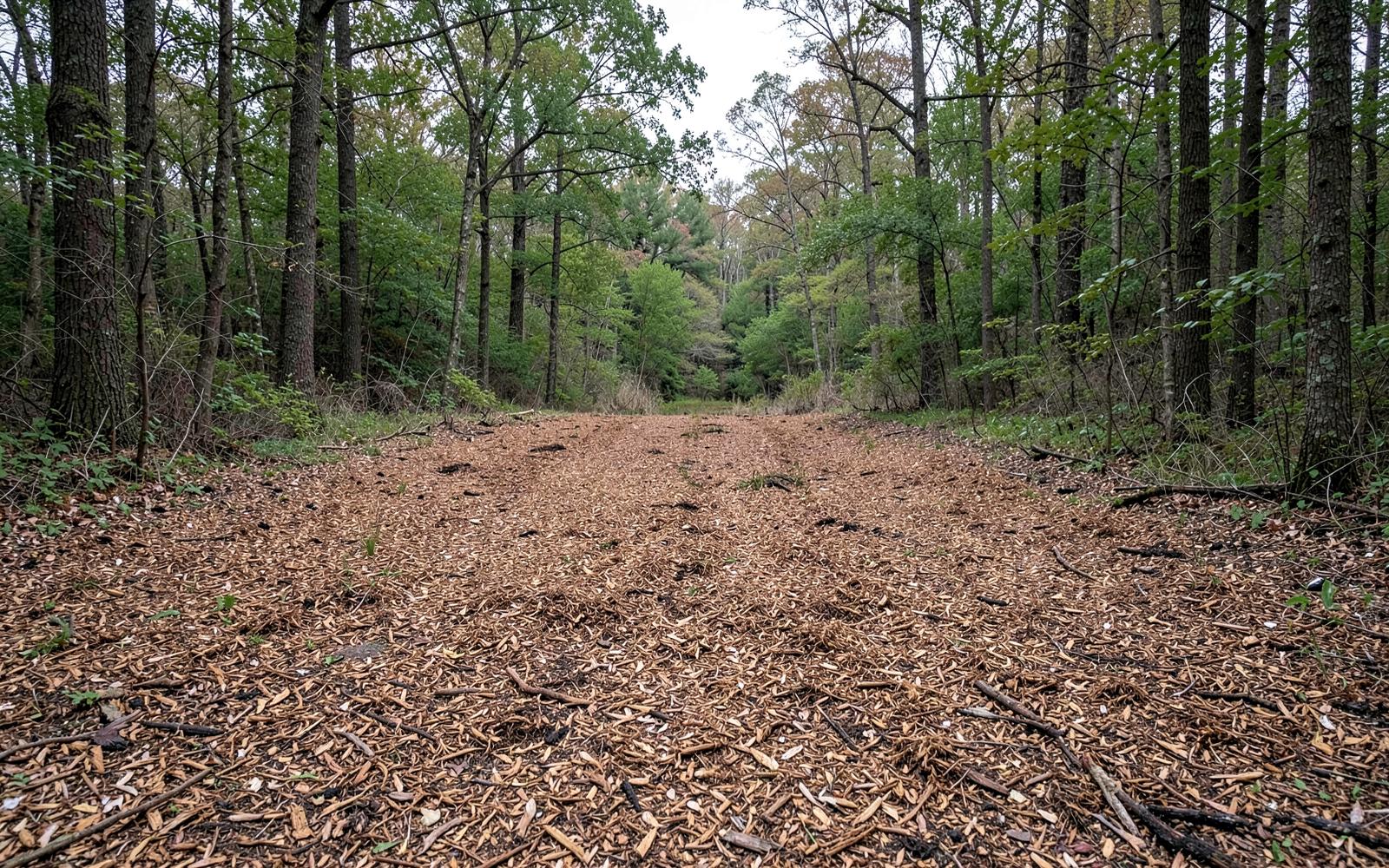
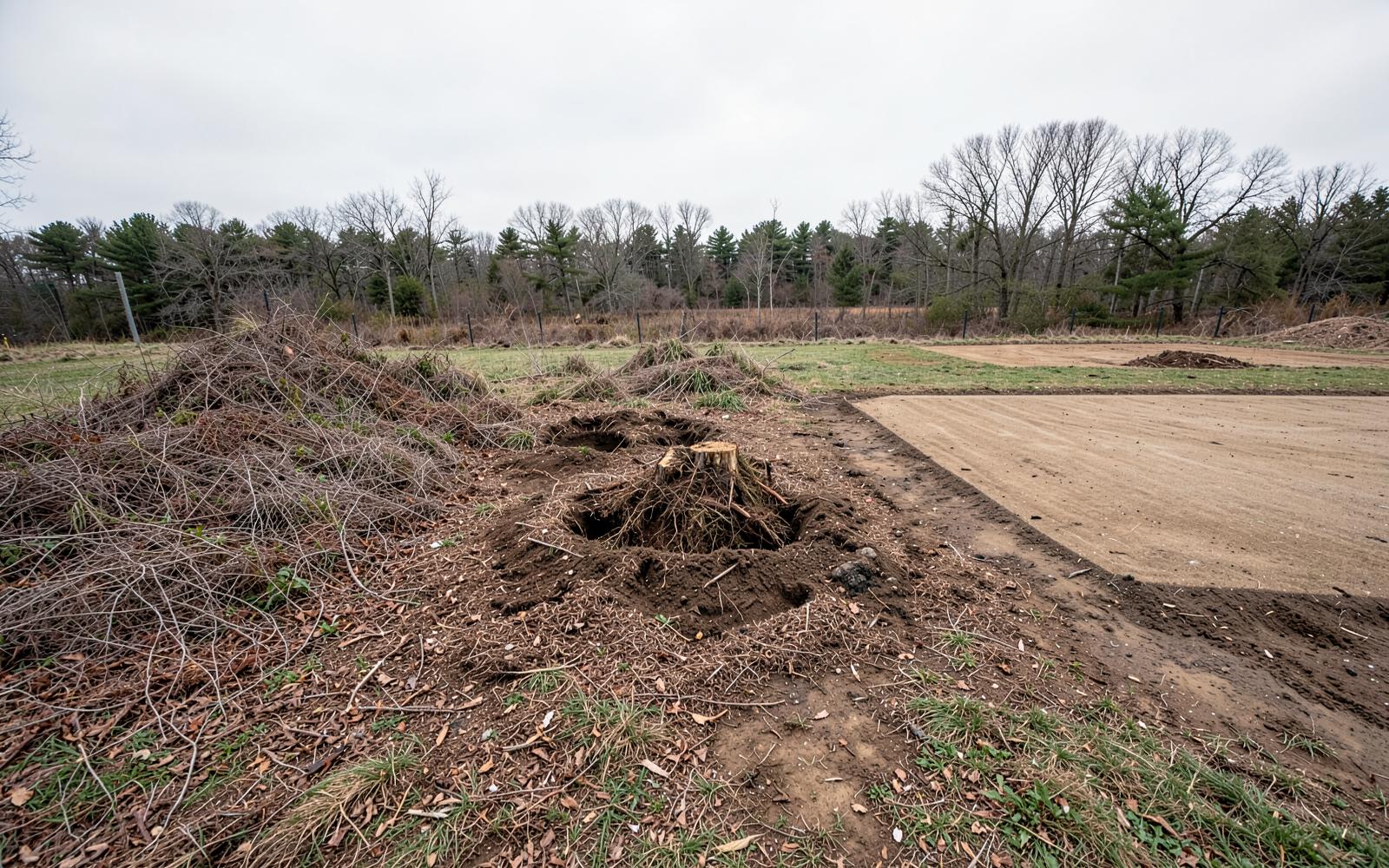
Ask for specifics. A mulch layer? Bare soil? Stumps at grade or ground below? This is the question that most often reveals a gap between what you pictured and what you are buying.
5. How do you handle wet ground?
The right answer is some version of "we stop." An operator who will push through soft conditions to stay on schedule will leave you ruts, compaction, and drainage problems that cost more to fix than the job cost.
6. What are you doing to protect what I want to keep?
Desirable trees, drain tile, septic fields, buried lines, fence, water lines, existing lanes. Walk the property together and mark them. Then confirm who is responsible if something marked gets damaged.
7. Have you called 811?
Utility locates are free and legally required before digging in both Indiana and Ohio. Any grubbing or excavation work needs them. A contractor who shrugs at this is telling you something important.
8. Do I need a permit for this?
Depends on the work. Land disturbance of one acre or more generally triggers a construction stormwater permit — IDEM''s Construction Stormwater General Permit in Indiana, Ohio EPA''s Construction General Permit in Ohio — with exemptions for certain agricultural and forestry activity. Counties add their own rules on floodplains, drainage, burning, and road approaches. A contractor working in your area should know which apply and who pulls them.
9. Can I see recent work like mine?
Not a polished gallery — a property comparable to yours in size, terrain, and cover. Better still, one finished a year or two ago, so you can see how the ground held up and how much regrowth came back.
10. Who is actually operating the machine?
On a job with real consequences, experience at the controls matters more than almost anything else in this list. Ask who will be on your property and how long they have been running that equipment.
One more, for larger jobs
How do you handle change orders? If the work turns out heavier than the quote assumed — and on overgrown ground it sometimes does — how does that get communicated and priced? You want to hear "we stop and talk to you before doing anything that changes the number."
Good contractors welcome these questions. The answers are how you tell.
Ask us all ten. If you are putting work out to bid or need a contractor for recurring commercial, municipal, or utility work, contract opportunities are welcome.