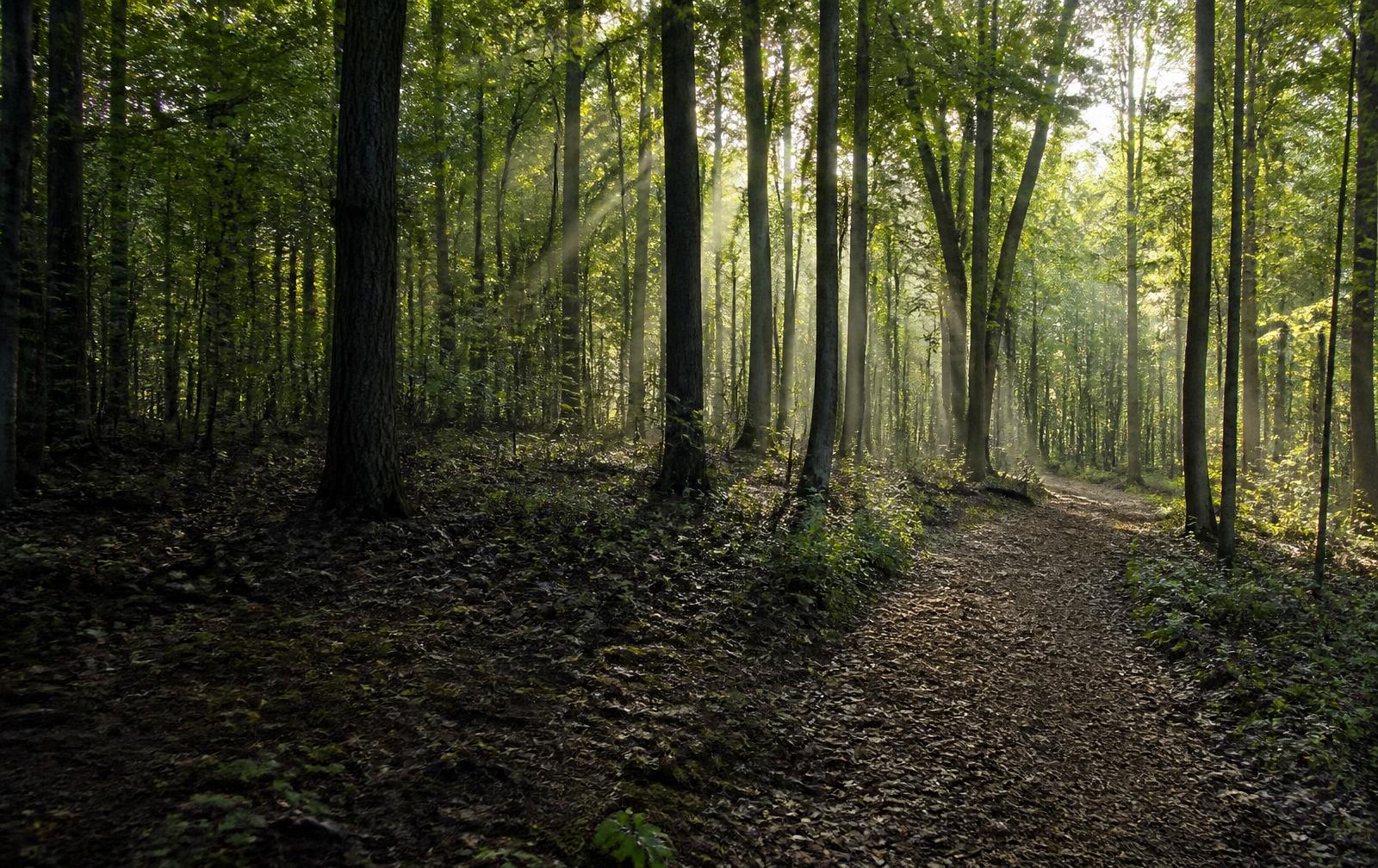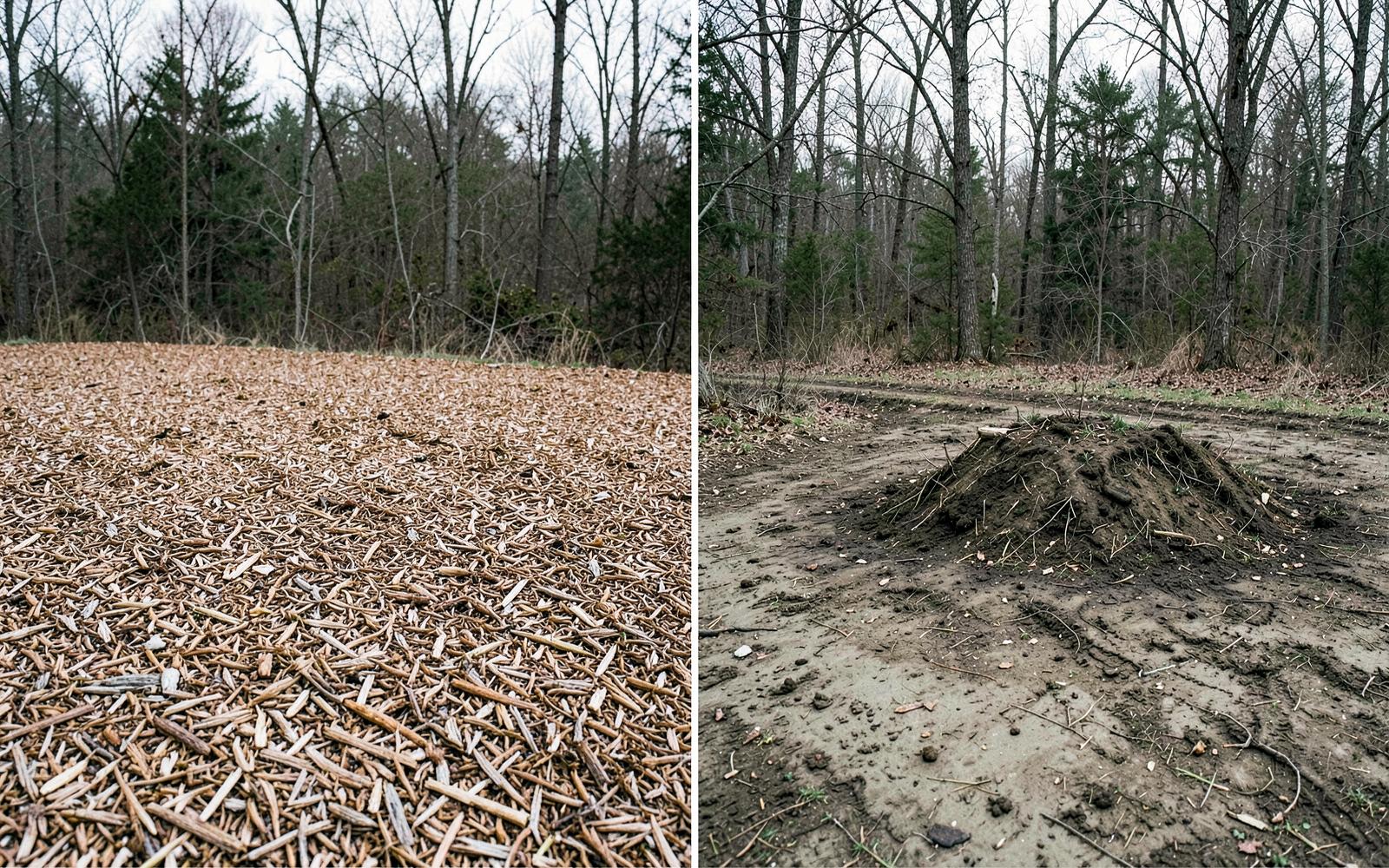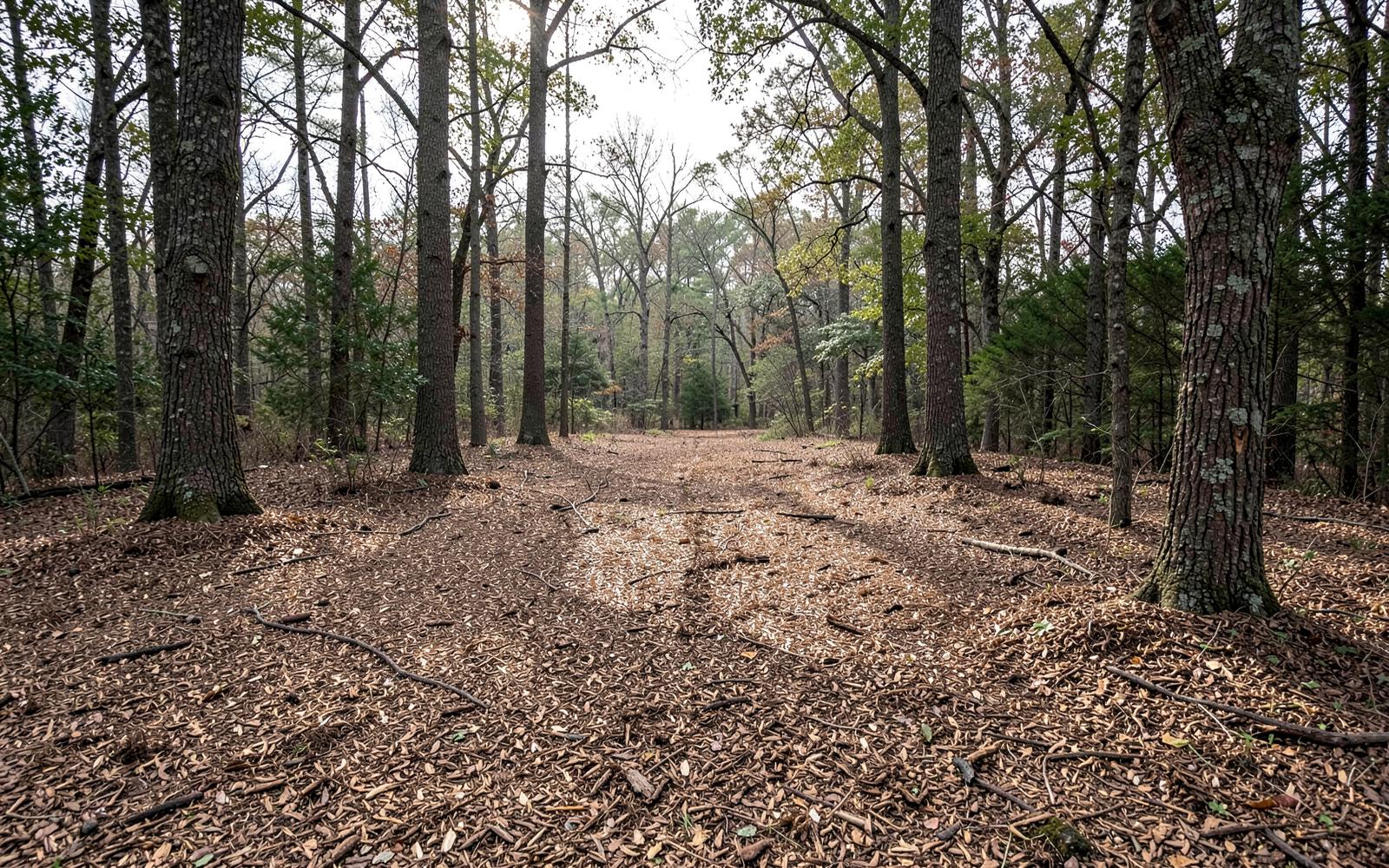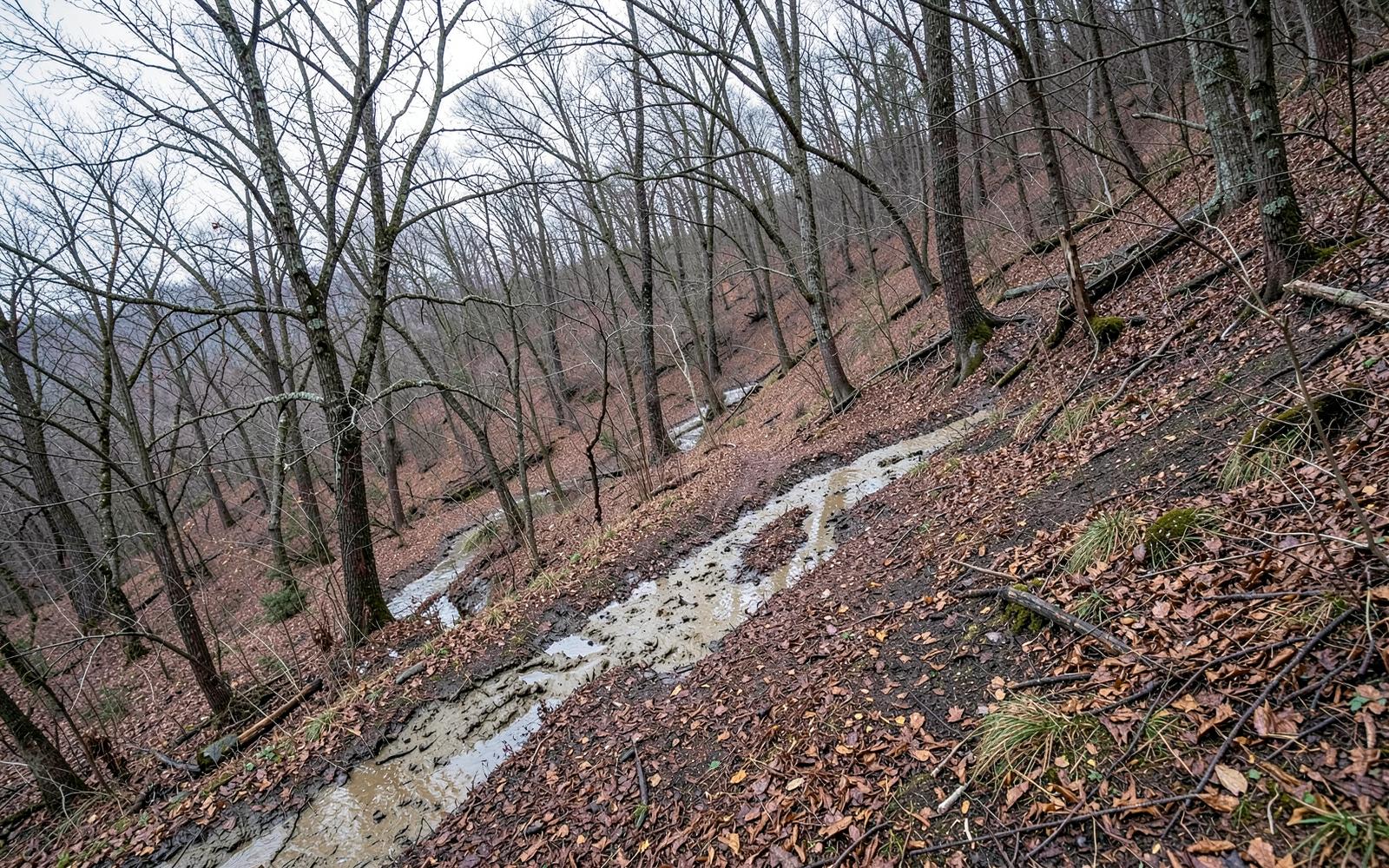

Difficult terrain is where mulching earns its keep — and also where it runs into hard limits. Knowing which side of the line your property falls on saves everyone time.
Plenty of Indiana and Ohio ground is not flat and not dry. Creek bottoms, ravine sides, hillside pasture, wet corners that never quite drain. That is exactly the ground people most want opened up and most struggle to find someone to do it.
Why mulching suits difficult terrain
It does not disturb the soil. A dozer works by pushing dirt. A mulching head works above the ground. On a slope, that difference is everything — disturbed soil on a grade is an erosion event waiting for the next hard rain.
It leaves erosion protection behind. The mulch layer is a mat that slows runoff and holds soil in place. On steep ground this is not a side benefit, it is often the main one.
The machines fit. Tracked carriers spread weight over a large footprint and handle grades and rough ground that wheeled equipment cannot.
No piles to move. On a hillside, piling material means dragging it somewhere, and there usually is not a good somewhere.
The limits on slope
Roughly speaking:
- Under 20% — normal operation, minimal impact on production
- 20% to 30% — workable, slower, requires an experienced operator and careful planning of pass direction
- Above 30% — case by case. Depends on soil, moisture, length of slope, and what is at the bottom
- Very steep — some ground simply should not have a machine on it, and the honest answer is no
Slope is not the only variable. A short steep bank is different from a long sustained grade. Dry clay behaves differently from saturated clay. An operator who has worked local ground will tell you which is which.
Wet ground
This is where the honest answer is often "not right now."
What wet ground costs you: ruts. Deep ones. Ruts channel water, change drainage, kill the grass you were trying to establish, and take real money to repair. A contractor who works through soft conditions to hold a schedule is handing you a problem.
Timing beats technique. The same property that is untouchable in March may be perfect in August or in January when the ground is frozen. Frozen ground is genuinely one of the best conditions for this work.
Permanently wet ground — seeps, springs, ground with a high water table year round — may need a different approach entirely, or work confined to a hard freeze.
The right questions to ask
- Have you worked ground like this before, and can I see it?
- What is your policy when the ground is too soft?
- Which direction will you work the slope, and why?
- What happens to runoff during and after?
- Is there any part of this property you would recommend leaving alone?
That last one is the most revealing. An operator who says every acre is workable has either not looked closely or is not being straight with you.
Near water
Ground along creeks, ditches, ponds, and wetlands carries additional considerations. Buffer requirements and permitting vary by county and by the water body in question, and land disturbance of an acre or more triggers state construction stormwater permitting in both Indiana and Ohio. Before working near water, confirm what applies with your county surveyor or soil and water conservation district.
Mulching''s low-disturbance profile makes it the more defensible approach in these areas, but low disturbance is not the same as no rules.
Got ground nobody wants to touch? Send us photos and we will tell you straight whether it is workable and when.