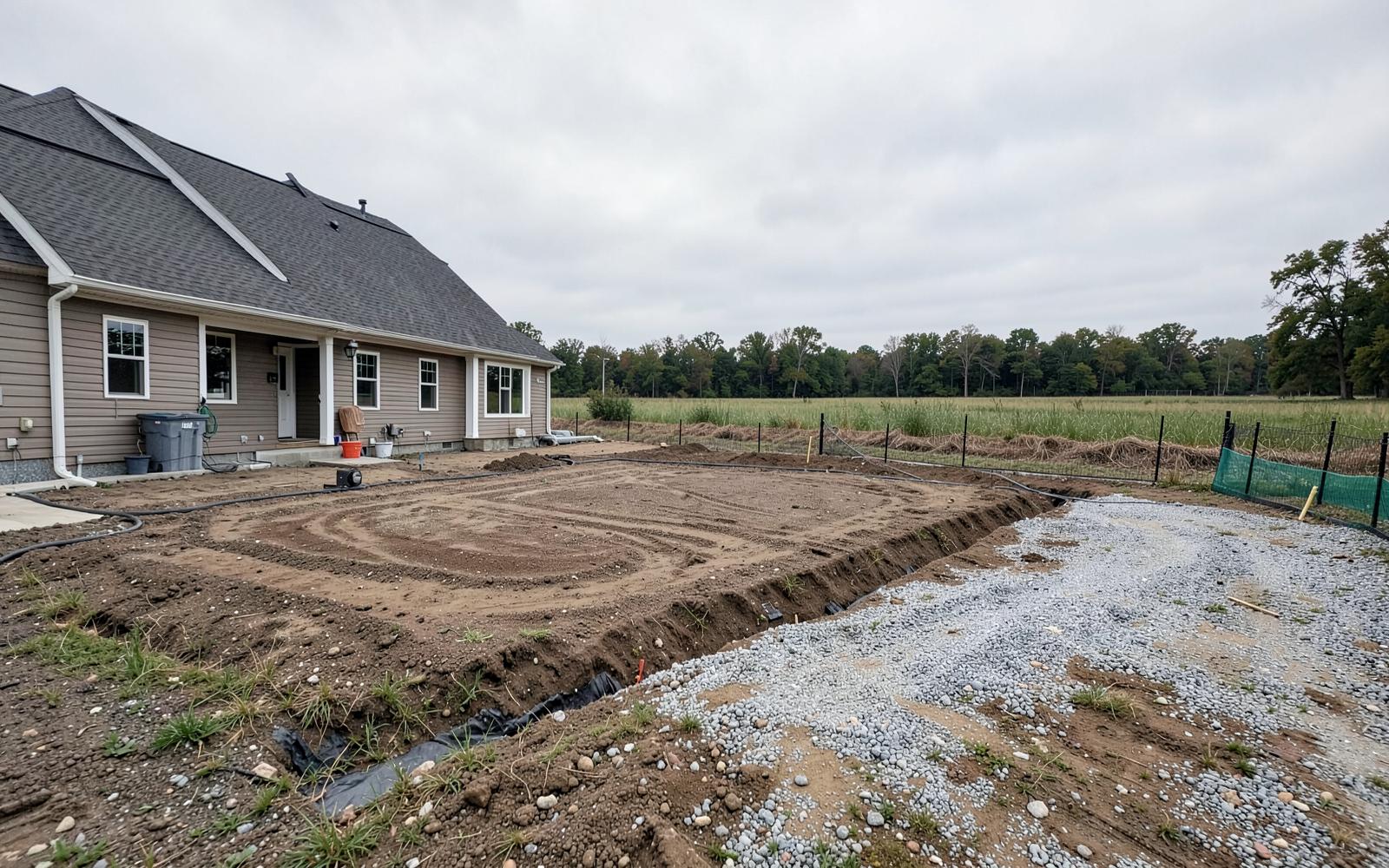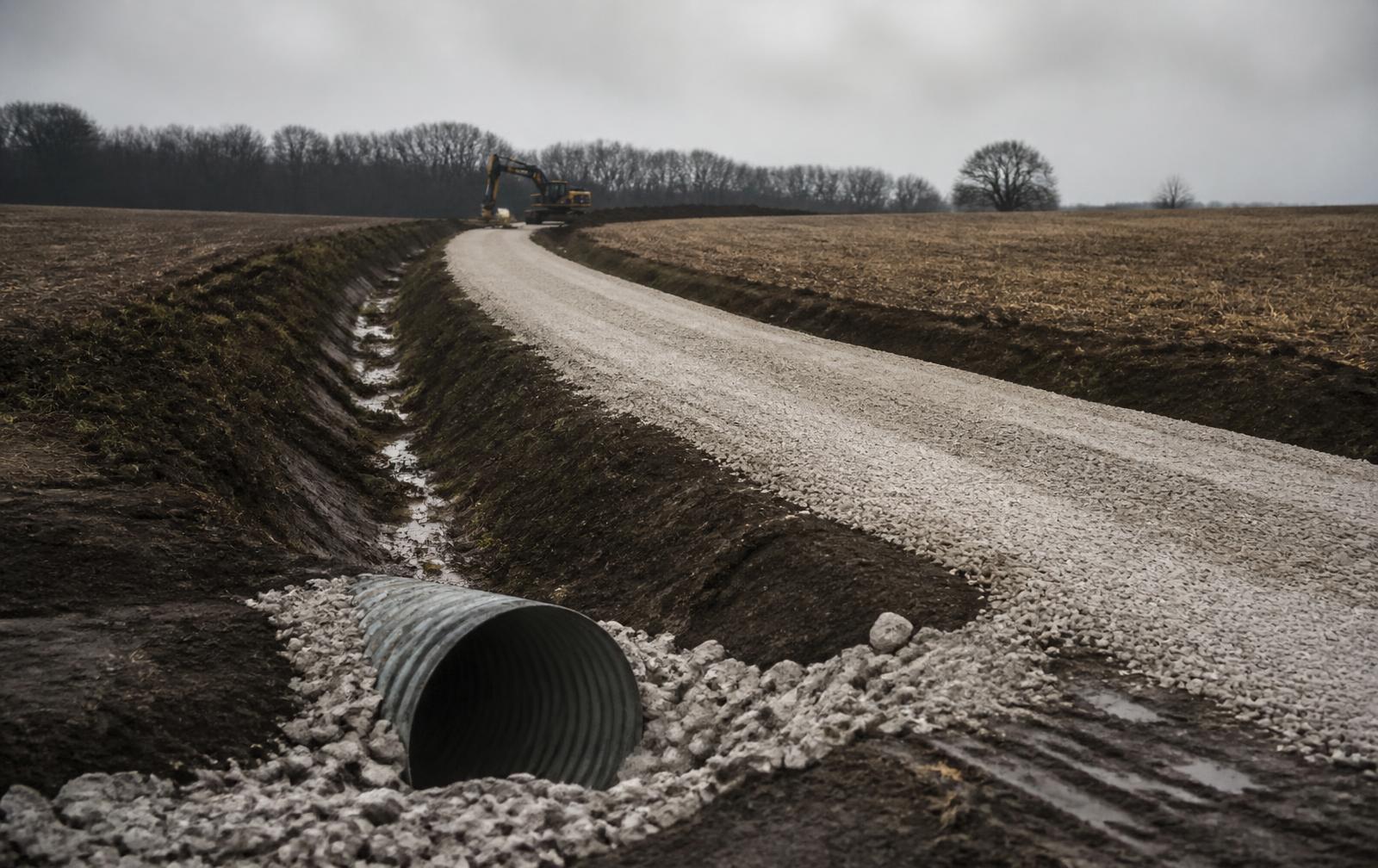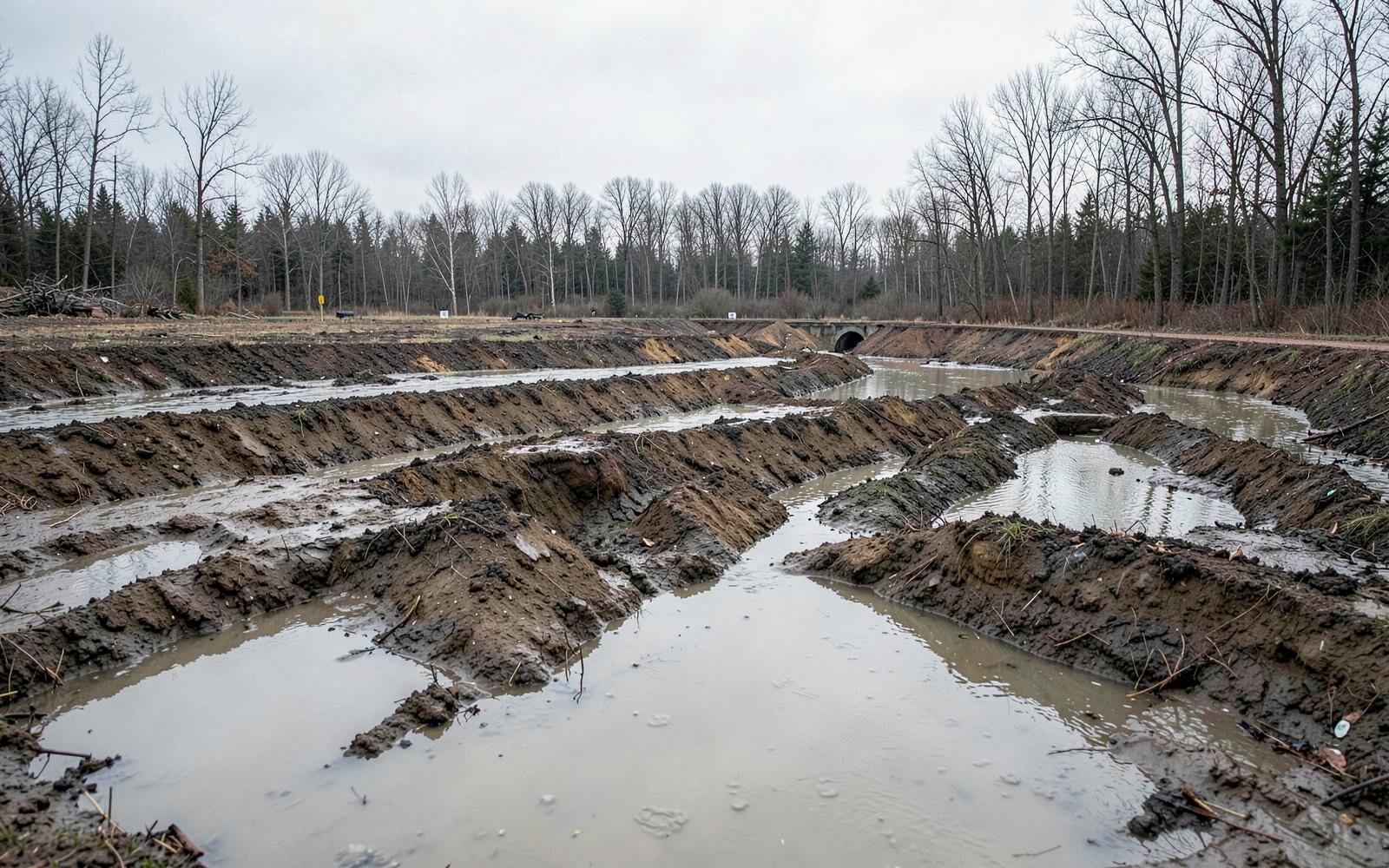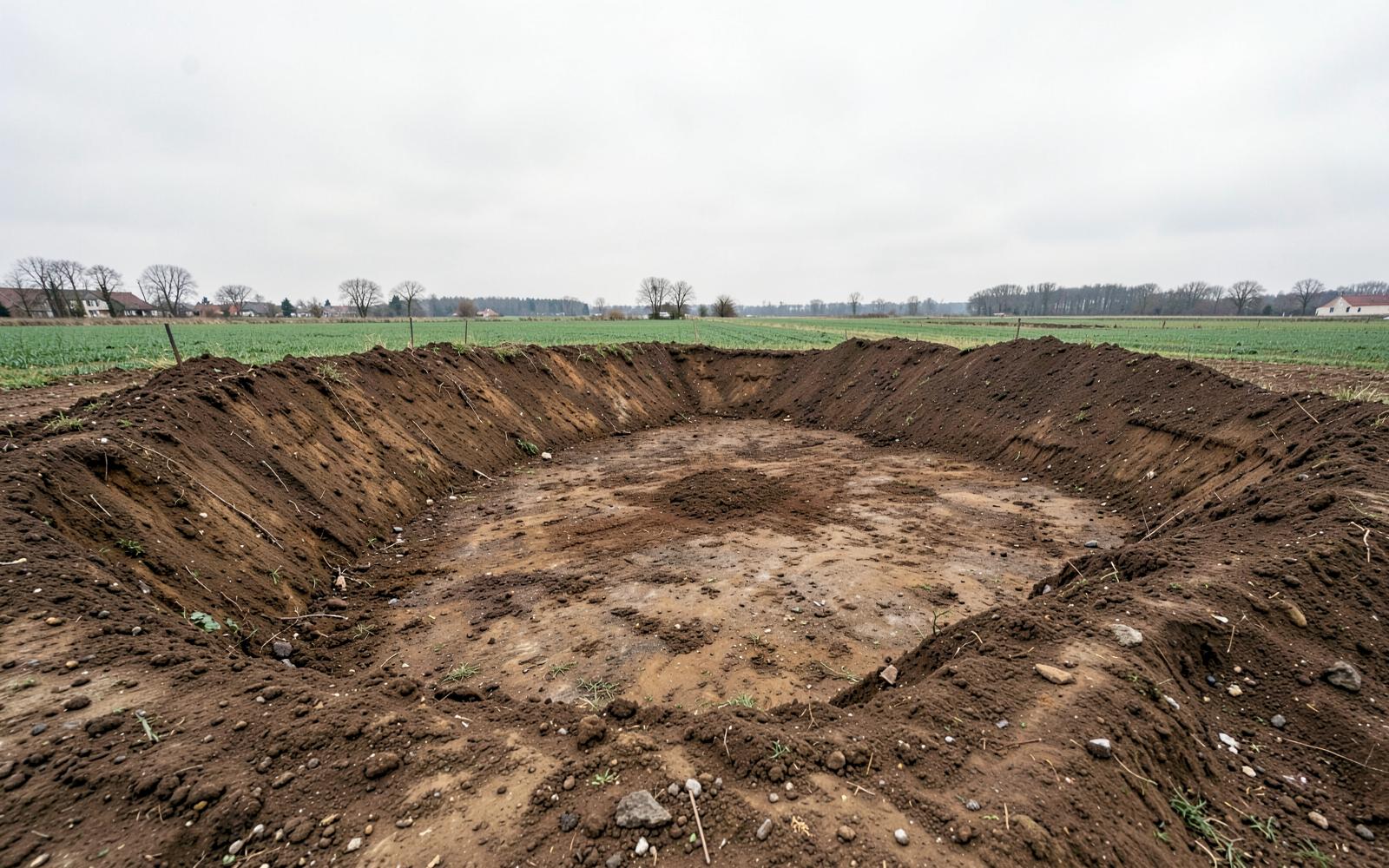

Excavation is priced by material moved, distance moved, and how hard it is to move — not by the size of your property. Here is how to read a quote.
Clearing gets quoted by the acre. Excavation does not, and expecting it to is where most confusion starts.
Earthwork is about volume, distance, and difficulty. A one-acre site with a deep cut can cost more than ten acres of light grading.
The main cost drivers
Volume of material. Measured in cubic yards. How much dirt has to move determines machine hours more than anything else.
Distance. Moving material fifty feet within the site is cheap. Trucking it off is expensive — trucks, drivers, fuel, dump fees, and a round trip per load.
Balance. A site that balances — where cut volume roughly equals fill volume — is dramatically cheaper than one that needs material imported or exported. A good operator will look for a way to balance before assuming trucking.
Material type. Topsoil and loose clay move easily. Wet clay is heavy and sticky and slows everything. Rock changes the job entirely and sometimes changes the equipment.
Groundwater. Hitting water in an excavation means pumping, shoring, or redesign. This is the classic budget-breaker on rural sites.
Access. Room for equipment to work and turn. A tight site means smaller machines and more repositioning, which means more hours.
Compaction requirements. Structural fill under a foundation must be placed in lifts and compacted, often with testing. Non-structural fill can be placed faster and cheaper. Know which the project needs.
Where the surprises usually come from
Rock. Almost never fully known until digging starts. Ask how rock is handled and priced in the contract before it appears.
Unsuitable soils. Soft or organic material discovered below grade has to be removed and replaced with engineered fill. Volume unknown until exposed.
Water. Springs, seeps, and high water tables.
Buried surprises. Old foundations, fill from a previous owner, abandoned tanks, undocumented drain tile. Rural Midwest ground has a long memory.
Weather. A wet week can stop earthwork entirely. Working wet clay damages the site and the material.
Reading a quote
Get clarity on:
- Is this lump sum or unit price? Unit price protects both sides on unknown quantities.
- What quantity is the price based on? If it changes, what is the adjustment?
- Is haul-off included, and for how much material?
- Is imported fill included, and at what quantity?
- Who is responsible if rock or unsuitable soil is encountered?
- Is compaction testing included, and who pays for it?
- Is erosion control included?
- Does it include final grading and topsoil respread?
The gap between two quotes usually lives in these answers, not in the hourly rate.
Hourly vs. lump sum
Hourly makes sense for exploratory work, small jobs, and situations where quantities genuinely cannot be known. You carry the risk.
Lump sum makes sense for well-defined work with known quantities. The contractor carries the risk and prices accordingly.
Unit price is often the fairest for earthwork — an agreed rate per cubic yard, with quantities measured. Neither side gambles.
Ways to keep costs sane
Get a topographic survey on anything complex. Guessing at volumes is how estimates go badly wrong in both directions.
Design to balance the site. Adjusting a pad elevation by a foot can eliminate a hundred truckloads.
Reuse material. Stripped topsoil is worth money. Excavated clay can often become berm or fill instead of a haul bill.
Do it in the right season. Late summer and frozen ground beat spring thaw by a wide margin.
Combine mobilizations. If clearing, grading, and driveway work are all coming, doing them in one visit saves real money.
The estimate worth paying for
On a site with meaningful earthwork, a proper survey and a takeoff is worth the cost. It converts guesses into quantities, and quantities into a quote you can hold someone to.
Tell us about the site and we will tell you what it actually needs. Builders and developers — contract opportunities welcome.