
Every other site problem is fixable. Water moving the wrong way across your property will cost you again every single year until someone corrects the grade.
If you spend your site budget on one thing, spend it on water. Not because drainage is glamorous, but because it is the only mistake that keeps charging you.
A crooked fence is annoying. A driveway that funnels water into your barn is a recurring bill.
What water does when it is wrong
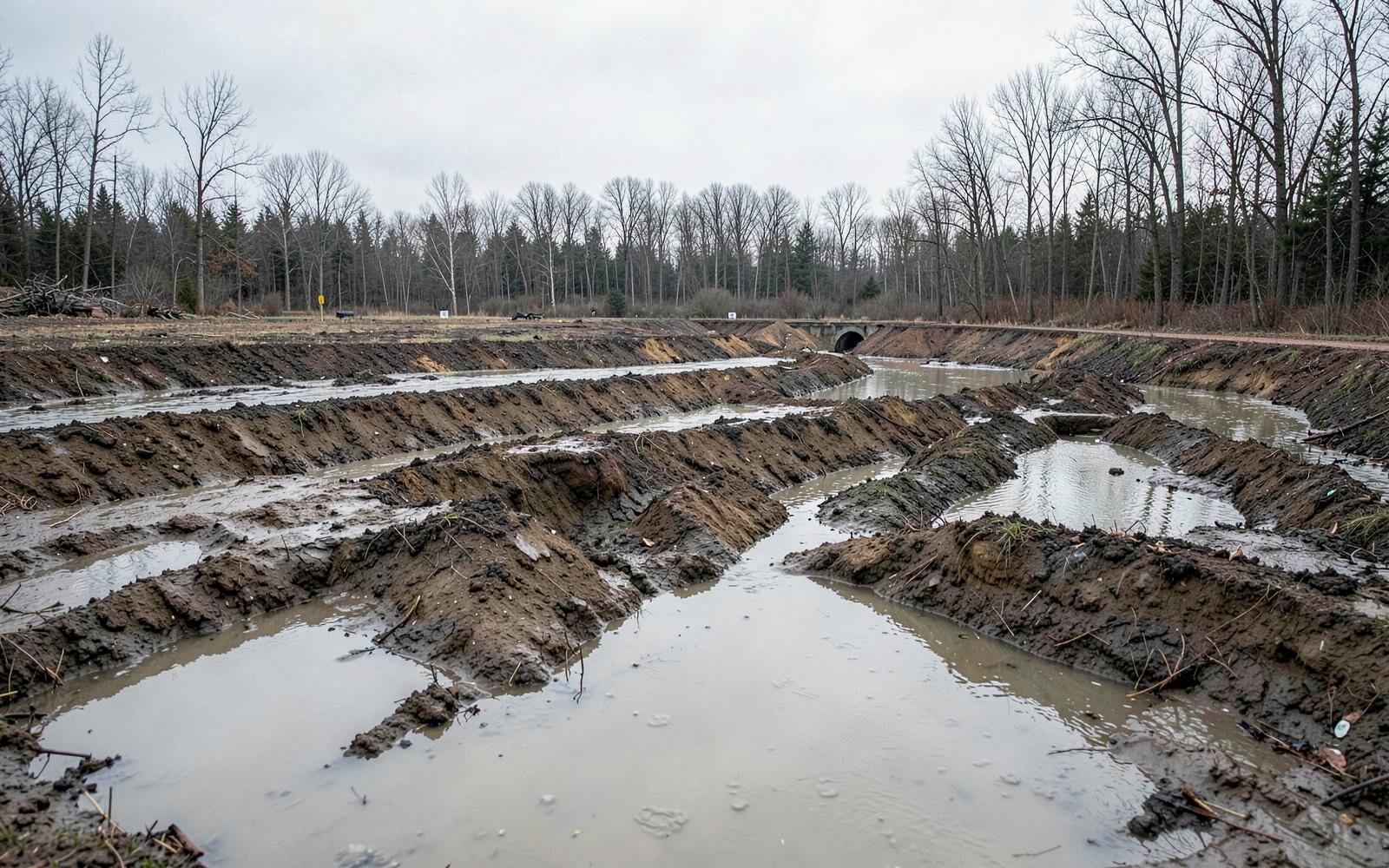
Erodes. Concentrated flow cuts channels. A small rill becomes a gully in a couple of seasons, and gullies take fence, driveway, and field with them.
Destroys roadbeds. Water in a gravel base plus freeze-thaw equals a broken road, every winter.
Floods structures. Ground sloping toward a building puts water against the foundation. On clay, that water has nowhere to go but in.
Kills pasture and crops. Standing water suffocates roots. Wet spots stay wet and produce nothing.
Creates neighbor problems. Changing where water leaves your property is a legal issue in both Indiana and Ohio, not just a courtesy issue. Concentrating flow onto adjoining land can create real liability.
Midwest specifics
Clay does not drain. In much of Indiana and Ohio, water does not soak in — it runs off or it sits. Solutions that work on sandy ground do not translate.
Flat ground is harder, not easier. Getting water to move across a quarter percent grade takes precision. There is very little margin for error.
Existing drain tile is everywhere. A lot of Midwest farmland has clay or plastic tile in it, sometimes a century old, often undocumented. Cutting a line during excavation and not knowing you did it means a wet field and a mystery. Ask the previous owner, ask the neighbors, and dig carefully near suspected runs.
County drainage law is real. Regulated drains and legal drains have protections and setbacks. Your county surveyor''s office is the place to check before altering anything.
Getting it right
Understand where water goes now. Walk the property during a hard rain. Not after — during. You will learn more in twenty minutes than from any map.
Work with the natural flow. The cheapest drainage plan almost always improves what water already wants to do rather than reversing it.
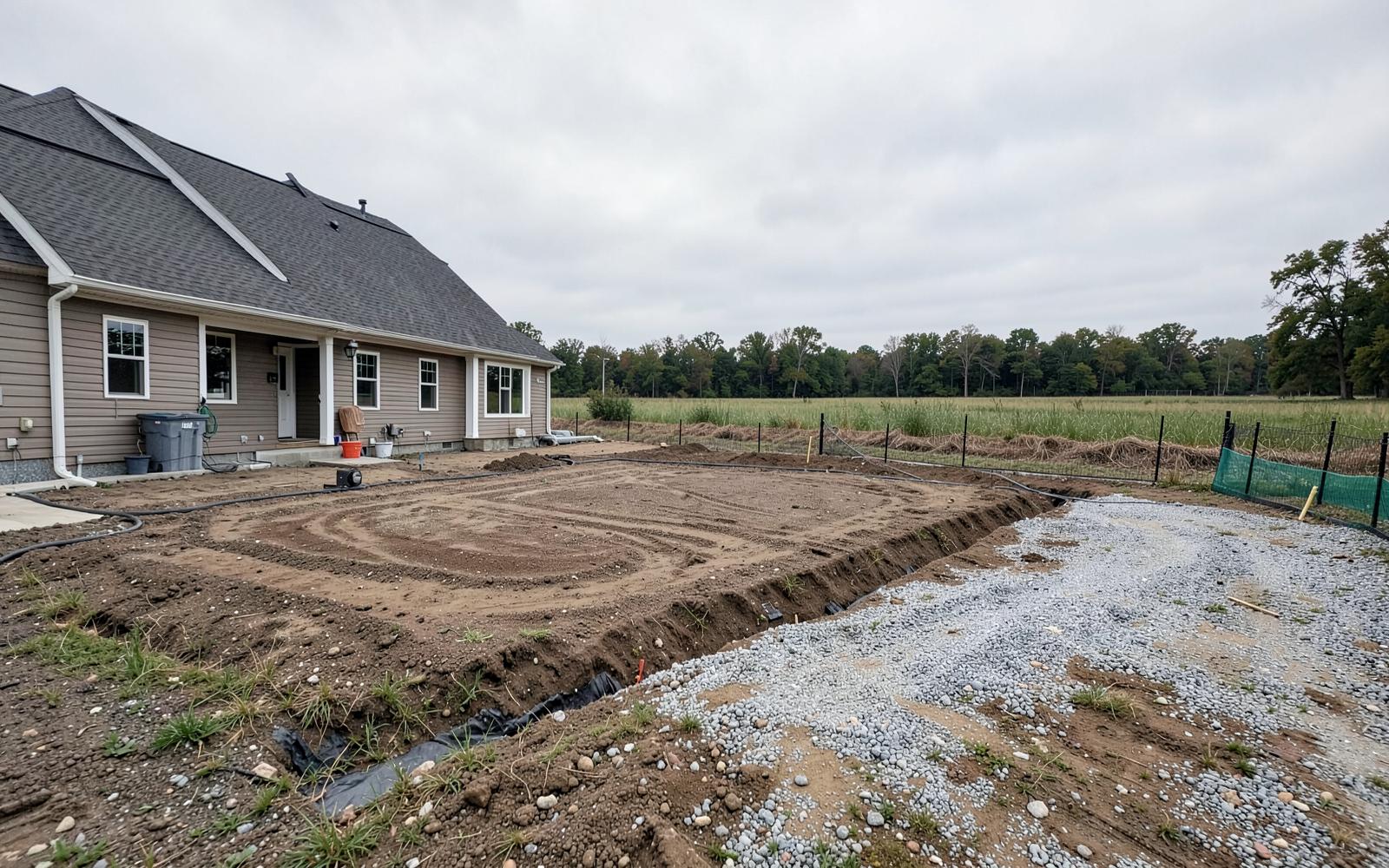
Slope away from everything you care about. Buildings, pads, and roadbeds should all shed water in every direction. A common target is roughly six inches of fall in the first ten feet away from a structure.
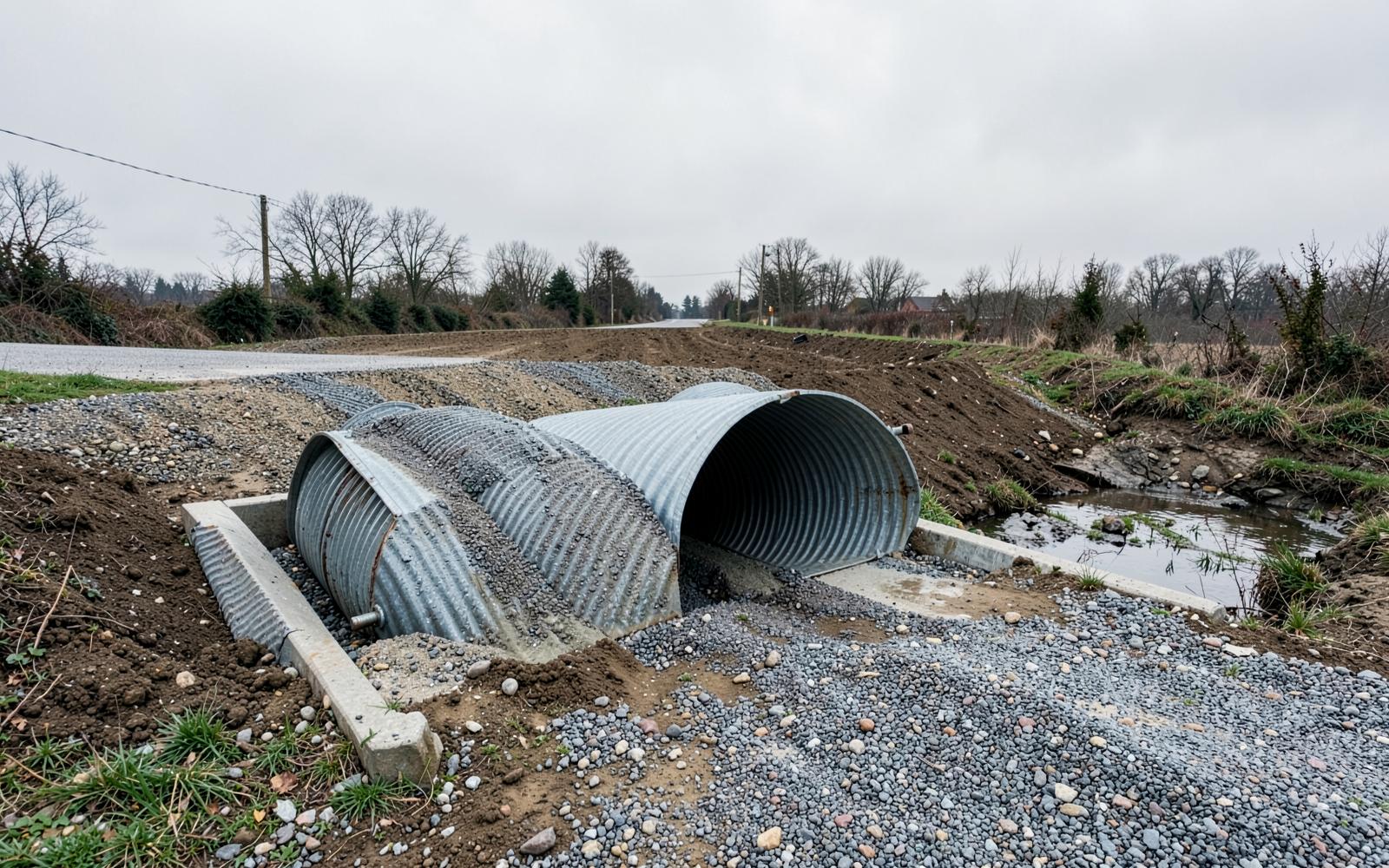
Size crossings for storms, not averages. Culverts and ditches fail in the storm, not on the average day. Undersized is the most common and most costly mistake.
Give water somewhere to go. A ditch that ends in the middle of a field is not drainage, it is a puddle with ambitions. Every system needs an outlet.
Slow it before you move it. Broad shallow swales, grassed waterways, and check structures reduce velocity. Fast water cuts; slow water carries.
The tools
- Grading and swales — reshaping the surface so water sheets where you want it. Usually the cheapest and most durable fix.
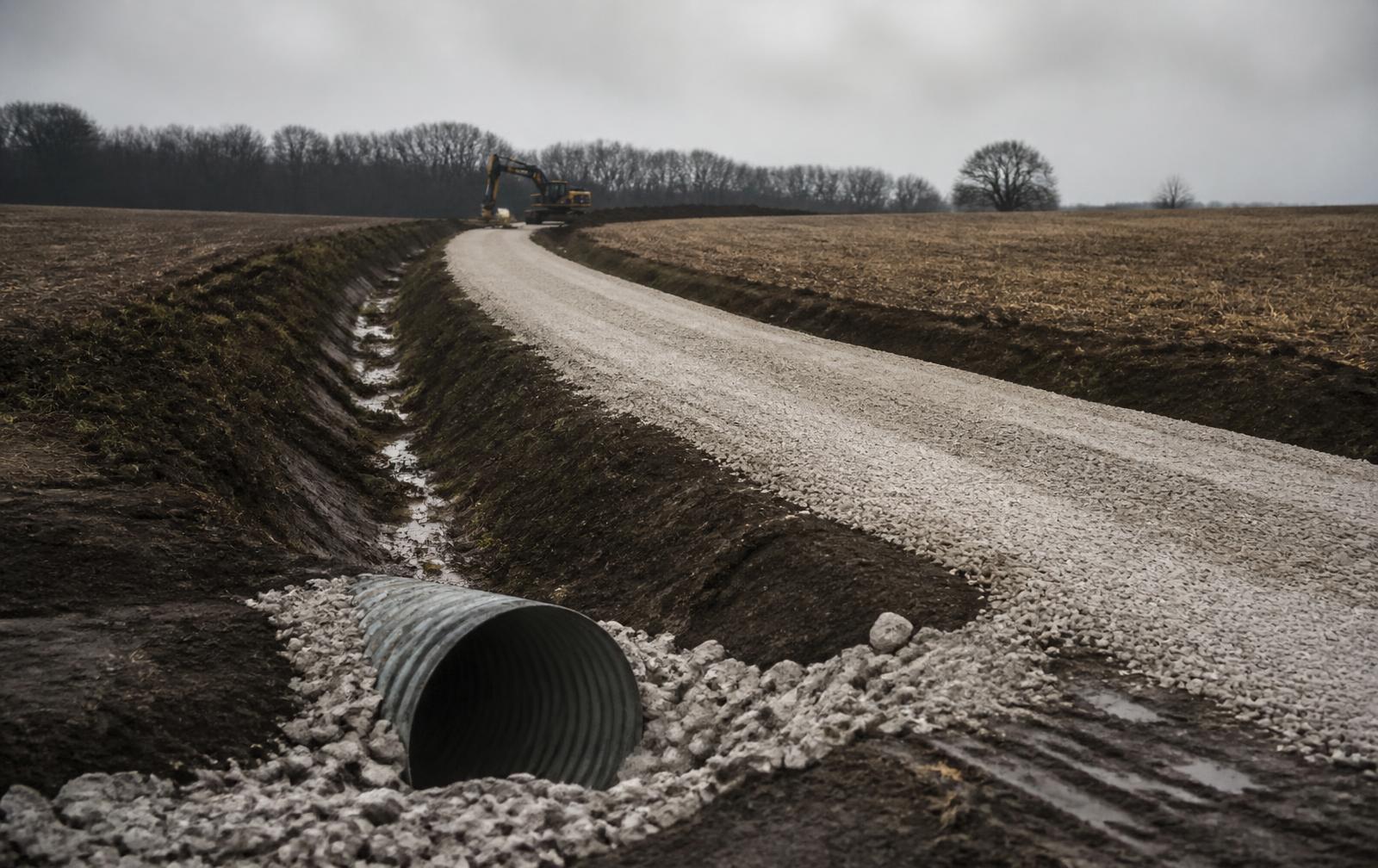
- Ditches — for concentrated flow along roads and boundaries.
- Culverts — where flow crosses a travel way.
- Drain tile / French drains — for subsurface water and persistent wet spots.
- Grassed waterways — vegetated channels for larger flows across fields.
- Detention — holding water and releasing it slowly, often required on developed sites.
What it costs to fix later
Correcting drainage after a site is built means working around a building, a driveway, and established landscaping. The same swale that would have been cut in an afternoon on open ground becomes careful work with hand tools and small equipment near a foundation.
The multiple is real. Do it while the ground is open.
The one thing to remember
Before any earthwork, ask: where does water go now, and where will it go when I am done? If you cannot answer the second part, you are not ready to start.
Walk your property with us. Drainage is easier to plan than to repair.