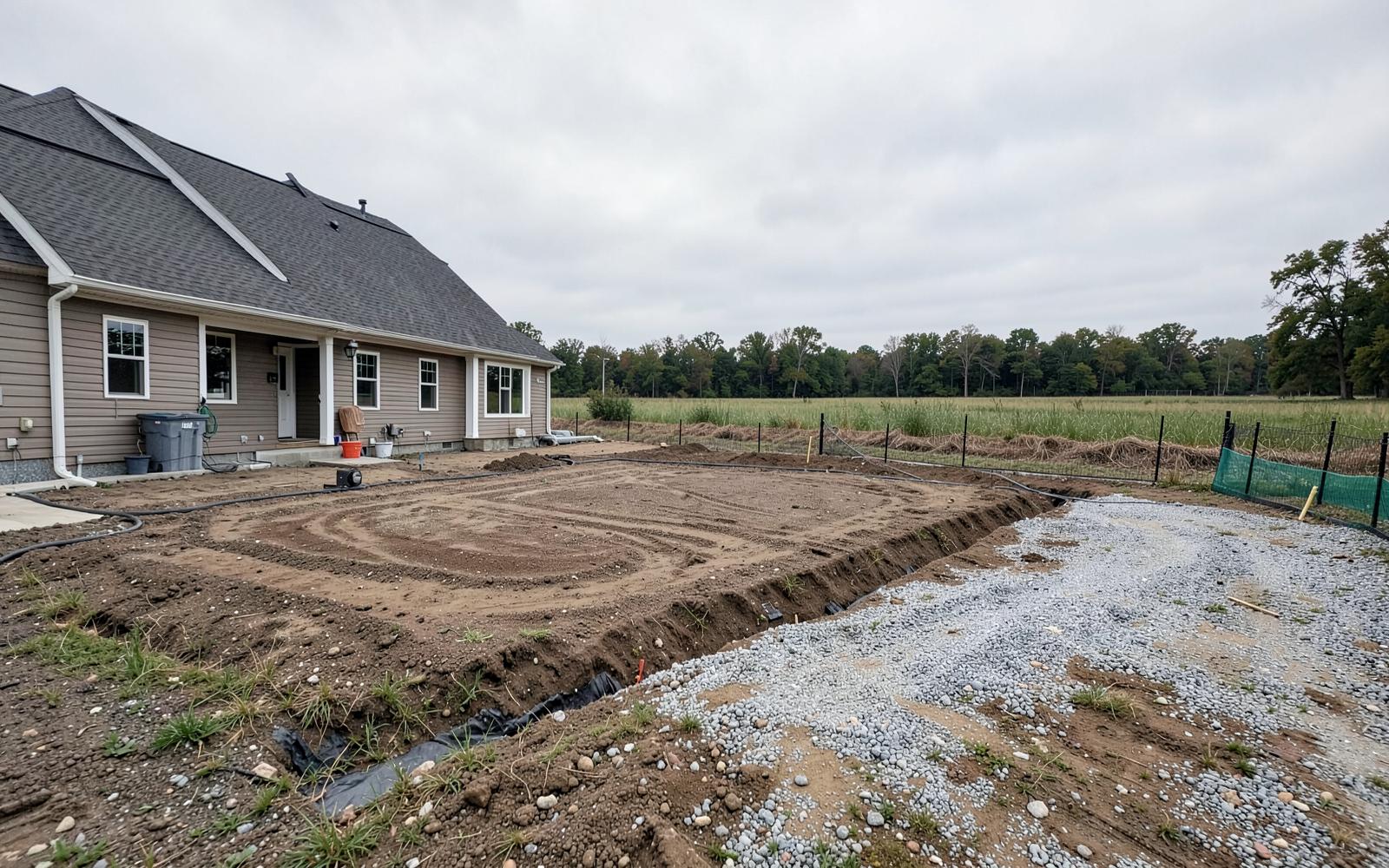

Where your lane meets the county road is the most regulated twenty feet of your property. Getting it approved first is far cheaper than digging it out twice.
Almost every county in Indiana and Ohio regulates how a private drive connects to a public road. The rules exist because a bad approach floods the road, damages the ditch, and creates a sight-distance hazard.
They are also enforced. Building an unpermitted approach can mean removing it at your expense.
Who to call
County highway department — approaches onto county roads. This is the usual one.
State DOT district office — INDOT in Indiana, ODOT in Ohio — if your frontage is on a state or US route.
City or town street department — inside municipal limits.
County surveyor — anything touching a regulated or legal drain.
County drainage board — larger drainage alterations.
Call before you design. The requirements shape the design.
What they typically look at
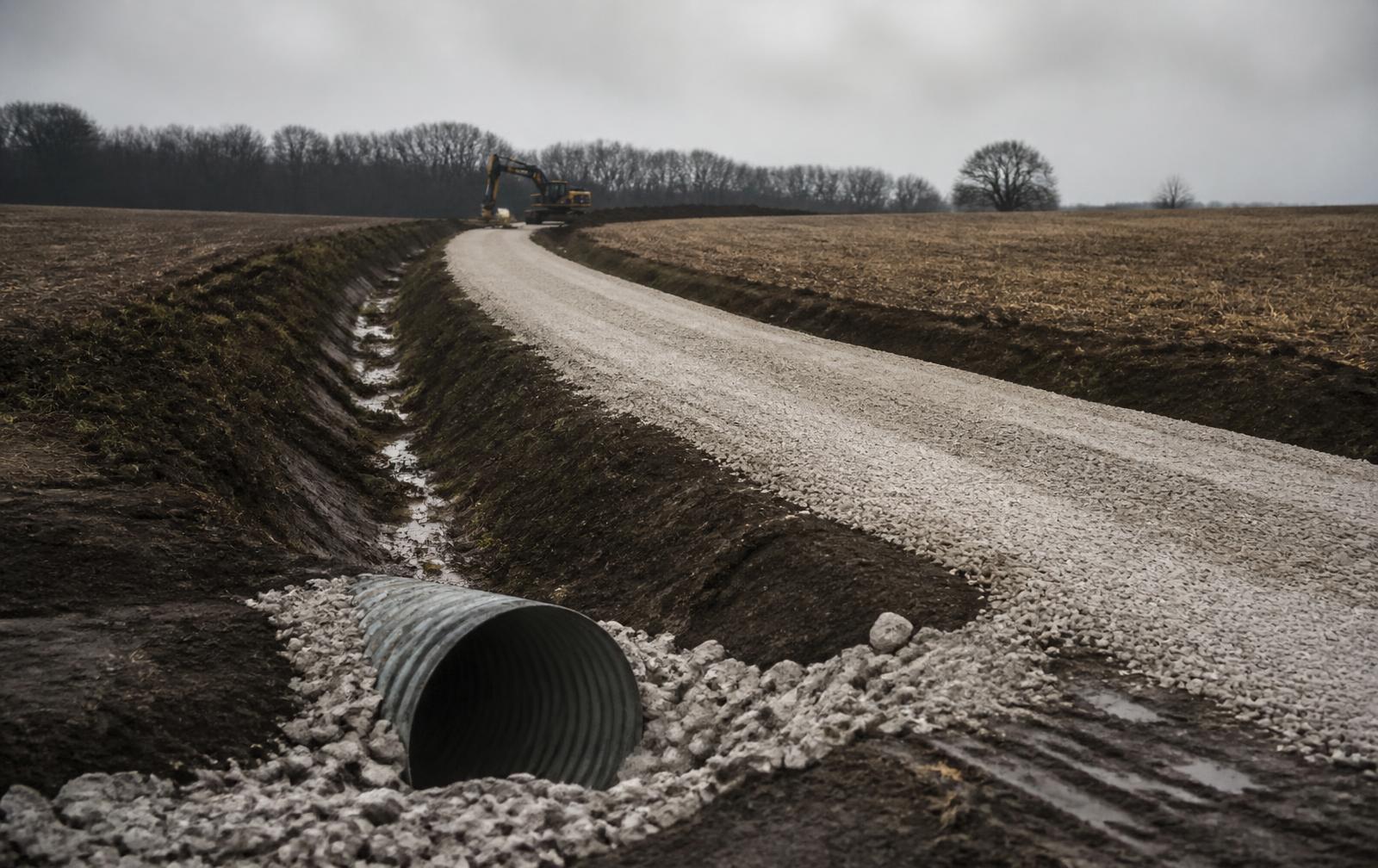
Culvert size. Usually the biggest item. The pipe under your approach has to carry what the roadside ditch carries in a design storm. Counties commonly specify a minimum diameter and may require a calculation on larger watersheds. Undersize it and the road floods; the county will not approve it.
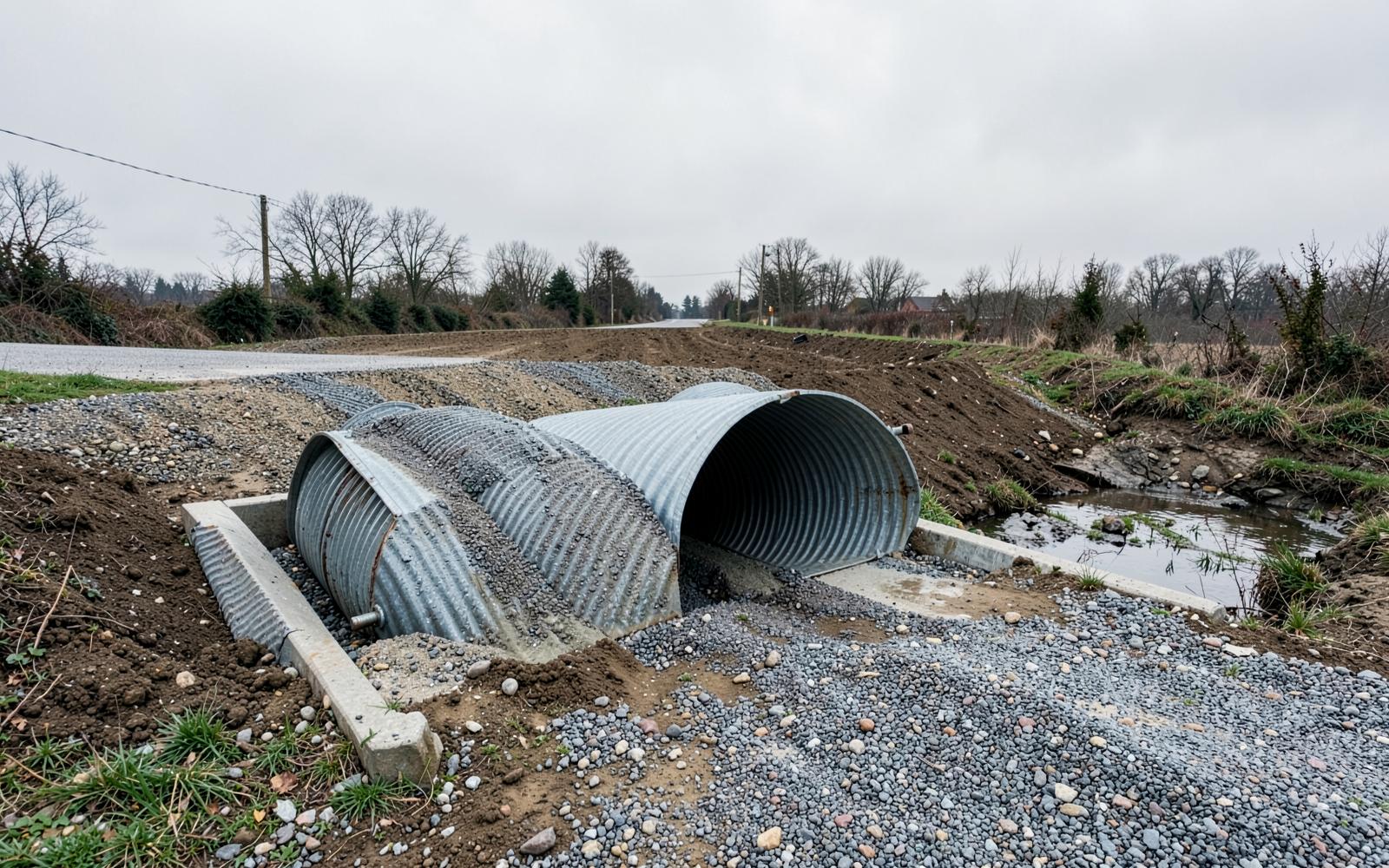
Culvert length and end treatment. Long enough for the approach width plus proper side slopes. Many counties require end sections or headwalls rather than a raw pipe end.
Invert elevation. The pipe has to be set at the right depth and grade to match the ditch flow line. Set too high and it dams; too low and it silts in. This detail gets missed constantly.
Approach width and radius. Wide enough for the vehicles that will use it — including delivery trucks and, if it is farm ground, equipment. Turning radius so a vehicle can enter without swinging into the oncoming lane.
Grade at the road. A short relatively flat section at the road before the drive climbs or drops, so vehicles are level when they enter the roadway and do not drag.
Sight distance. Adequate visibility both directions. On a curve or hill crest, this can determine where the approach is allowed to be at all.
Surface material. Many counties require a paved or hard-surfaced apron for some distance from the pavement edge to keep gravel off the road.
Ditches
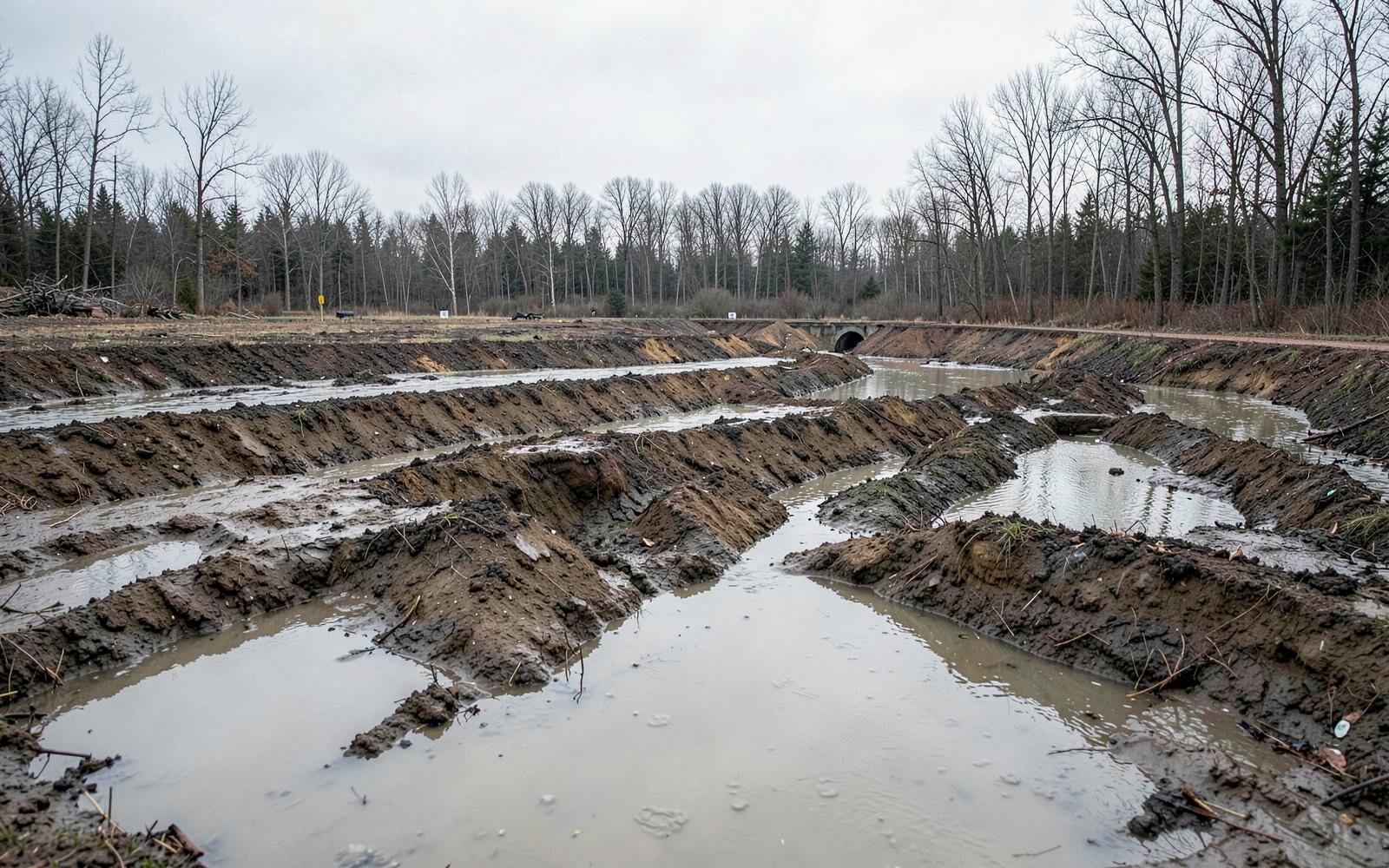
Do not fill the roadside ditch. It is the road''s drainage. Filling it, even partially, is one of the most common violations.
Maintain flow line continuity. Whatever you build has to let water continue at the same grade.
Regulated drains have setbacks. If a legal drain crosses your property, there are protected easements alongside it where you cannot build, fill, or plant. The county surveyor has the maps.
Process, roughly
- Call the county highway department and describe the location
- Submit an application — often a simple form with a sketch
- Some counties inspect the site before approving
- Approval comes with specifications: pipe size, length, invert, surface
- Build to those specifications
- Final inspection
Timelines vary from days to several weeks. Fees are typically modest. Build it early enough that construction traffic can use it.
Common mistakes
- Building first, asking later
- Buying pipe before knowing the required diameter
- Setting the culvert too high because it was easier
- Making the approach too narrow for a delivery truck or a combine
- Ignoring the sight-distance requirement on a curve
- Filling the ditch to make a smoother entrance
Multiple approaches
Want a second entrance? Many counties limit approaches per parcel or per road frontage. Ask before you plan around it.
Requirements change
Specifications differ county to county and get updated. Nothing here substitutes for a call to your county highway department about your specific location — that call is free and takes ten minutes.
Need an approach, culvert, or lane built? We work to county specification and can help sort out what yours requires.