
A grown-in fence line is a slow-motion fence failure. Clearing it is straightforward — clearing it without destroying the fence takes a different approach.
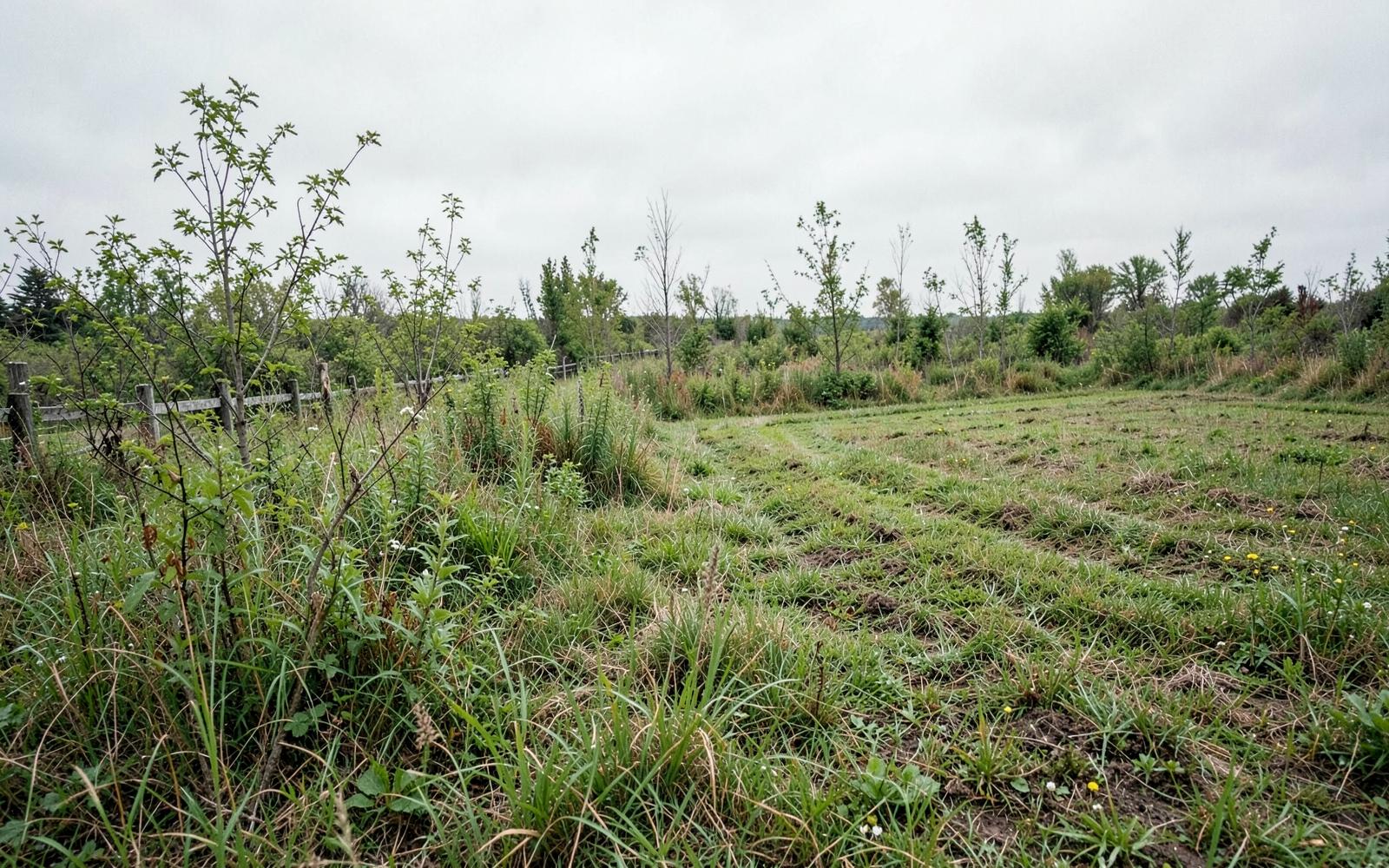
Fence lines grow in because they are the one strip nobody mows. Then a few seasons pass, and what was a clean line is a hedgerow with a fence somewhere inside it.
Why it has to be dealt with
Trees destroy fence. Trunks grow into and around wire, stretching and snapping it. Roots heave posts out of plumb. A tree that falls takes out a span and sometimes a whole run.
You cannot inspect what you cannot see. Livestock get out through gaps nobody knew existed.
Electric fence shorts. Any vegetation touching the wire bleeds current. A grown-in line means an ineffective fence.
Boundaries blur. Overgrown lines create genuine disputes about where the property line sits.
It only gets more expensive. Two-inch saplings are cheap to deal with. The same stems at eight inches are a different job.
The core problem
The fence and the brush occupy the same space. Anything aggressive enough to remove mature woody growth is aggressive enough to take out wire and posts.
That is why fence line work is slower and more careful than open-ground clearing, and why it is priced differently.
How it gets done well
Walk it first and mark everything. Corner posts, brace assemblies, gates, water lines, buried electric, and any tree you want to keep. On a long line this is an hour that saves a day.
Work from the open side. Approach from the field, not by straddling the fence. Keeps the machine on ground you control and gives the operator a clear view of the wire.
Take the offset seriously. Precision near wire means working at a standoff and cleaning up close to the fence more carefully — often by hand or with a smaller attachment.
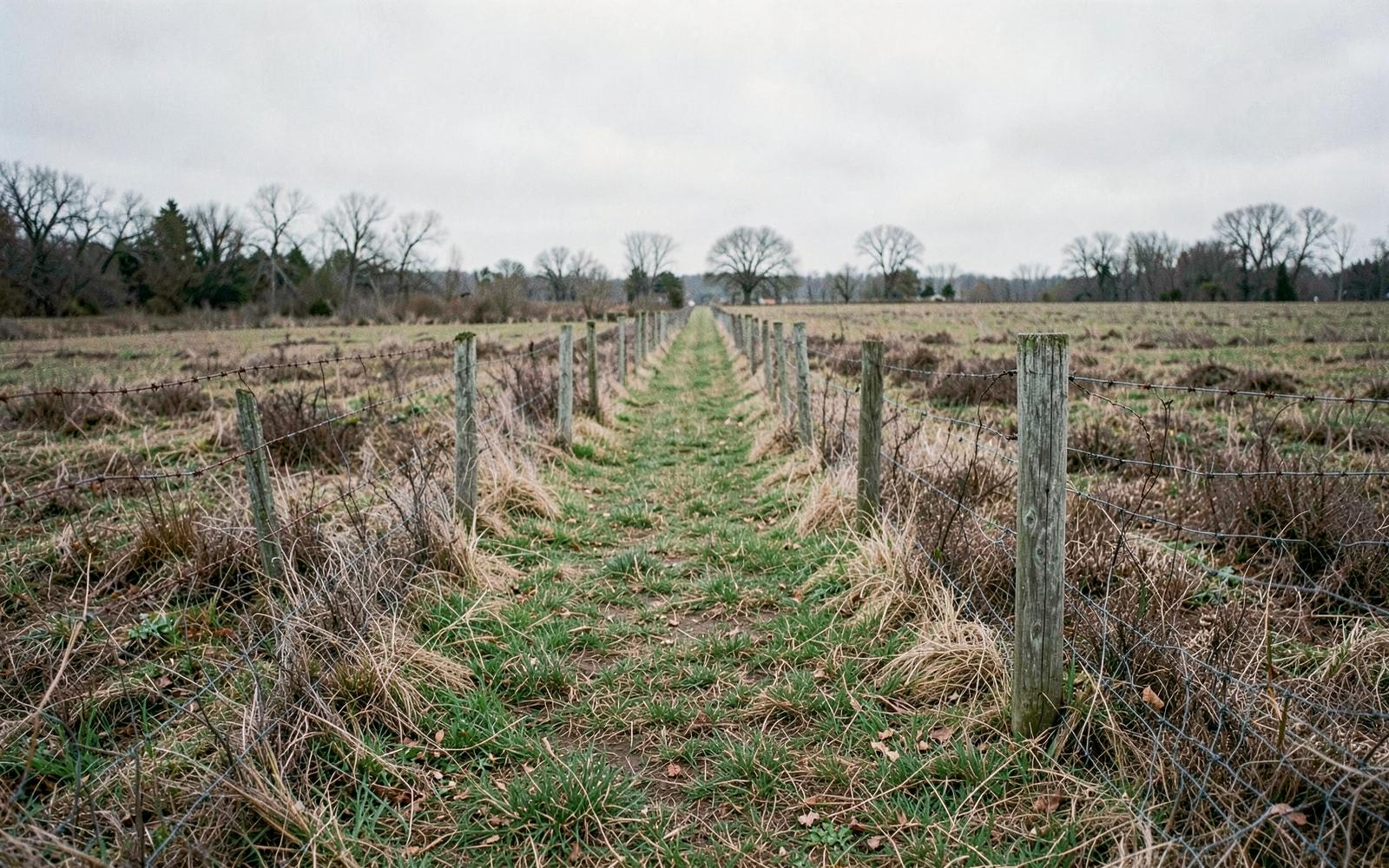
Clear a working width, not just the line. A useful fence line is cleared wide enough on both sides that you can drive it and that the next round of growth is not immediately back on the wire. Ten to fifteen feet total is a common target; more where you want a lane.
Handle stumps deliberately. Mulched stems at grade are fine along most fence. Where a post needs to go, the stump has to come out.
When the fence comes out first
Sometimes the honest answer is that the fence is done. If it is old woven wire with trees grown through it, pulling the fence first and clearing freely is faster, cheaper, and produces a better result — then rebuild on clean ground.
Worth asking the question rather than paying premium prices to protect a fence you are going to replace anyway.
Boundary lines and neighbors
Talk first. Clearing a shared line affects both sides. A conversation beforehand prevents a problem afterward.
Know where the line actually is. If there is any doubt, a survey costs less than a dispute. Removing trees on the wrong side of a boundary carries real liability in both Indiana and Ohio, and damages can be significant.
Agree on what happens to the material. Mulched in place is usually easiest and least contentious.
Timing
Late fall through early spring is the window. You can see the fence, the ground is firm, and there is no leaf cover hiding wire.
Avoid working wet ground along a fence — ruts along a fence line become the drainage channel and undermine posts.
Keeping it clear
The whole point is not to do this again in five years.
- Mow or spray the cleared strip annually
- Watch for anything establishing within a few feet of the wire
- Deal with volunteers when they are stems, not trunks
A cleared line maintained annually costs very little. A cleared line ignored for a decade is a full clearing job again.
Fence lines and property boundaries at scale
Farms, utilities, and municipalities with miles of line generally do best on a recurring cycle rather than an emergency basis. Predictable scheduling means predictable cost and no runs ever reaching the expensive stage.
Get a fence line quote, or if you manage miles of line, contract opportunities are welcome.