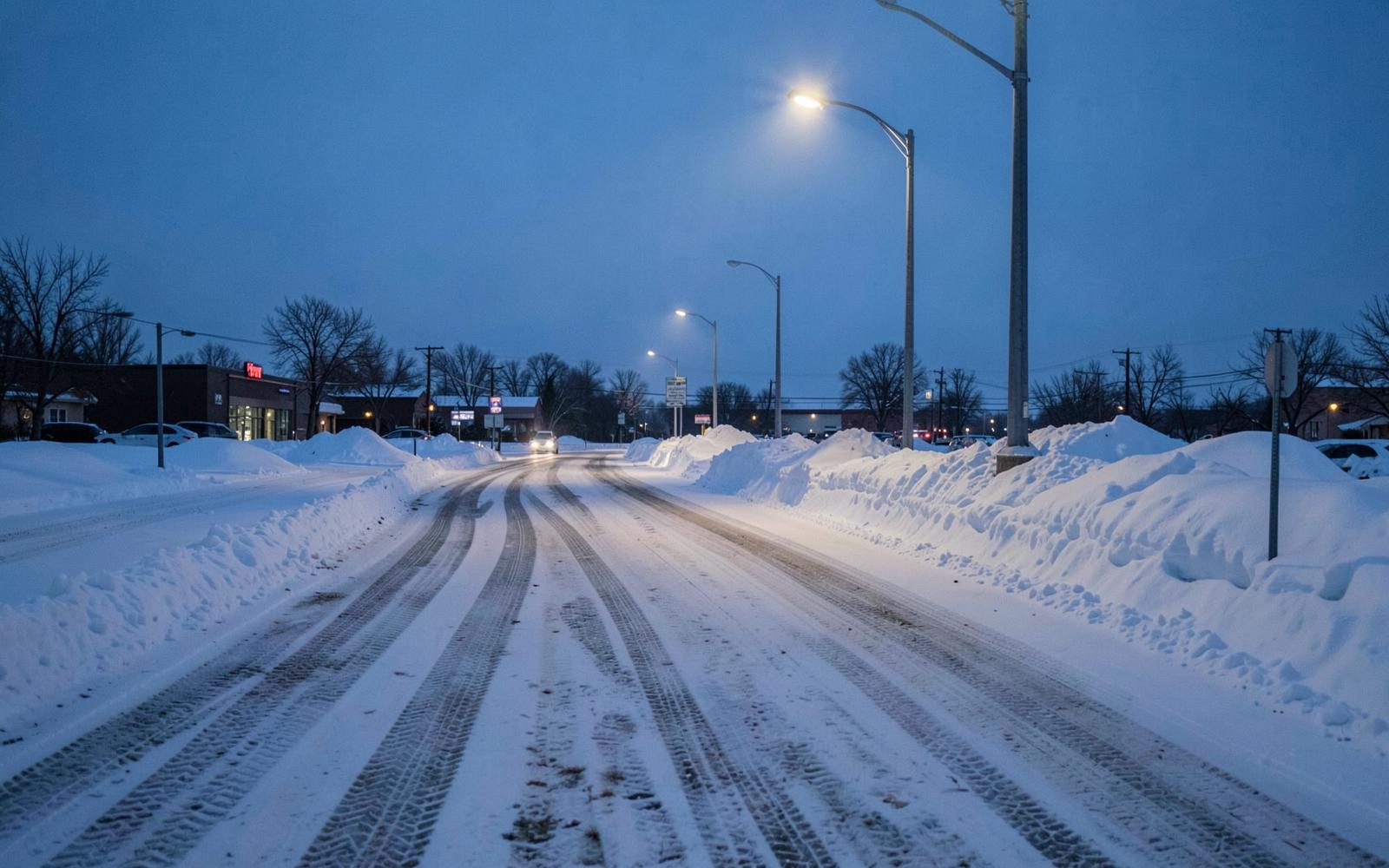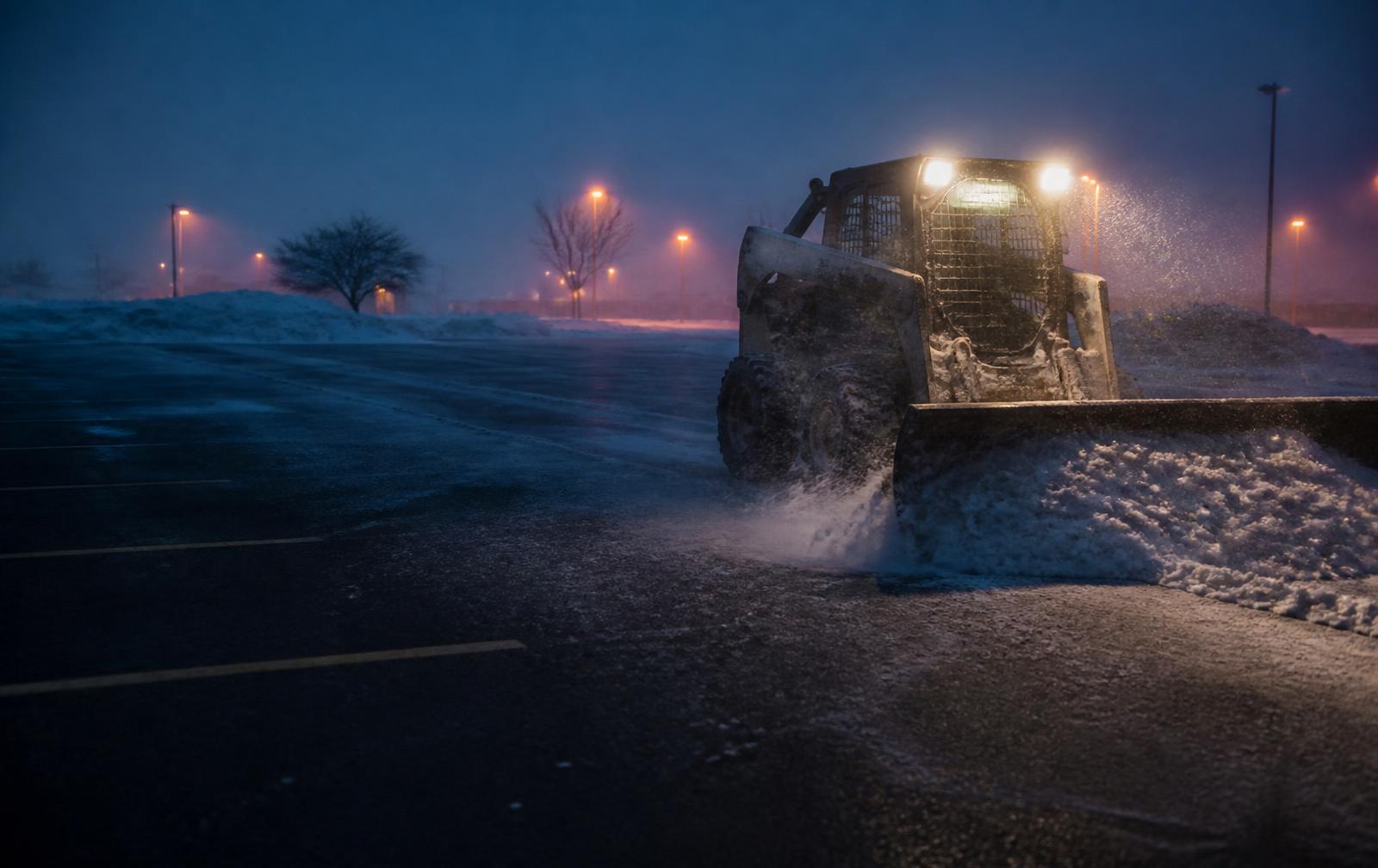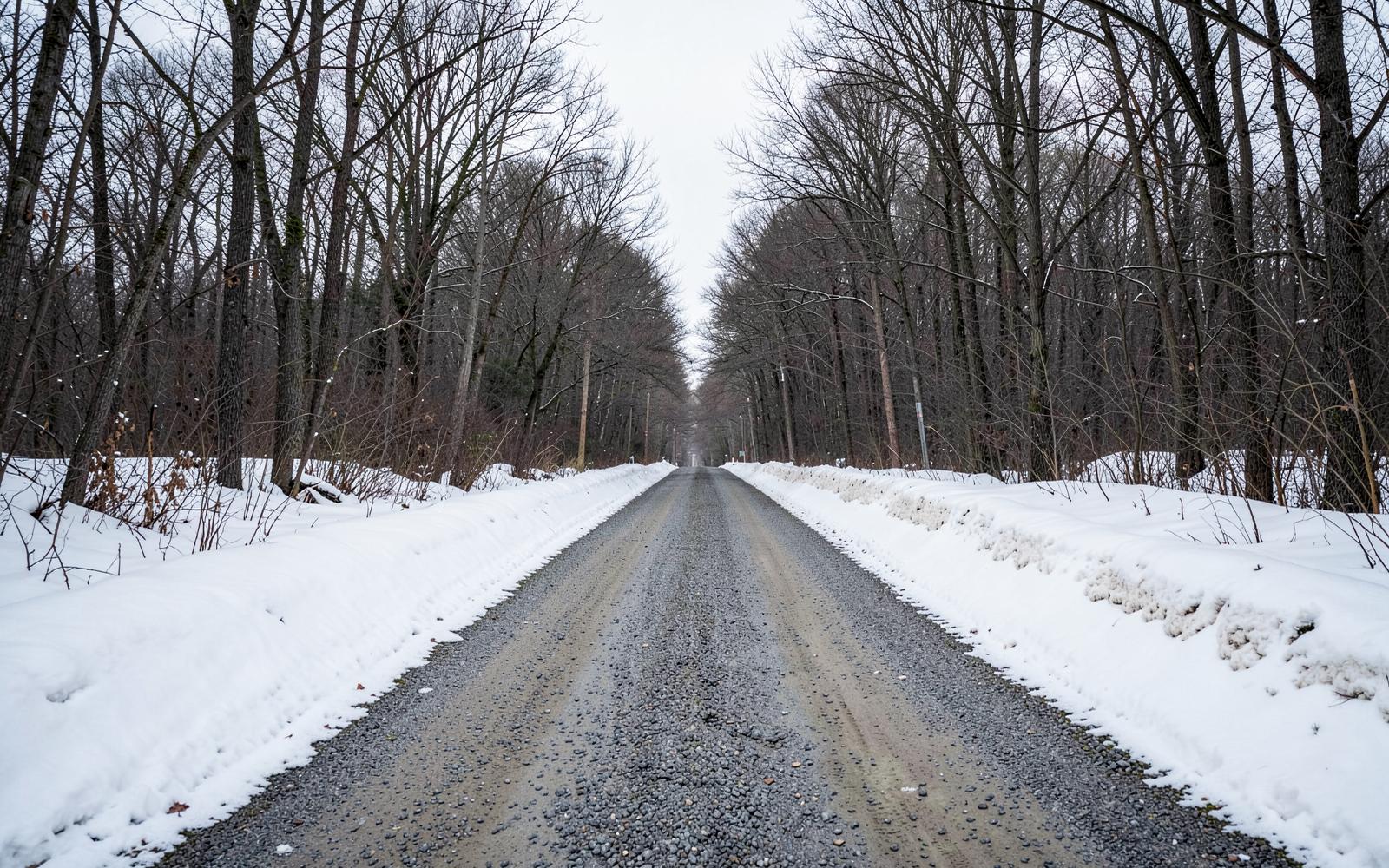

A quarter-mile lane is not a big driveway — it is a small road, and it needs to be treated like one. What that means before winter and during it.
Rural properties in Indiana and Ohio routinely have lanes measured in tenths of a mile. Getting plowed reliably is a different problem from a suburban driveway, and most of the difficulty is decided before the first snow.
Prepare in the fall
Mark the edges. The single most valuable thing you can do. A plow operator working at night in blowing snow cannot see where gravel ends and ditch begins. Reflective markers every 50 to 100 feet, set back from the actual edge, save your lane, the ditch, and the truck.
Mark culvert ends, sharp edges, and anything a blade could catch.
Fix the surface first. Potholes and ruts fill with snow and become invisible. A plow blade finds them hard. Grade the lane in the fall.
Clear the overhead. Snow and ice load branches, and loaded branches hang far lower than they did in October. A lane that clears a truck in summer may not clear a plow truck in January. Trim back to give real height and width.
Create turnarounds and stacking room. A truck needs somewhere to turn at the end. And a long lane generates a lot of snow — if there is nowhere to put it, by February the lane narrows to one lane and then to none. Widening the cleared corridor before winter pays off every year.
Check culverts and ditches. Blocked culverts flood the lane, and flooded lanes turn to ice.
Identify the drift zones. Open stretches on the windward side drift. You will know which ones from experience. Snow fence or a living windbreak can substantially reduce repeat visits.
During the season
Widen early. The first plow of the season should push snow well back, not just open a path. Every subsequent storm has to go somewhere, and banks that started narrow will bury the lane by mid-winter.
Watch the shaded sections. Under canopy or on a north-facing bank, ice forms first and lasts longest. These stretches often need treatment when the rest of the lane does not.
Manage the low spots. Anywhere water stands is where ice forms. If the same twenty feet ices every year, the actual fix is drainage, not salt.
Do not let banks get vertical. High vertical banks collapse into the lane and reduce visibility at bends. Pushing banks back periodically is real work but prevents a mid-winter problem.
Getting service
Long rural lanes are less attractive work for a lot of contractors — travel time, low density, and real risk to equipment. Some things that help:
Get on a contract before the season. Nobody is adding a half-mile lane to their route during a storm.
Be realistic about timing. Commercial contracts often come first. Ask where you sit in the route and what time to expect service.
Consider a seasonal agreement. Predictable revenue makes an awkward property worth serving.
Coordinate with neighbors. Several lanes on the same road as a package is far more attractive than one on its own — and usually cheaper per property.
Tell them about the hazards. Culverts, soft shoulders, gate posts, buried lines near the surface, and the corner that is tighter than it looks.
Emergency access
Worth thinking about before you need it.
If someone on the property needs an ambulance, a fire truck, or a vet, the lane has to be passable and wide enough for a large vehicle — not just your pickup. That is a real argument for wider clearing and for a service standard rather than plowing it yourself when you get to it.
Keep a plan for a heavy event: who to call, how long it realistically takes, and enough supplies on hand to be comfortable for a couple of days.
Where clearing work fits
A lot of winter access problems are really summer problems. Lanes that drift are lanes with no windbreak. Lanes that ice are lanes with drainage problems. Lanes that narrow are lanes with a corridor too tight.
Widening the corridor, opening drainage, and establishing a windbreak are warm-weather jobs that make every winter after them easier.
Ask us about winter access, or about widening and grading the lane before the season turns.