
Snow pricing looks opaque because every property is different. Here is what contractors are actually measuring when they build your number.
Nobody can quote commercial snow removal from an address. The price is built from the site, and the site has to be looked at.
Here is what goes into it, so you can read a proposal properly.
What contractors measure
Square footage of plowable surface. Not the parcel — the actual pavement being cleared.
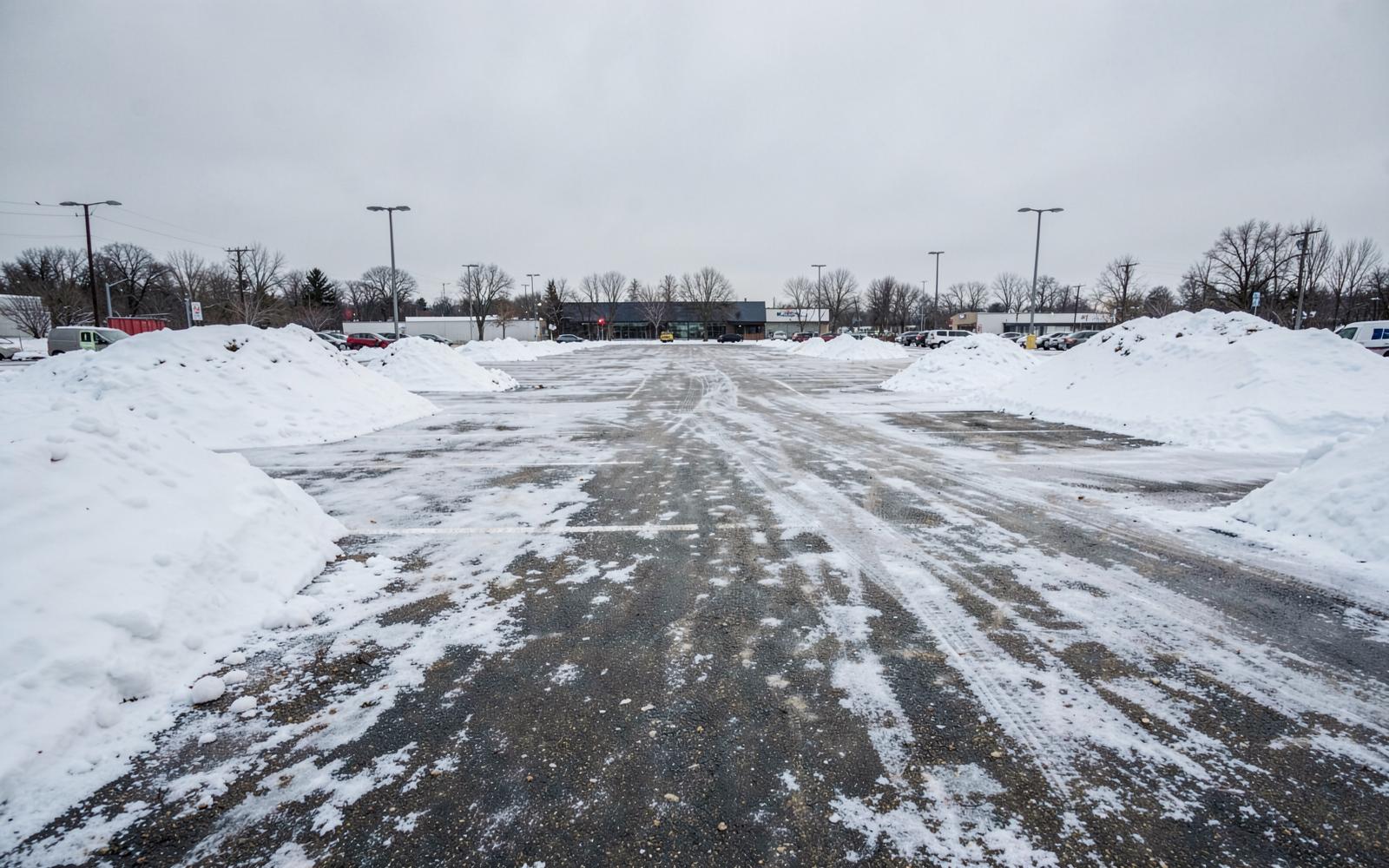
Layout efficiency. A long open lot with clear stacking areas plows fast. The same square footage broken up by islands, curbs, light poles, drive-thrus, and parked cars takes far longer.
Stacking space. Where does the snow go? Sites with nowhere to push are dramatically more expensive because material has to be relocated or hauled.
Sidewalks and entrances. Usually priced separately from lots, and often the most labor-intensive part of the job. Hand work and walk-behind equipment do not scale like a truck with a plow.
Trigger depth. A 1-inch trigger produces roughly twice the events of a 2-inch trigger in a typical Midwest winter. This single term moves seasonal cost more than the rate does.
Service standard. Open by 7 a.m. is a different operation than open by noon. Tight windows mean dedicated equipment held for your site.
Ice control. Material cost plus application. Often the larger share of the winter bill in Indiana and Ohio, where freezing rain and refreeze are common.
Location. Travel time between properties is real. Contractors route efficiently, and a site far from their other work costs more to serve.
How proposals are usually structured
- Per push, tiered by depth — 2–4", 4–8", 8–12", above that usually hourly
- Seasonal flat rate — one number, paid in monthly installments
- Per event — one price per storm regardless of visits
- Hourly — equipment and operator, typically for extreme events and haul-off
- Ice control — per application, per ton, or included
Most real agreements mix these.
The ranges question
Honest answer: published national averages are close to useless for commercial snow because the variables dominate. A small office lot and a hospital campus are not on the same scale, and two similar-sized retail lots can differ by double based on stacking and sidewalk footage alone.
What is reliable:
- Sidewalks and hand work cost more per square foot than lots, often by a lot
- Ice control frequently exceeds plowing cost over a Midwest winter
- Seasonal pricing carries a risk premium over expected per-push cost — that premium is what you pay for budget certainty
- Haul-off is expensive and usually separate
Get two or three site-visited proposals. That is the only number that means anything.
Where budgets get blown
Ice events. Indiana and Ohio winters deliver a lot of freezing rain and thaw-refreeze. Properties budgeted for plowing and not for salt run over nearly every year.
Drifting. Open rural and industrial sites can require repeat visits from a single storm as wind reloads the lot.
Extreme events. Most contracts cap what is included. Above the cap you are on hourly.
Running out of stacking room. By February on a heavy winter, snow has to go somewhere. Haul-off is a real line item.
Getting comparable proposals
Give every bidder identical information:
- A site map marking lots, drives, sidewalks, entrances, fire lanes
- Approximate square footage of each
- Your required trigger depth and completion time
- Where snow may and may not be stacked
- Hours of operation and any access restrictions
- Whether ice control is in scope
Without this, proposals will not be comparable and you will pick the one that assumed the least work.
What to verify
- General liability and workers'' compensation certificates, sent from the insurer
- Equipment capacity relative to the number of properties they serve
- Service documentation — time-stamped logs of visits, conditions, and materials
- Communication process during an event
- What happens if they cannot get to you
That last one deserves a straight answer, not a reassurance.
Get a site-visited proposal for your property. Multi-site, municipal, and property management contracts welcome.