
Advice written for sandy southern soil will get you in trouble here. Three regional conditions that change how every job on Indiana and Ohio ground should be done.
A lot of land-work advice online was written for places with sandy soil, mild winters, and different rainfall. Applied to Indiana and Ohio, some of it is merely useless and some of it is actively expensive.
Three things make Midwest ground its own problem.
1. Clay
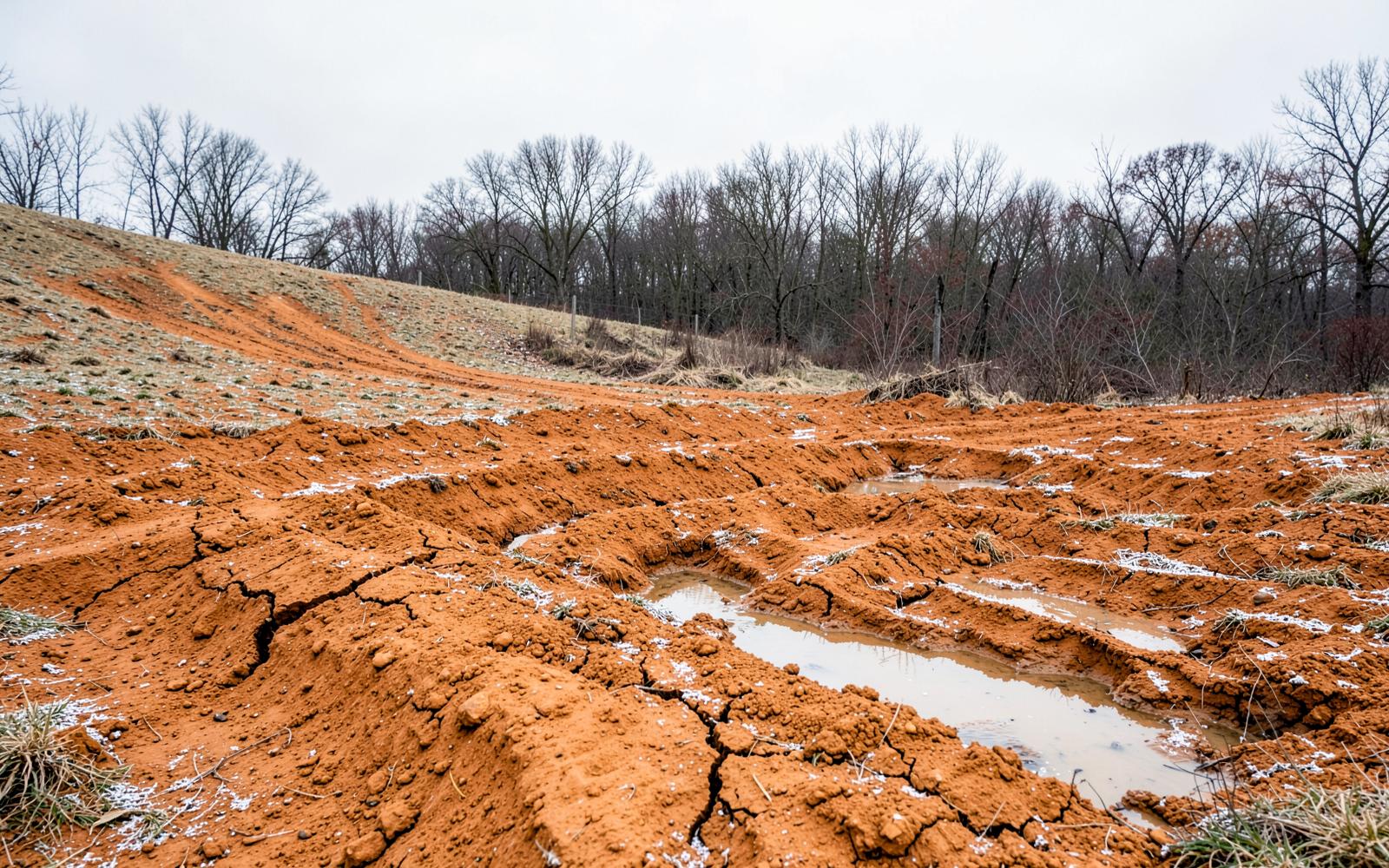
Much of Indiana and Ohio sits on heavy clay soils, a lot of it glacial in origin, much of it with a dense subsoil layer that water simply does not move through.
What this changes:
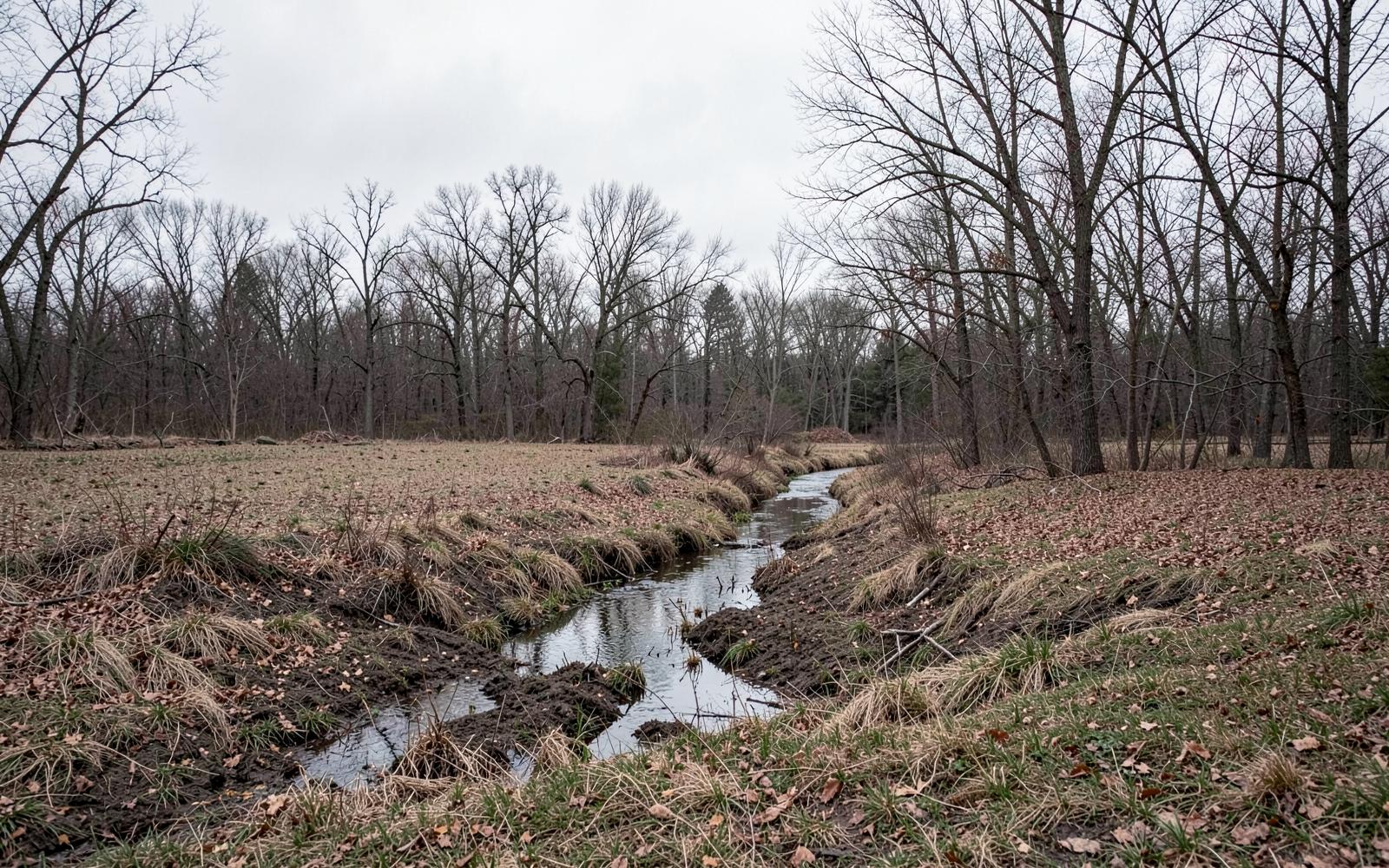
Drainage solutions that work elsewhere do not work here. A dry well or infiltration trench assumes water soaks in. On clay it does not — it fills and stays full. Surface drainage, grading, swales, and tile are the tools that actually work here.
Ground stays wet far longer. A property that had two inches of rain last week is still soft this week. Scheduling has to account for it.
Compaction is permanent-ish. Compacted clay does not recover on its own. Ruts and traffic pans from a wet-weather job are still there years later, and fixing them means mechanical work.
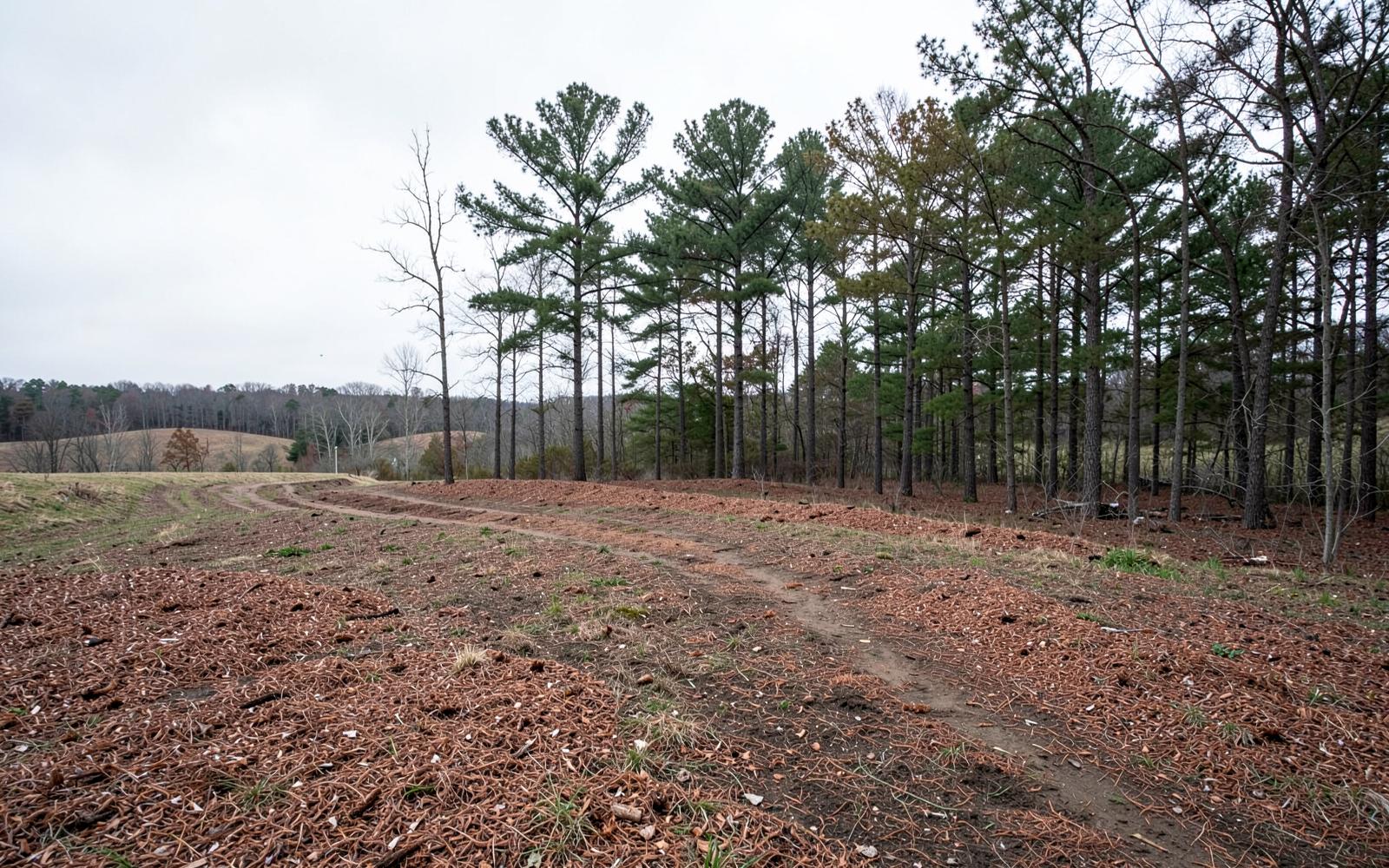
Organic matter is genuinely valuable. Mulch layers and returned organic matter improve clay structure meaningfully. This is a real argument for mulching in place rather than hauling material off.
Tile is everywhere and often undocumented. Century-old clay tile and newer plastic runs cross a huge amount of Midwest farmland. Cutting a line during excavation without knowing it means an inexplicably wet field later.
2. Slope
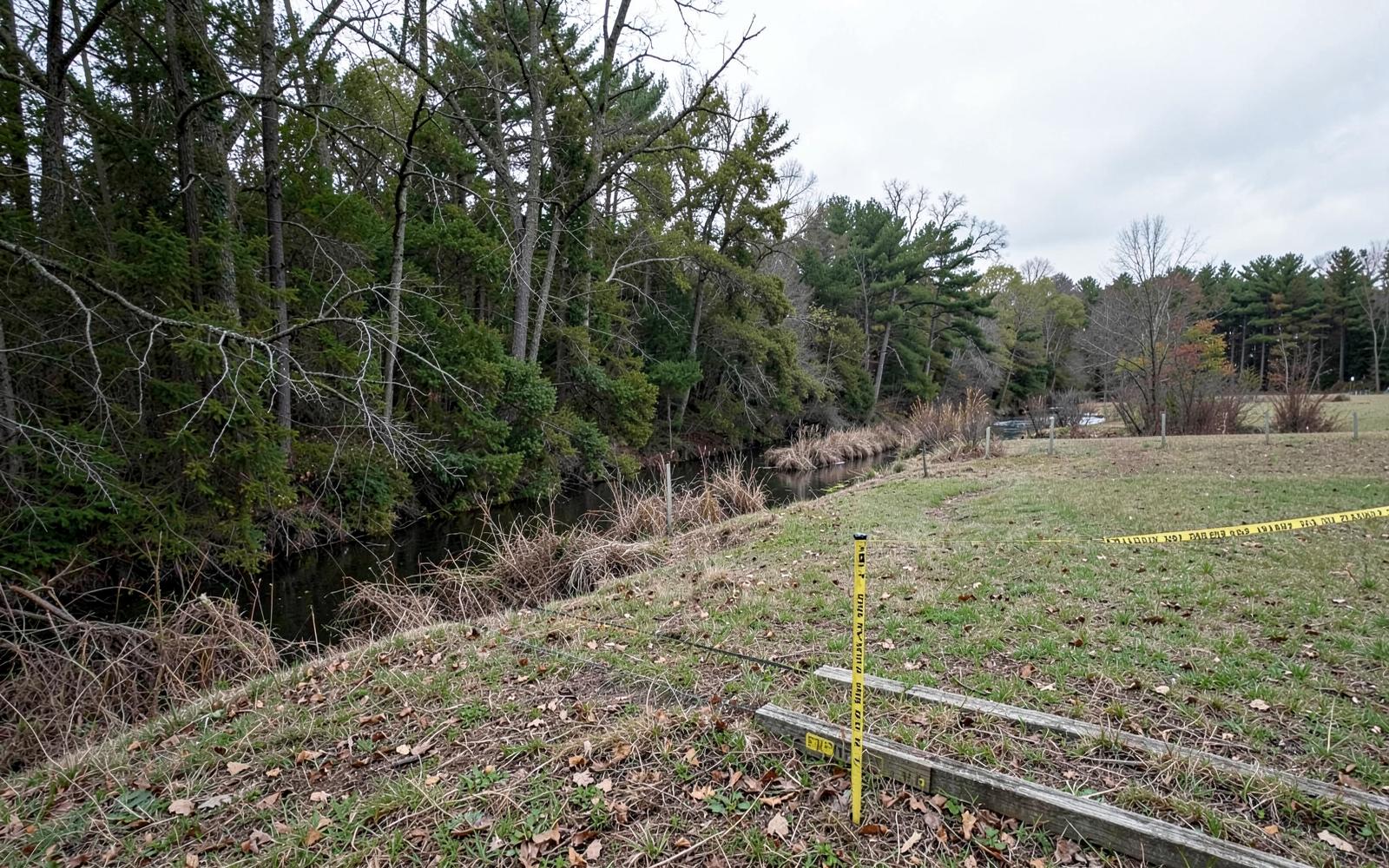
Southern Indiana and southeastern Ohio in particular are genuinely hilly — the unglaciated country has real relief, steep hollows, and long grades. Even in the flatter north, creek and ditch banks create local slopes that matter.
What this changes:
Erosion risk is immediate and severe. Bare disturbed soil on clay on a grade will move in the first hard rain. This is the strongest argument for low-disturbance methods: a mulch layer protects the surface from day one.
Equipment limits are real. Above roughly 20% grade, production drops and safety becomes a live consideration. Above 30% it is case by case. Some ground should not have a machine on it.
Water concentrates. Runoff from a slope arrives at the bottom fast and with force. Culverts, ditches, and outlets have to be sized for what the whole hillside sends, not for local rainfall.
Pass direction matters. Working across a slope rather than up and down it changes both safety and how water moves afterward.
3. Freeze-thaw
The Midwest does not get one long freeze. It gets dozens of freeze-thaw cycles between December and March — a warm week in January, a hard freeze in February, back and forth.
What this changes:
Frost heave destroys roadbeds. Water in a gravel base freezes, expands, breaks the structure, thaws, and leaves voids. Repeat forty times. This is why a driveway built without drainage fails here and survives in a milder climate.
Base depth and drainage are not optional. In a mild climate you can get away with a thin base. Here you cannot.
Spring thaw is the worst working window of the year. Frozen ground thaws from the top down while the layer beneath is still frozen, so water has nowhere to go. The surface turns to soup over a solid base.
But frozen ground is the best working window. The same cycle that ruins roads gives you a firm working platform in the middle of winter. This is genuinely the Midwest''s advantage, and most landowners never use it.
What this adds up to
- Time work to ground conditions, not to the calendar. Wet clay stops work. Frozen clay is ideal.
- Design for water first. On clay, everything else is downstream of drainage.
- Prefer low-disturbance methods on slope. Erosion protection is cheaper than erosion repair.
- Build roadbeds properly. Freeze-thaw punishes shortcuts every single winter.
- Keep organic matter on the property. Clay needs it.
- Assume there is tile until proven otherwise.
When you are getting advice
Ask whether whoever is giving it has worked this ground. Techniques that are standard in sandy country or the mild South can be exactly wrong here — and expensive to undo.
We work Indiana and Ohio ground year round, and we plan jobs around what the soil is actually doing.