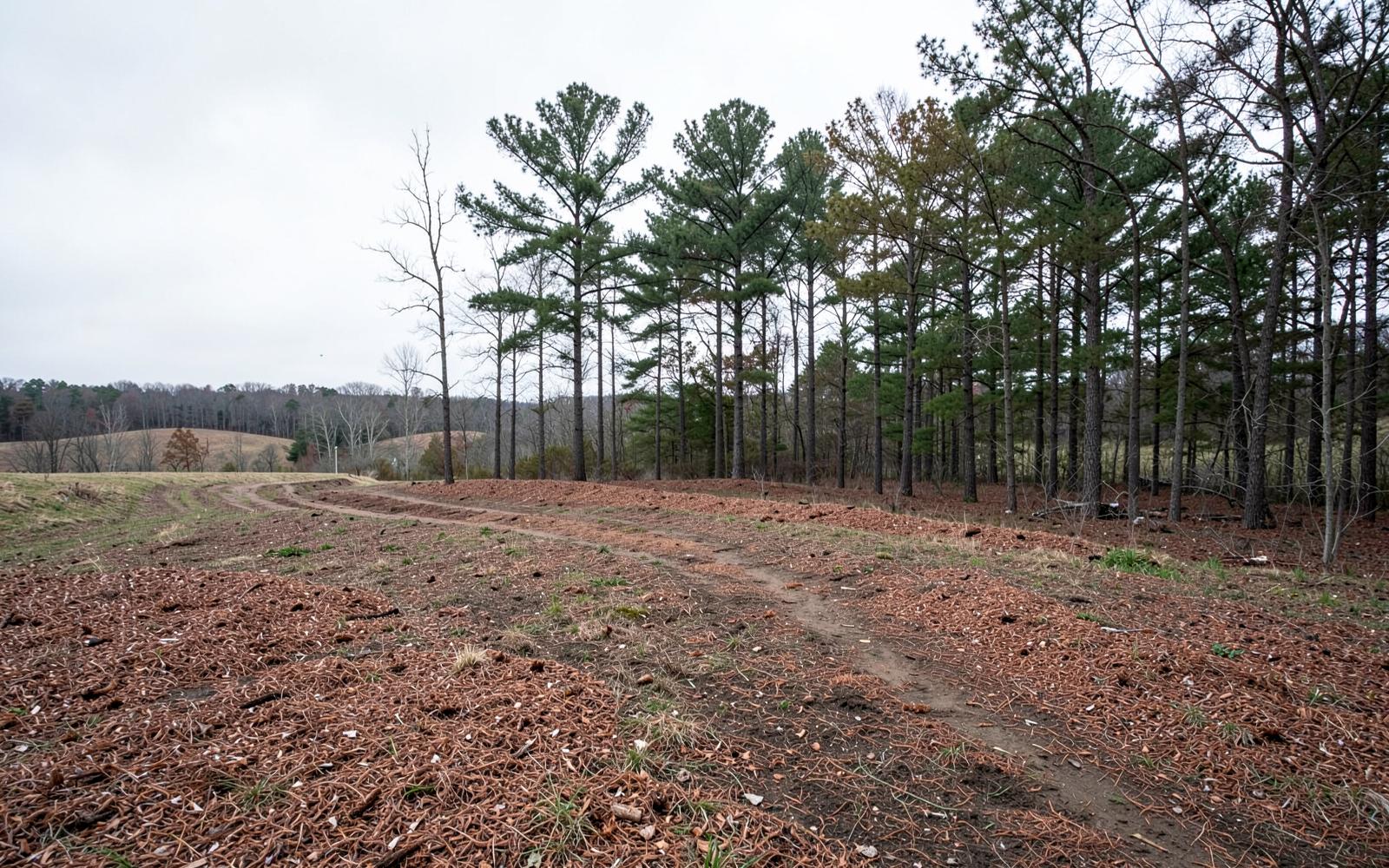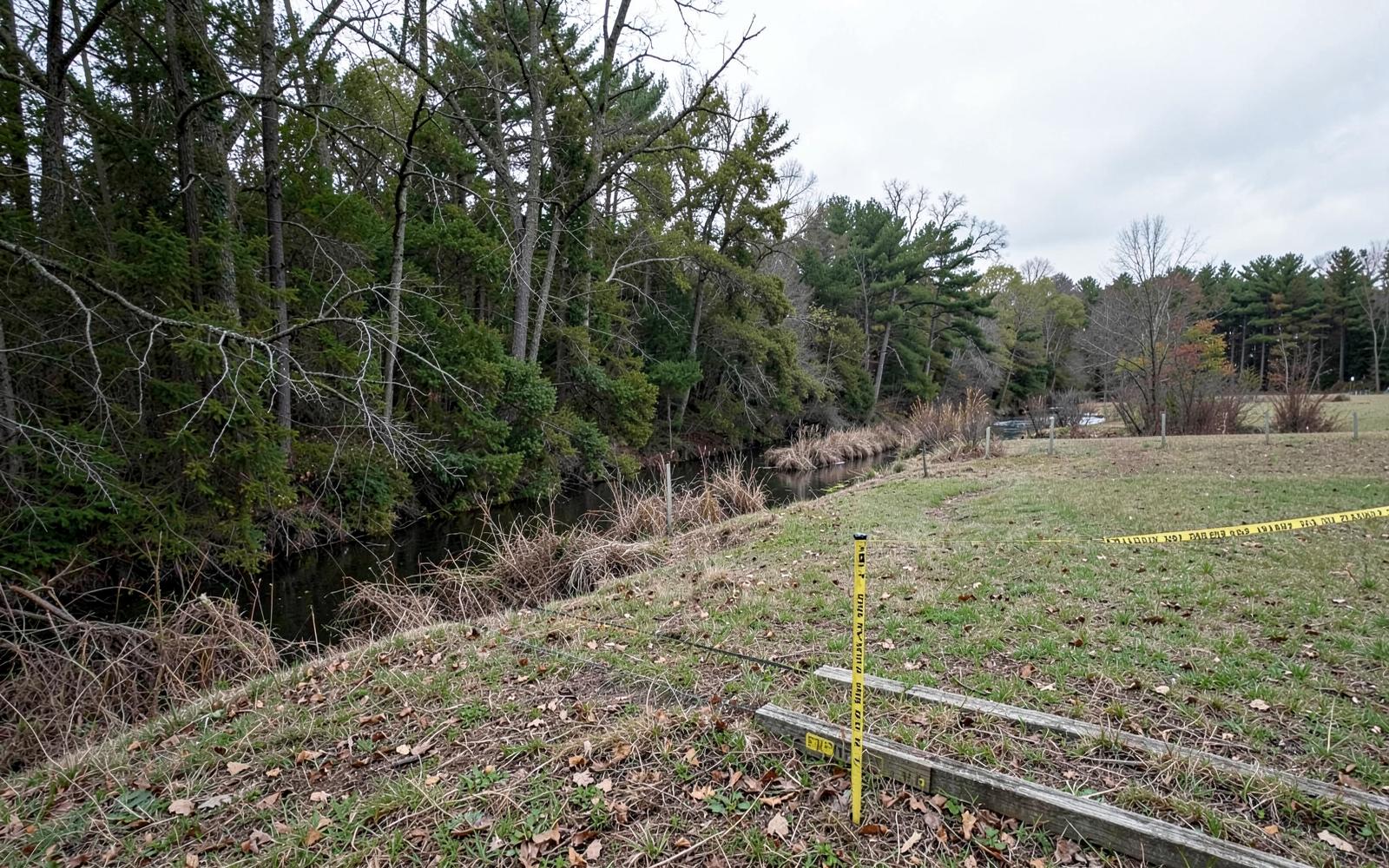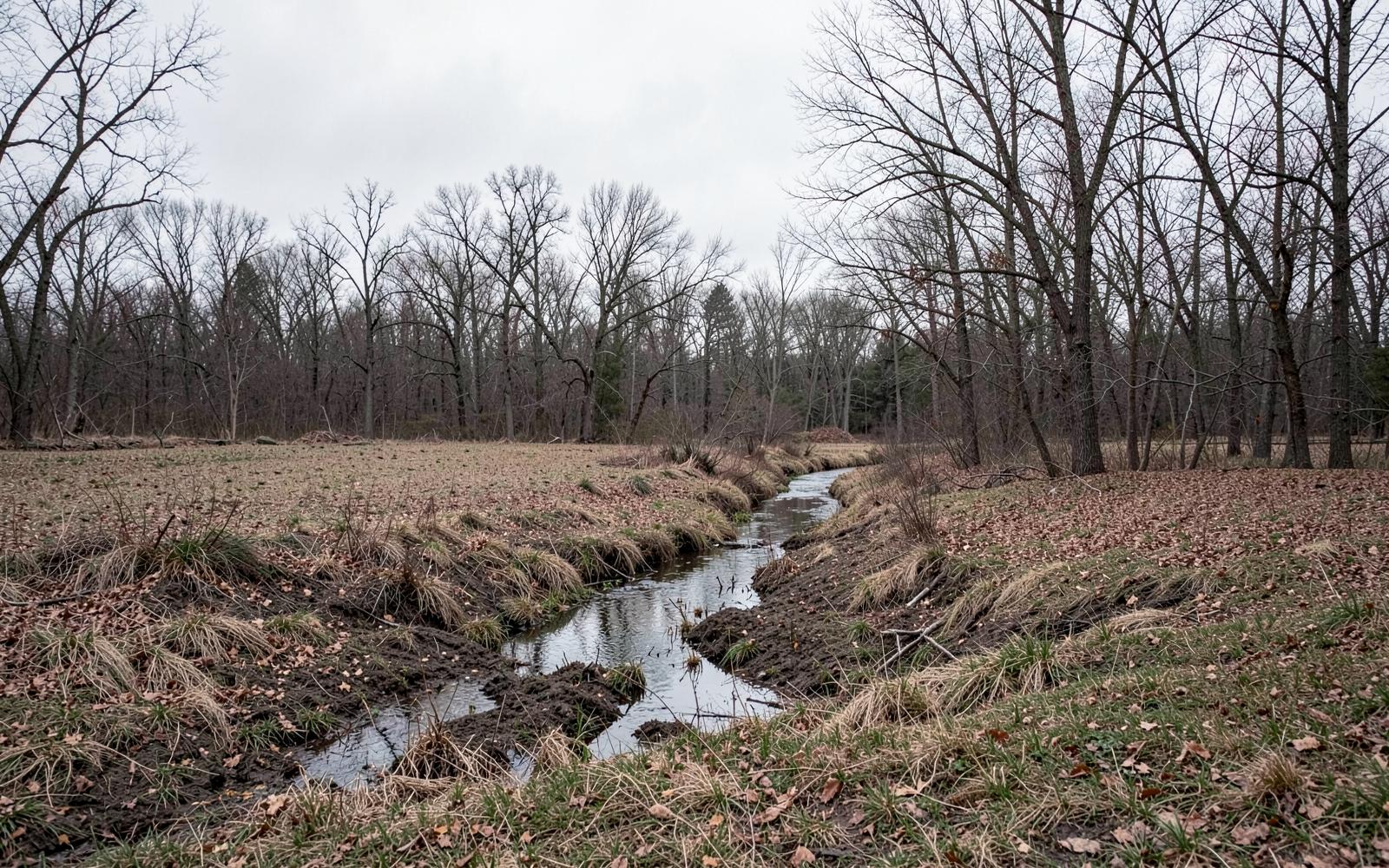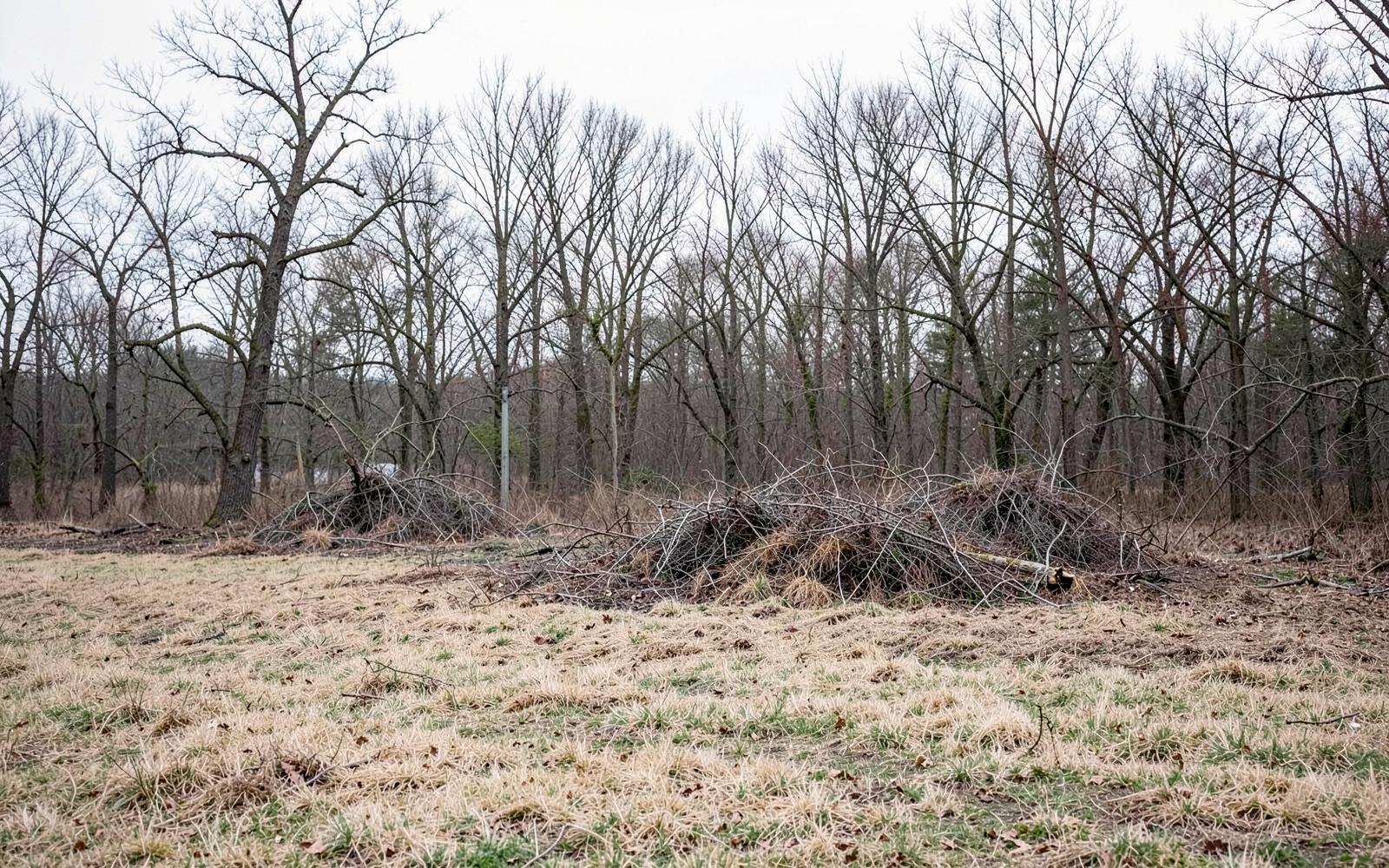

Winter is the answer more often than people expect. A season-by-season look at what works, what costs more, and what you should not schedule.
Timing affects cost, quality, and how much damage gets done to your ground. In the Midwest, the differences between seasons are large.
Winter — the best window
December through early March, when the ground is frozen or firm.
Why it wins:
- Frozen ground carries equipment. Almost no rutting, almost no compaction. This is the single biggest factor.
- No leaves. The operator can actually see the terrain, the stems, the fence, the drainage, and what you want left standing.
- No nesting season. Fewer wildlife concerns.
- Dormant vegetation. Less sap, less mess, and cut-stump herbicide treatment is highly effective in this window.
- Schedules open up. Winter is the slow season for a lot of land work, which often means better availability and better pricing.
- Full recovery time. Ground has all spring and summer to green up.
The catch: the freeze is not reliable in Indiana and Ohio. A warm wet January can be worse than March. Good contractors watch the forecast and move jobs around.
Late summer — the strong second choice
August into September.
- Ground is usually at its driest
- Long working days
- Woody species have spent their spring energy, so treatment timing can be good
- Seeding window follows immediately, which suits pasture reclamation
Downside: heat is hard on people and equipment, and this is a busy season, so scheduling is tighter.
Spring — usually the worst
March through May.
Why to avoid it:
- Thaw plus spring rain equals saturated clay. Equipment ruts, compacts, and sometimes gets stuck.
- Ruts made in spring channel water all year
- Peak nesting season
- Leaf-out hides everything the operator needs to see
- Everyone wants work done now, so scheduling is worst
If you must clear in spring, expect delays, and accept that a contractor postponing your job for wet ground is protecting your property.
Fall — variable
October through November.
Can be excellent in a dry fall — leaves are down, temperatures are workable, ground is often firm. Can be terrible in a wet one.
Good window for treating invasives: bush honeysuckle holds its leaves after natives drop, making it easy to identify and target.
By project type
Pasture reclamation: clear in late winter, treat regrowth through summer, seed in late summer. The full sequence fits one calendar year.
Hunting land: late winter, without question. Everything recovers before season and you are not disturbing the property in fall.
Building sites: clear in winter, build in spring and summer. Reverse it and you are trying to run construction traffic over ground that was just disturbed.
Fence lines: late fall through winter. You can see the fence.
Storm cleanup: whenever it happens. Safety first, then access, then the rest as ground conditions allow.
Booking
The paradox: the best time to have work done is winter, and the best time to book it is late summer or early fall. Contractors fill winter schedules well before winter.
Calling in February about February work means taking whatever slot exists. Calling in September usually means getting the window you want.
The one rule
Do not push a job through wet ground to hold a date. Rutting is expensive to repair, it changes drainage, and it undoes the point of low-impact clearing. If your contractor says wait, wait.
Ask about winter scheduling — the ground and the price both usually favor it.